View-Master: How Vacation Slides Became a Toy-Box Favorite
View-Master began with scenic reels for adults. Paired photographs, Disney stories and a redesigned viewer helped turn the souvenir into a toy-box fixture.
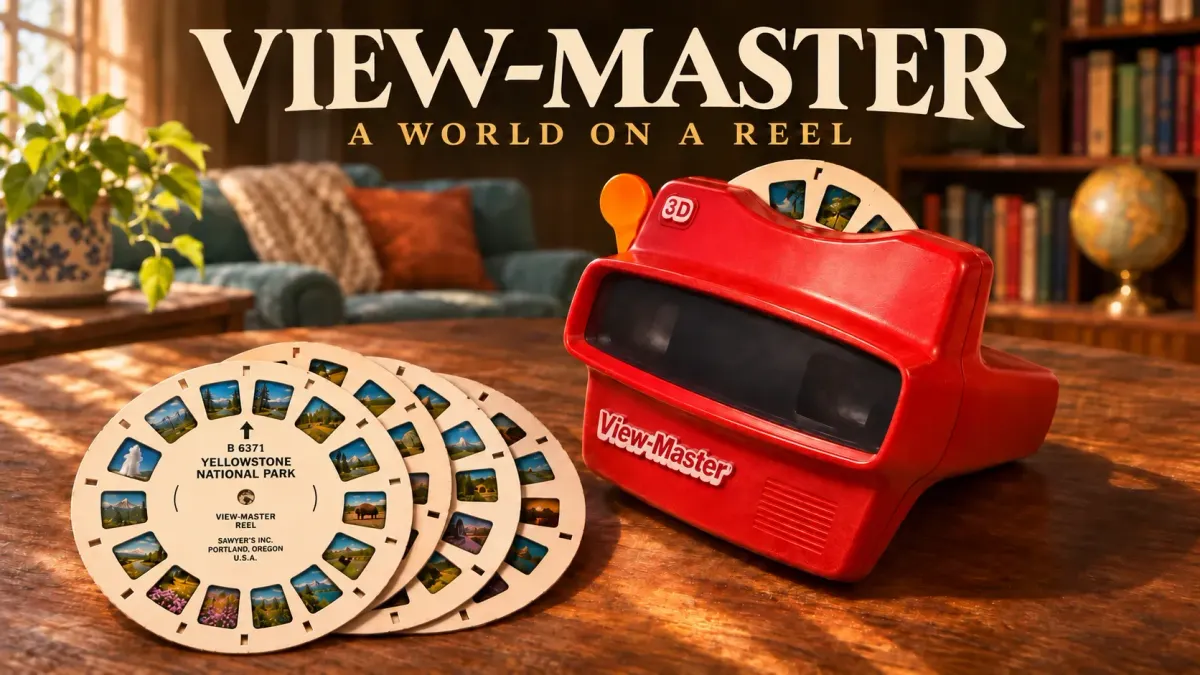
Slide a cardboard reel into a View-Master, hold the eyepieces to your face and press the lever. A new scene moves into place: a canyon wall, a toy-sized room or a familiar character. A standard reel holds fourteen pictures arranged in seven pairs, each showing the same subject from slightly different viewpoints. The viewer presents one image to each eye, creating the impression of depth from two still pictures.
Early View-Master reels were aimed mainly at adults, with color views of scenic places.
A souvenir you could look into
The idea took shape in 1938, when Sawyer’s president Harold Graves met photographer William Gruber at Oregon Caves. Gruber was experimenting with paired cameras and a new way to present three-dimensional pictures. Their work led to View-Master’s introduction at the 1939 New York World’s Fair.
Early reels featured tourist destinations. The Grand Canyon and Carlsbad Caverns were among the subjects described in the Oregon Historical Society’s View-Master collection history. A viewer could bring home a set of vacation scenes or examine a place they had never visited.
Stereographs had already brought views of distant places into homes, often on rectangular cards. View-Master put seven color scenes on a reel that advanced with a lever.
Disney arrives on the reel
In 1951, Sawyer’s acquired Tru-Vue and its Disney stereo-licensing rights. The Strong’s account of View-Master identifies that purchase as an important step toward the familiar children’s product.
Disney characters, films and views of Disneyland joined the reel collection, followed by other entertainment subjects.
Scenic and educational reels remained available alongside the children’s stories.
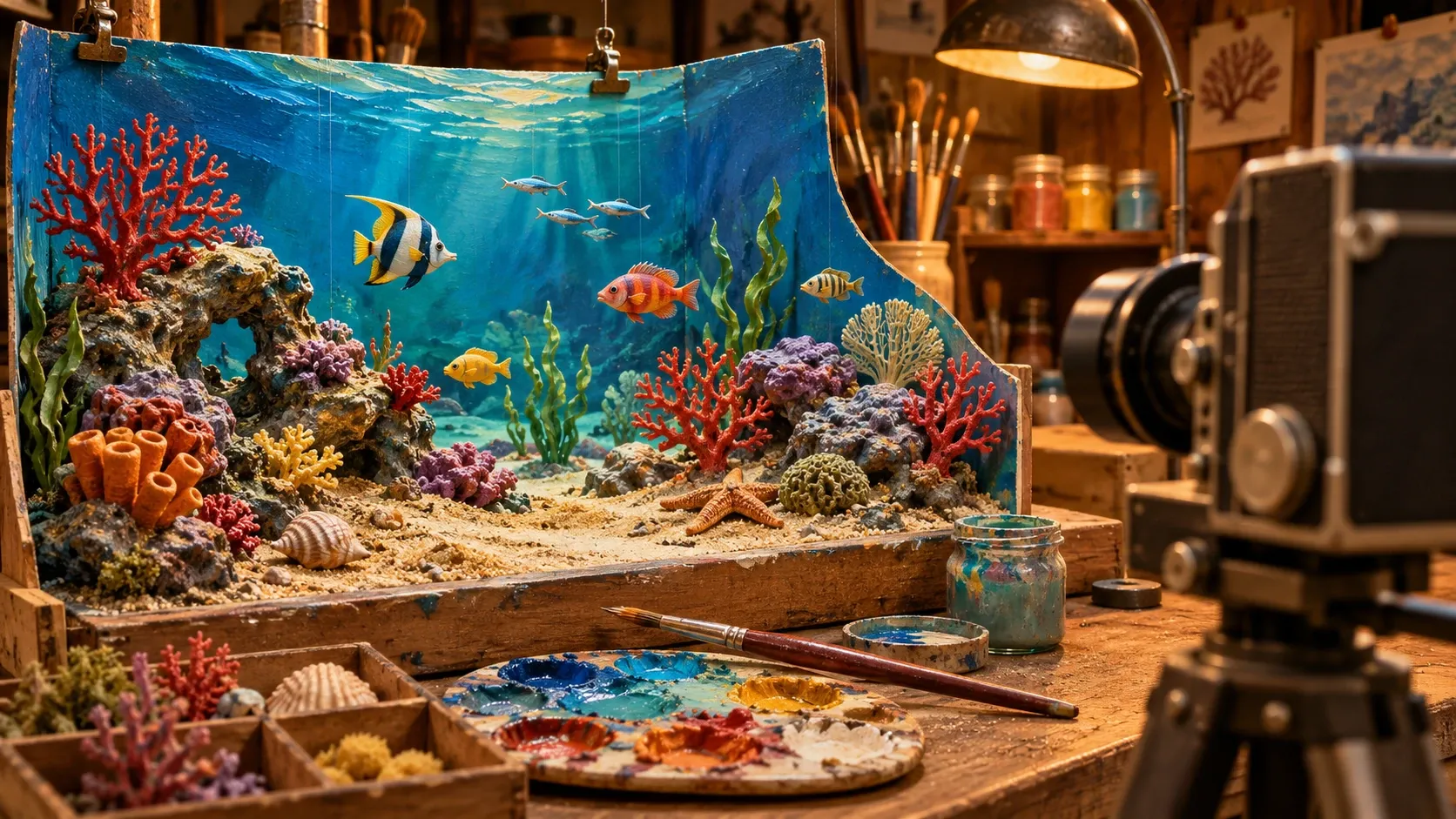
The Oregon Historical Society preserves figures, props, molds and miniature scenery used to make photographic reels. Its examples include material for Wonders of the Deep from 1954, The Wizard of Oz from 1957 and Holly Hobbie from 1975.
Charles Harrison makes the viewer easier to handle
In 1959, industrial designer Charles Harrison was hired to redesign the View-Master. As the Denver Art Museum’s account explains, it used injection-molded thermoplastic in place of the brittle Bakelite used in earlier versions.
Harrison also changed the parts people touched. A larger advance lever was easier to find and operate. A rounded cutout helped show where the reel should go. He also enlarged the lenses and angled the eyepieces. A 1962 advertisement emphasized that small children could operate the viewer themselves.
Into the toy box
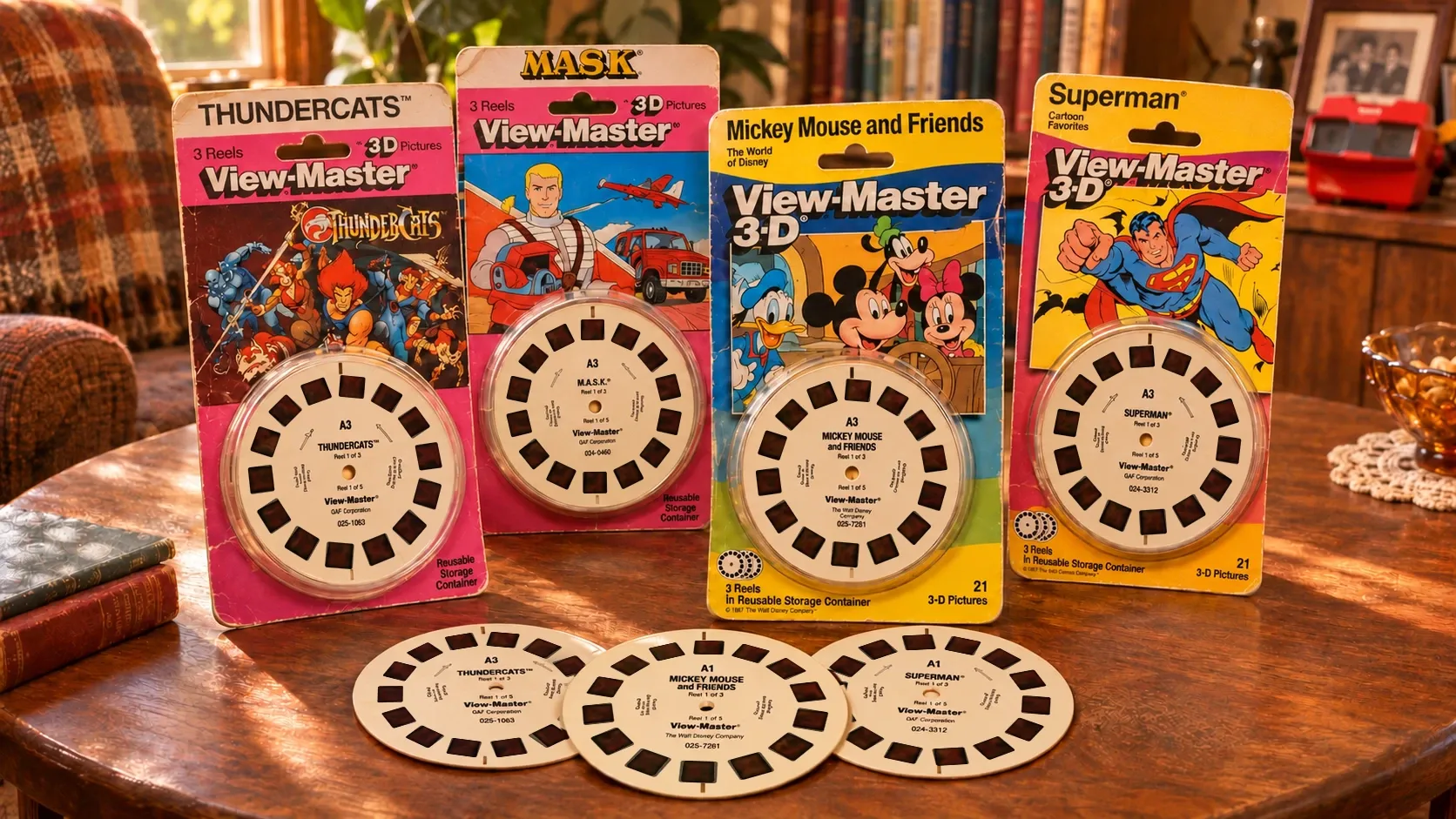
By the 1970s, View-Master reels were sold in toy stores, pharmacies, grocery stores and souvenir shops. Disney stories shared the racks with Snoopy, Spider-Man and other familiar characters.
The gift sets made that expanding library part of the appeal. GAF’s 1976 Bicentennial Gift Pak paired a red, white and blue Model G with ten history reels and was recommended for children four and older. A viewer and a handful of cardboard discs were a complete present; another packet of reels could bring something new to the same toy.
Recommended