The Technology in a Typical 1995 Home—and What Replaced It
What technology did a typical American home have in 1995? Explore CRT TVs, VCRs, landlines, dial-up PCs, CD players and what replaced them today.

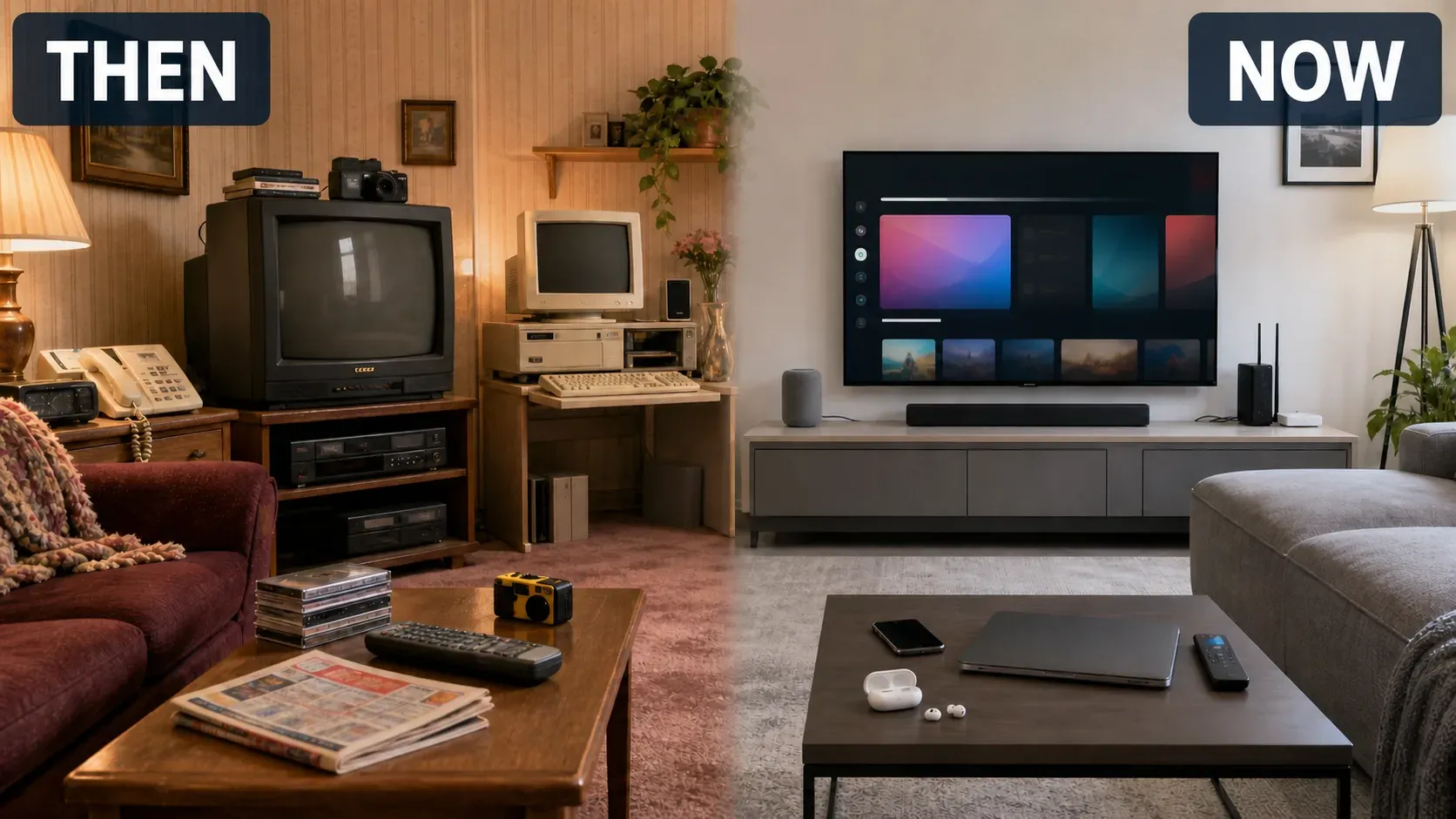
Walk into a typical American home in 1995 and the technology would be impossible to miss. A bulky CRT television dominated the living room. VHS tapes filled cabinets and shelves. A landline telephone sat on a kitchen counter or hung on the wall, while a stereo system, CD player, answering machine and perhaps a camcorder each handled a job that today can be done with a single device.
The home computer was becoming more important, but it was still far from universal. The Times Mirror Center, now Pew Research Center, found computers in 36% of U.S. households in its June 1995 survey. Internet access was even less common, and getting online usually meant connecting a desktop computer to a telephone line through a noisy dial-up modem.
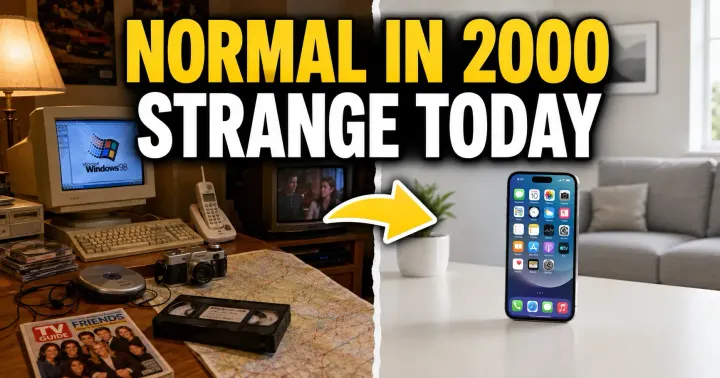
Three decades later, many of those once-essential machines have disappeared or been absorbed into smartphones, smart TVs, laptops and cloud services. Comparing technology in 1995 with what we use today shows just how dramatically the American home has changed—and how many separate devices have been compressed into a handful of screens.
What Technology Was in a Typical Home in 1995?
A technology-equipped American home in 1995 might have included a CRT television, VCR, landline telephone, answering machine, stereo system, CD player, film camera or camcorder, video game console and, increasingly, a desktop computer with a CD-ROM drive and dial-up modem.
Not every household owned every device, but this collection captures the technology that defined everyday life during the mid-1990s. Most of these machines have not simply improved over the past three decades. Their functions have been consolidated into smartphones, streaming services, broadband internet and connected devices.
| Technology in 1995 | Modern Successors and Alternatives |
|---|---|
| CRT television | LED and OLED smart TVs |
| VCR and VHS tapes | Streaming video |
| Landline telephone | Smartphones |
| Answering machine | Voicemail and messaging apps |
| Desktop computer | Modern desktops, laptops, tablets and smartphones |
| Dial-up modem | Broadband internet and Wi-Fi |
| CD and cassette stereo | Streaming music |
| Film camera and camcorder | Smartphone cameras |
| Paper maps and printed directions | GPS and navigation apps |
| Video game cartridges and discs | Digital downloads and subscriptions alongside physical games |
| Clock radios, calculators and other small devices | Smartphone apps |
The biggest change is not simply that today's technology is faster or more powerful. It is that many devices that once occupied separate shelves, desks and cabinets now exist as software inside one connected device.
1. The CRT television became a flat screen—and the schedule became an app
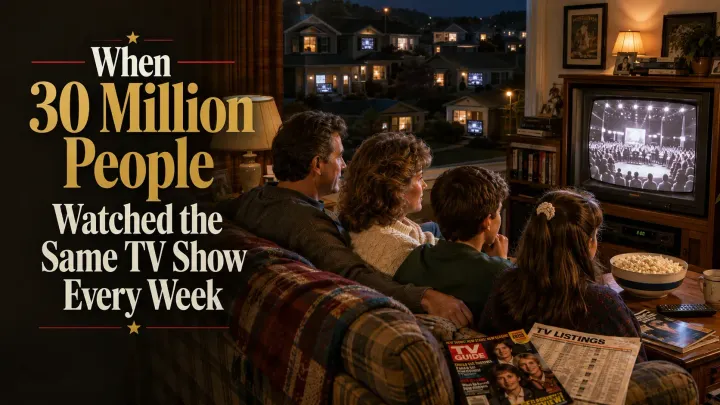
In 1995, the television was usually the largest piece of technology in the room. A 27-inch CRT could sit inside a cabinet nearly as deep as it was wide, and moving it often required two people.
Viewers chose from whatever happened to be airing, checked TV listings and planned around network schedules. Missing an episode often meant waiting for a rerun. Our look at the TV networks that ruled the 1990s explains how NBC, ABC, CBS and Fox competed for those evenings.
What replaced it: thin LED and OLED televisions, streaming boxes and on-demand libraries. The screen grew larger while the cabinet nearly vanished. More important, the schedule stopped belonging to the networks and started belonging to the viewer.
2. The VCR became streaming video
The VCR recorded television, played rented movies and preserved home videos copied from a camcorder. It also blinked 12:00 in countless living rooms because nobody wanted to wrestle with the setup menu.
A movie night often meant a trip to the video store, while recording a show required programming the correct time and channel—and hoping nobody changed it.
What replaced it: first the DVD player and digital video recorder, then streaming. Movies no longer occupy shelves, recordings no longer depend on blank tapes and “be kind, rewind” has become a phrase that needs explaining.
3. The family telephone became a pocket computer
The home telephone was not personal. It belonged to the household, occupied a fixed location and rang loudly enough for everyone to hear. A teenager could stretch a coiled cord around a corner for privacy, but not far enough to escape a sibling listening from another room.
Caller ID was a separate box in many homes. The answering machine stored messages on a tiny cassette or digital chip. Important numbers lived in a paper address book, a Rolodex or memory.
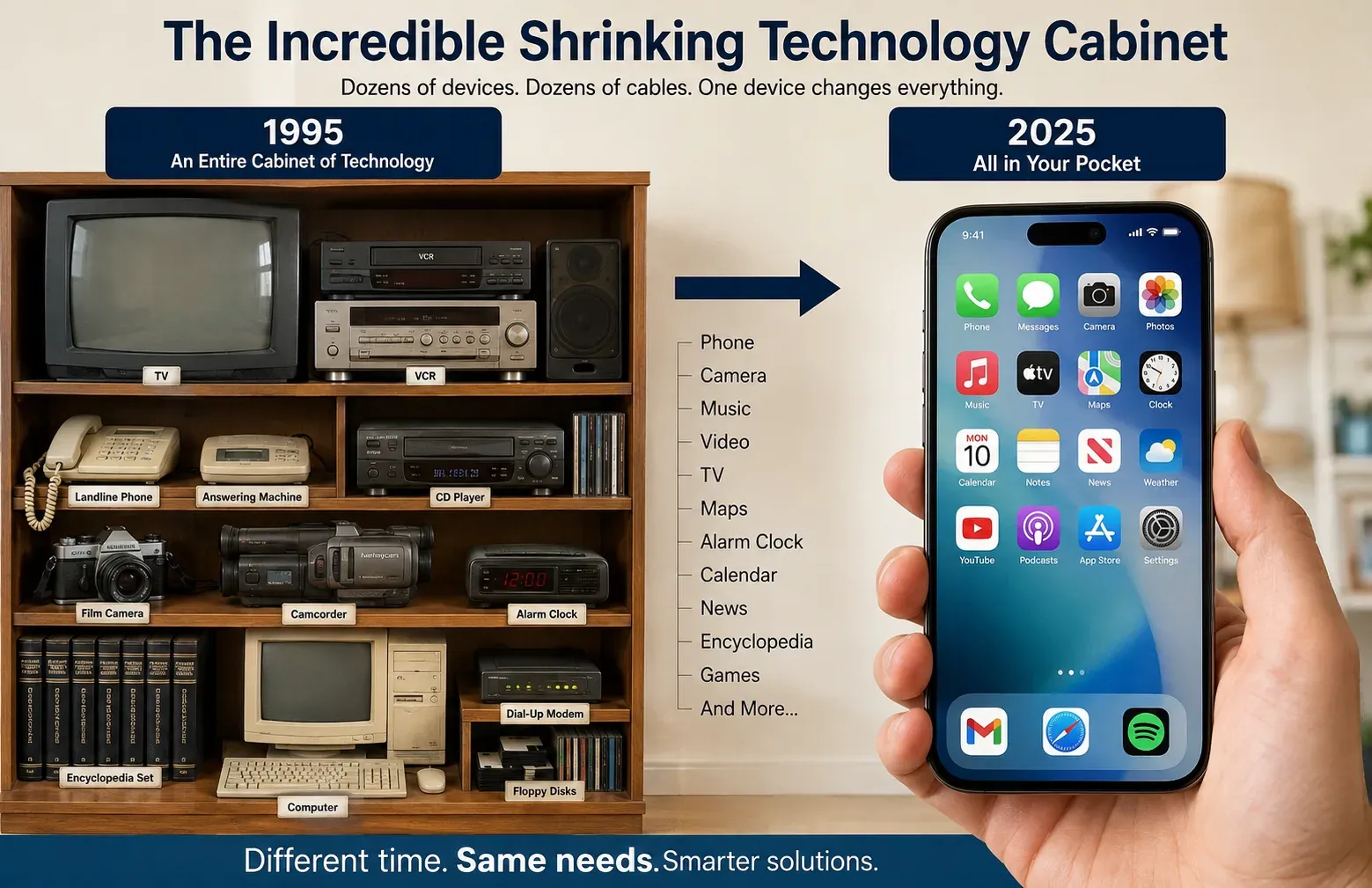
What replaced it: the smartphone. One device absorbed the telephone, answering machine, address book, pager, calculator, calendar, camera, map and much of the home computer. The old family number became a collection of individual numbers, and the shared ritual of answering the phone disappeared with it.
4. The beige desktop computer became an Always-Connected ecosystem
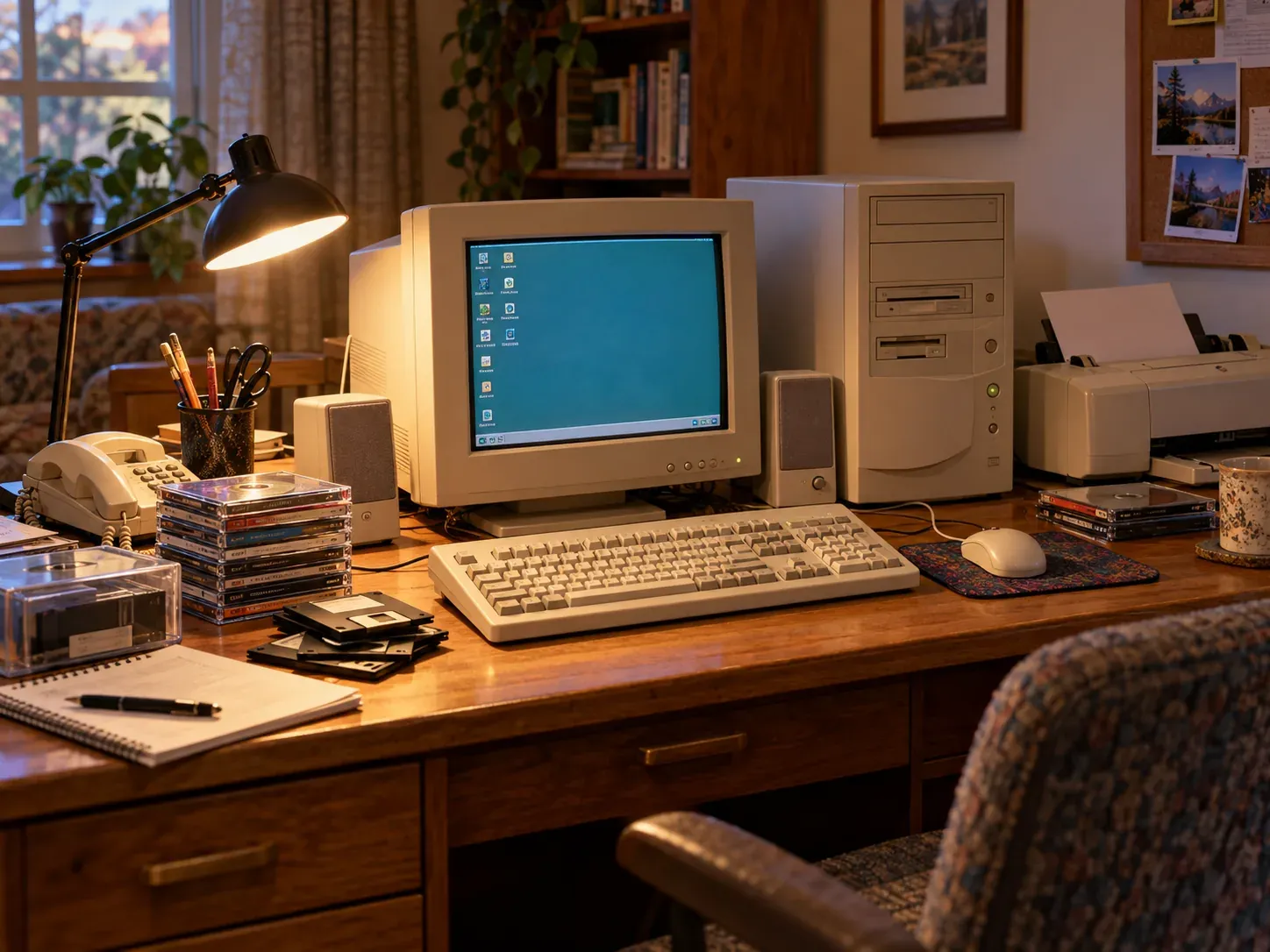
A typical home computer in 1995 was a destination rather than something that followed you everywhere. If a household owned one, it was usually placed on a dedicated desk and surrounded by a CRT monitor, keyboard, mouse, speakers and often a printer. Using the computer meant sitting down in front of it specifically to write a document, play a game, explore a CD-ROM or connect to an online service.
1995 was also a pivotal year for the personal computer. Microsoft launched Windows 95 that August, helping popularize a more approachable graphical interface at the same time that CD-ROM drives, multimedia software and faster processors were making PCs more useful for entertainment as well as work. The Computer History Museum’s 1995 timeline captures the broader turning point as home computing, CD-ROM multimedia and the rapidly growing web began converging.
What replaced it: not one machine, but an ecosystem. Laptops, tablets and smartphones now share files through the cloud, while broadband and Wi-Fi keep devices connected throughout the day. Software updates itself, storage follows the user and the old idea of a dedicated “computer room” has largely dissolved into technology spread throughout the entire house.
The biggest change was not simply speed. In 1995, using a computer usually meant going to a specific place in the home and sitting down in front of a single machine. Today, computing follows us from room to room and from one device to another.
5. The dial-up modem became invisible broadband
Going online in 1995 was an event. The modem dialed a telephone number, exchanged a burst of chirps and static, and tied up the household phone line. An incoming call or someone picking up another extension could interrupt the connection.
Web pages arrived slowly, often appearing piece by piece. Email still felt remarkably fast because the alternative was a letter, not because the network itself was instant.
What replaced it: cable, fiber, cellular data and whole-home Wi-Fi. The connection became faster, constant and largely invisible. Instead of asking whether someone was online, the modern household notices only when it is not.
6. The stereo rack became streaming audio
A serious music setup could occupy an entire shelf: receiver, cassette deck, CD player and large speakers connected by a nest of wire. Music collections were physical libraries, with albums, liner notes and a visible place in the room.
Portable listening meant carrying a cassette or CD player, while making a playlist often required recording songs onto a blank tape in real time.
What replaced it: streaming subscriptions, wireless earbuds and compact connected speakers. Millions of songs now occupy no shelf space at all. The tradeoff is that access has replaced ownership: the collection is vast, but it can change whenever a service or licensing agreement does.
7. The film camera and camcorder became the smartphone camera
Most family photos in 1995 began on 35mm film. A roll offered 24 or 36 exposures, and nobody knew whether a picture worked until the prints came back from the drugstore. Disposable cameras handled vacations and parties. Camcorders recorded birthdays, school plays and holidays onto VHS-C or Hi8 tapes.
The delay made photographs scarce enough to feel deliberate. People took fewer pictures, printed more of them and arranged the best ones in albums.
What replaced it: the smartphone, backed by cloud storage and instant sharing. Today a family can shoot more photographs in a weekend than it once took in a year. The modern problem is not capturing a moment. It is finding that moment later among thousands of nearly identical images.
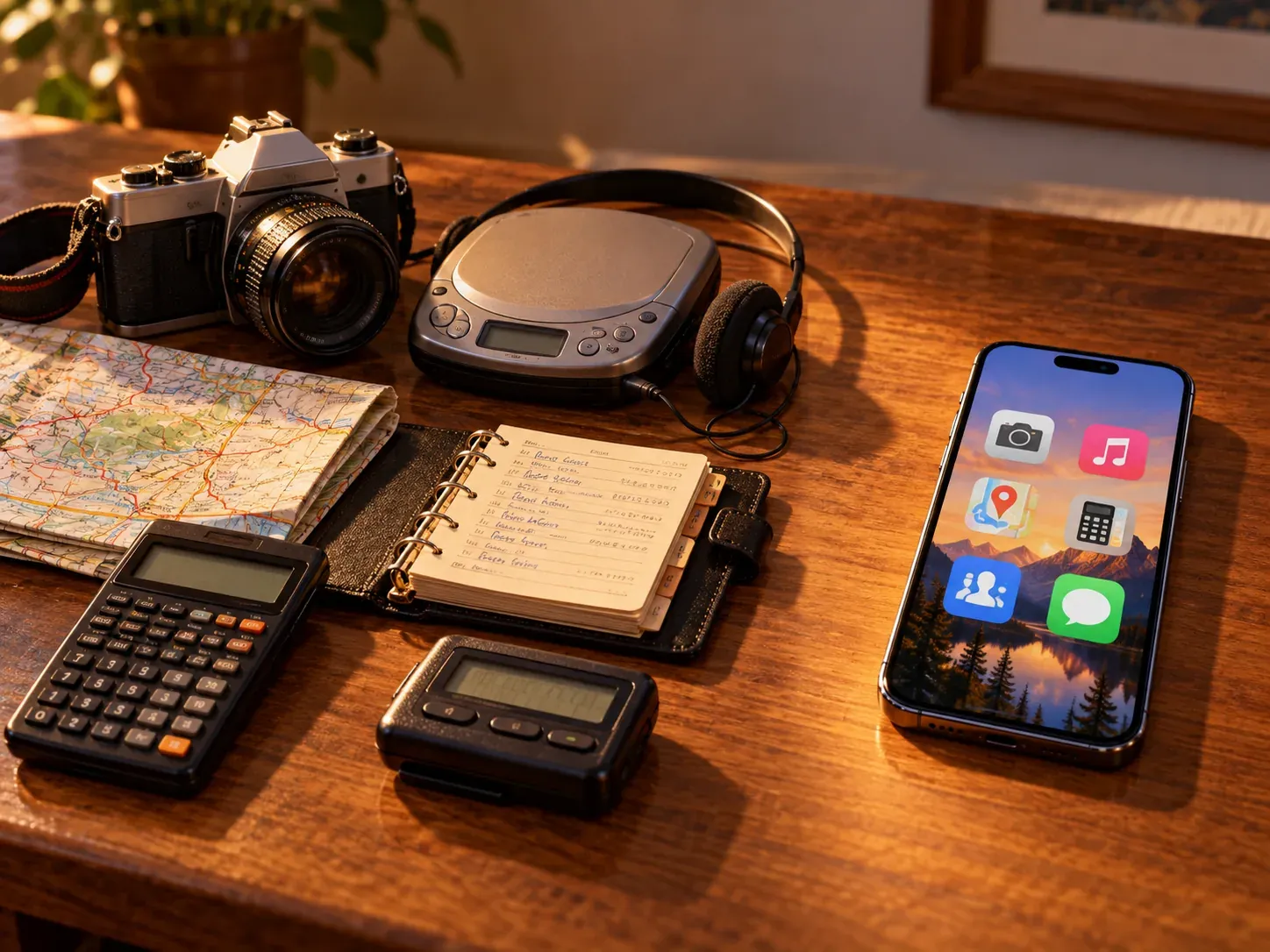
8. Paper maps and printed directions became GPS
A 1995 car often carried folding road maps, while longer trips depended on atlases and handwritten directions. A wrong turn meant stopping to figure out where you were, and traffic updates usually came from the radio.
What replaced it: satellite navigation and map apps with live traffic, rerouting, business hours, reviews and street-level imagery. Getting lost became harder—but so did building a mental map of the places we travel through.
9. The game console stayed—but almost everything around it changed
In 1995, American players were moving between the 16-bit era and a new generation of disc-based systems. Cartridges and game discs were purchased, traded, borrowed and rented. Multiplayer usually meant two people sitting on the same couch, arguing over who got the better controller.
The arrival of the PlayStation in North America was one sign of the shift toward CD-based games, richer 3D graphics and a new kind of living-room entertainment. But the console itself remained disconnected from the wider world. For a look at what those machines cost, compare video game console launch prices adjusted for inflation.
What replaced it: connected consoles, digital storefronts, downloads, subscriptions, online multiplayer and mobile games. The console survived because it evolved. What disappeared was the assumption that the complete game had to be inside the box on the day you bought it.
10. The little single-purpose devices became apps
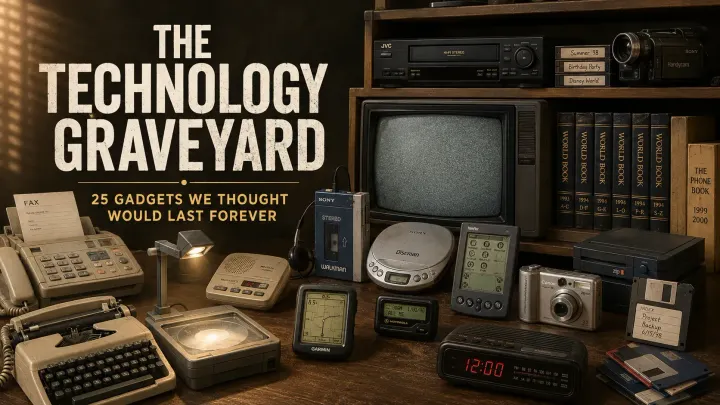
A 1995 home was full of small, single-purpose devices: clock radios, calculators, flashlights, portable music players, kitchen timers, phone books, calendars and remote controls. Each object did one job, and each occupied its own physical space. The clock radio, phone book, and portable music player also appear in our technology graveyard, which follows 25 familiar gadgets and tools beyond their years of everyday use.
That made the house more cluttered, but the purpose of each device was obvious. A clock did not require an account, and a camera did not send notifications.
What replaced them: apps, smart speakers and connected devices. A phone can now wake you, navigate, calculate, translate, photograph, record, entertain and control the lights. The drawer of gadgets became a grid of icons.
Common Questions About Technology in 1995
What technology was popular in 1995?
Popular household technology in 1995 included CRT televisions, VCRs, CD players, cassette players, landline telephones, answering machines, film cameras, camcorders, video game consoles and increasingly home computers. Clock radios and printed maps were familiar household tools, while some home offices also had fax machines.
Did people have computers at home in 1995?
Yes, although home computers were still far from universal. A June 1995 Times Mirror Center survey, now archived by Pew Research Center, found a computer in roughly 36% of U.S. households. Ownership was growing quickly as PCs became more useful for schoolwork, productivity, games, multimedia and early online services.
Did people use the internet at home in 1995?
Some Americans did, but home internet access was still relatively uncommon. Most people who connected from home used a dial-up modem over an ordinary telephone line. Connections were slow by modern standards, tied up the household phone line and were often accessed through services such as America Online, CompuServe or Prodigy.
What replaced most 1990s household technology?
There was no single replacement, but the smartphone absorbed more functions than any other device. Phones now serve as cameras, music players, maps, calculators, clocks, messaging devices and internet terminals. Streaming services replaced much of the physical media once stored on VHS tapes, CDs and DVDs, while broadband internet and Wi-Fi replaced dial-up access.
What the modern home gained—and what it lost
The technology in a 1995 home was slower, bulkier and less capable. It demanded blank tapes, fresh batteries, storage shelves and patience. Modern devices are better by almost every measurable standard, connecting instantly while combining dozens of tools into a handful of screens.
But the older home also had boundaries that now feel unusual. The television stopped when it was turned off, the phone stayed behind when the family left, and music and photographs were finite physical collections.
The great story of home technology since 1995 is consolidation. The television became a portal. The stereo became a service. The camera, map, calendar and telephone became software. The computer escaped the desk and spread into almost everything.
A 1995 home contained more machines. A modern home contains more technology—and much less of it is visible.
Recommended