The Rise of the Nintendo Wii: How Nintendo Got Everyone Playing
How the Nintendo Wii used motion controls, Wii Sports and an accessible price to bring families and first-time players into video games.
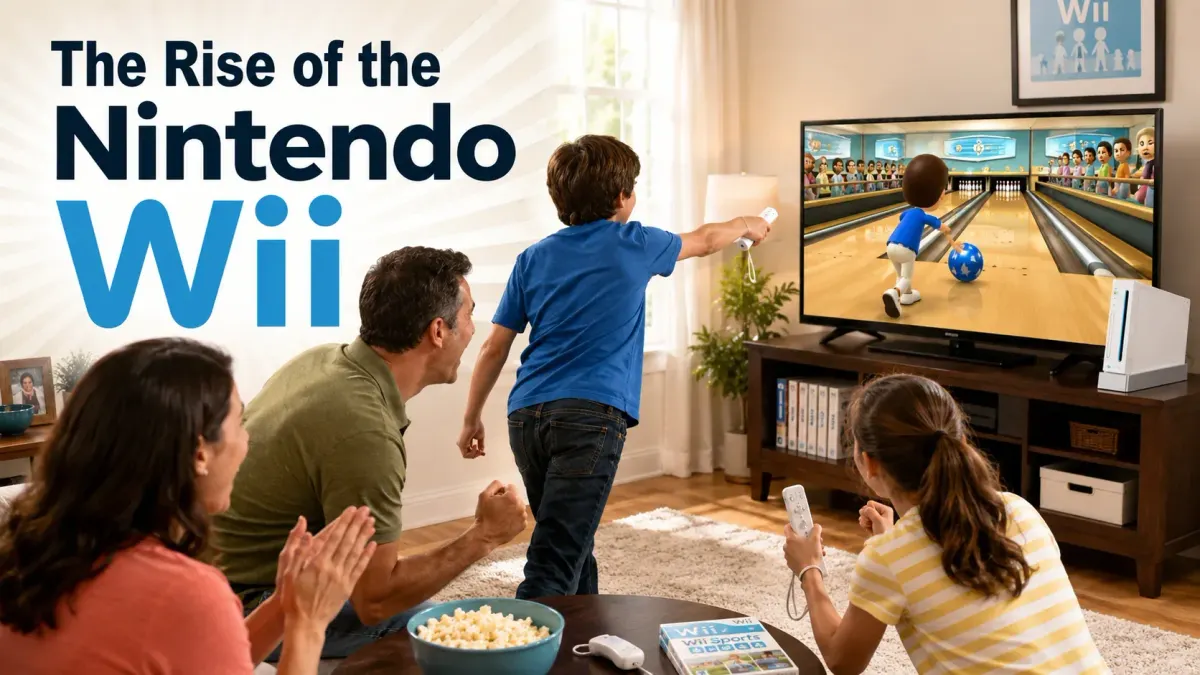
When Nintendo released the Wii in the United States on November 19, 2006, the video game industry seemed to be moving toward more power, better graphics and increasingly sophisticated games. Microsoft had already launched the Xbox 360. Sony’s PlayStation 3, with its high-definition visuals and Blu-ray drive, had launched in North America two days earlier, on November 17. Nintendo chose not to compete on those terms. Instead, it introduced a less powerful console built around a simpler idea: make video games easier for almost anyone to pick up and enjoy.
The launch dates are documented in Nintendo’s financial results and Sony’s North American launch announcement.
Wii Remote and Wii Sports
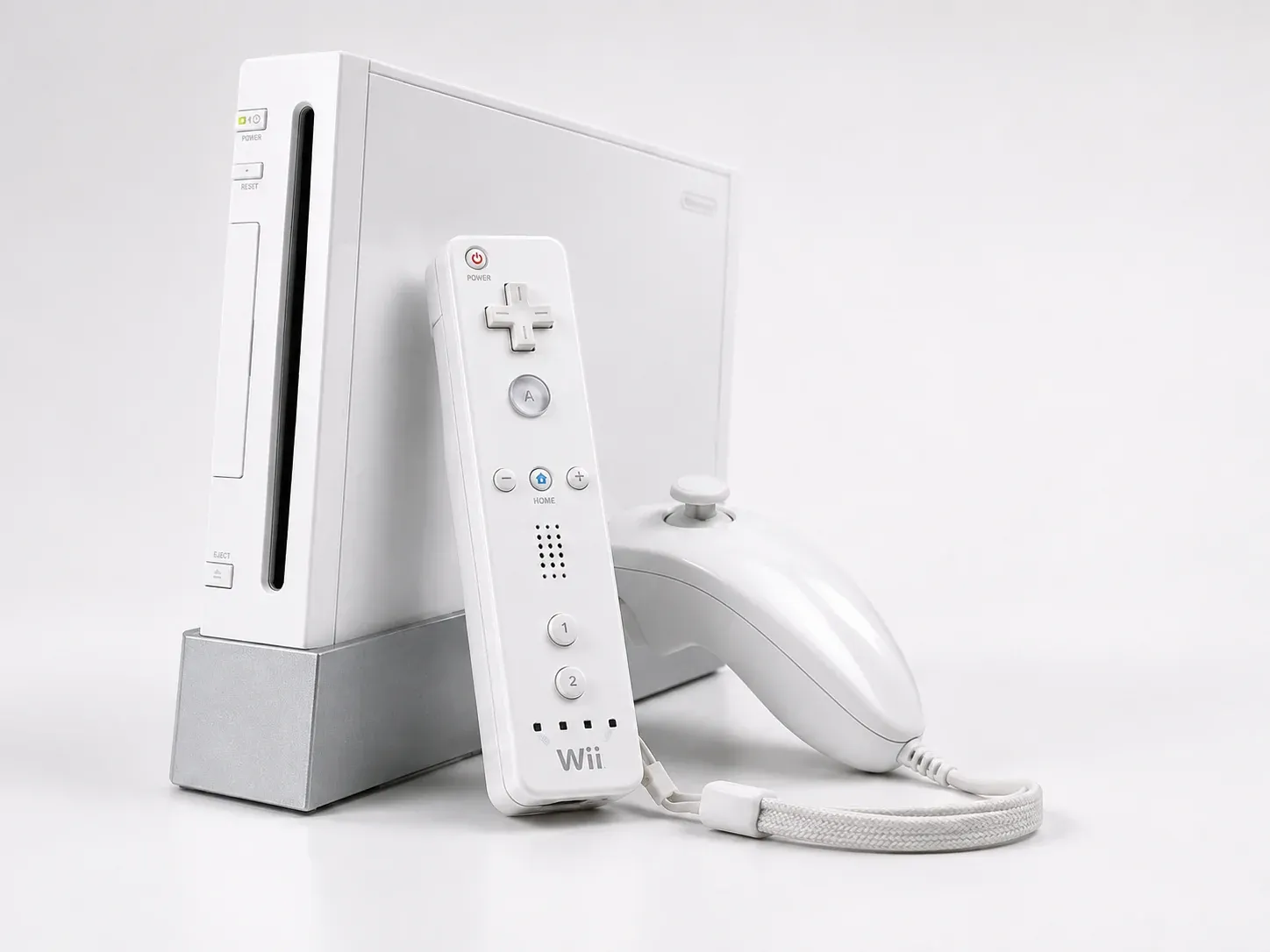
The Wii's defining feature was its motion-sensitive controller, the Wii Remote. Rather than asking players to master a traditional gamepad filled with buttons and analog sticks, many Wii games encouraged them to use familiar physical movements. Players could swing the controller like a tennis racket, point it toward the television, tilt it, shake it, or move it through the air. The technology itself was not entirely new, but Nintendo presented it in a way that felt immediate and intuitive.
Nothing demonstrated that better than Wii Sports.
Included with the system in many markets, Wii Sports offered simplified versions of tennis, bowling, baseball, golf, and boxing. The brilliance of the game was that it required very little explanation. To bowl, you made a bowling motion. To swing a tennis racket, you swung the Wii Remote. Within minutes, people who had little or no experience with video games could understand what they were supposed to do.
That simplicity helped the Wii reach an audience far beyond traditional gamers. Children played it with their parents. Grandparents joined in. Families brought it out during holidays and parties. Wii bowling leagues appeared in retirement communities, and television news programs regularly featured stories about people using the console for everything from recreation to light exercise.
A Wider Audience at $249.99

Its price also helped. The Wii launched in the United States at $249.99, making it significantly cheaper than many versions of the PlayStation 3 at the time. Demand quickly exceeded supply, and during the console's early years it was common for stores to sell through new shipments almost immediately. Finding a Wii during the holiday season became something of a challenge, with shoppers checking inventory websites, calling retailers, and lining up for new stock.
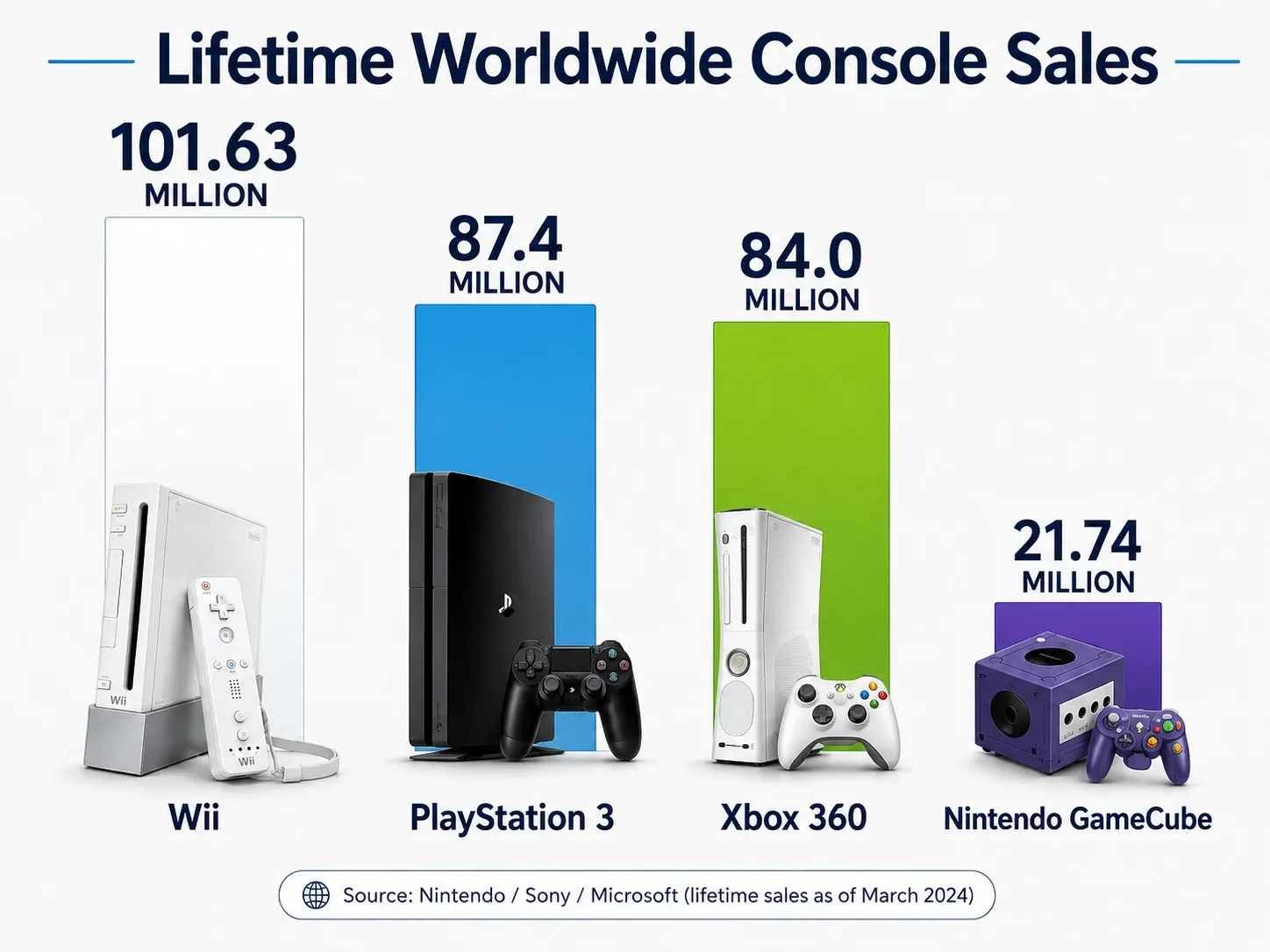
Eventually, Nintendo sold more than 101 million Wii consoles worldwide, making it one of the best-selling home video game systems ever released.
Reported worldwide hardware totals:
- Wii: 101.63 million; GameCube: 21.74 million. Nintendo calls these worldwide consolidated sales in units life-to-date. Its table is dated September 30, 2026, but does not specify separate cutoffs for these legacy systems.
- PlayStation 3: more than 87.4 million, as of March 2017.
- Xbox 360: 84 million, reported in June 2014. This is a historical reported total, not a claim of final lifetime sales.
These figures have different reporting dates and should not be treated as a single-date comparison. The chart’s March 2024 footer is not a shared measurement date. The GameCube belongs to the preceding console generation.
Although the Wii attracted millions of new players, Nintendo did not abandon the franchises that longtime fans already loved. The console became home to major releases such as Super Mario Galaxy, Mario Kart Wii, Super Smash Bros. Brawl, and The Legend of Zelda: Twilight Princess. These games gave traditional Nintendo fans plenty to enjoy while still making use of the Wii's unusual controls and broader appeal.
Mario Kart Wii became especially popular because of its social nature. The game could be played with the Wii Remote inserted into a plastic steering wheel, giving players the feeling of physically turning a car. Super Mario Galaxy, meanwhile, became one of the most acclaimed games of its generation, showing that the Wii could support ambitious and creative games even without the graphical power of its competitors.
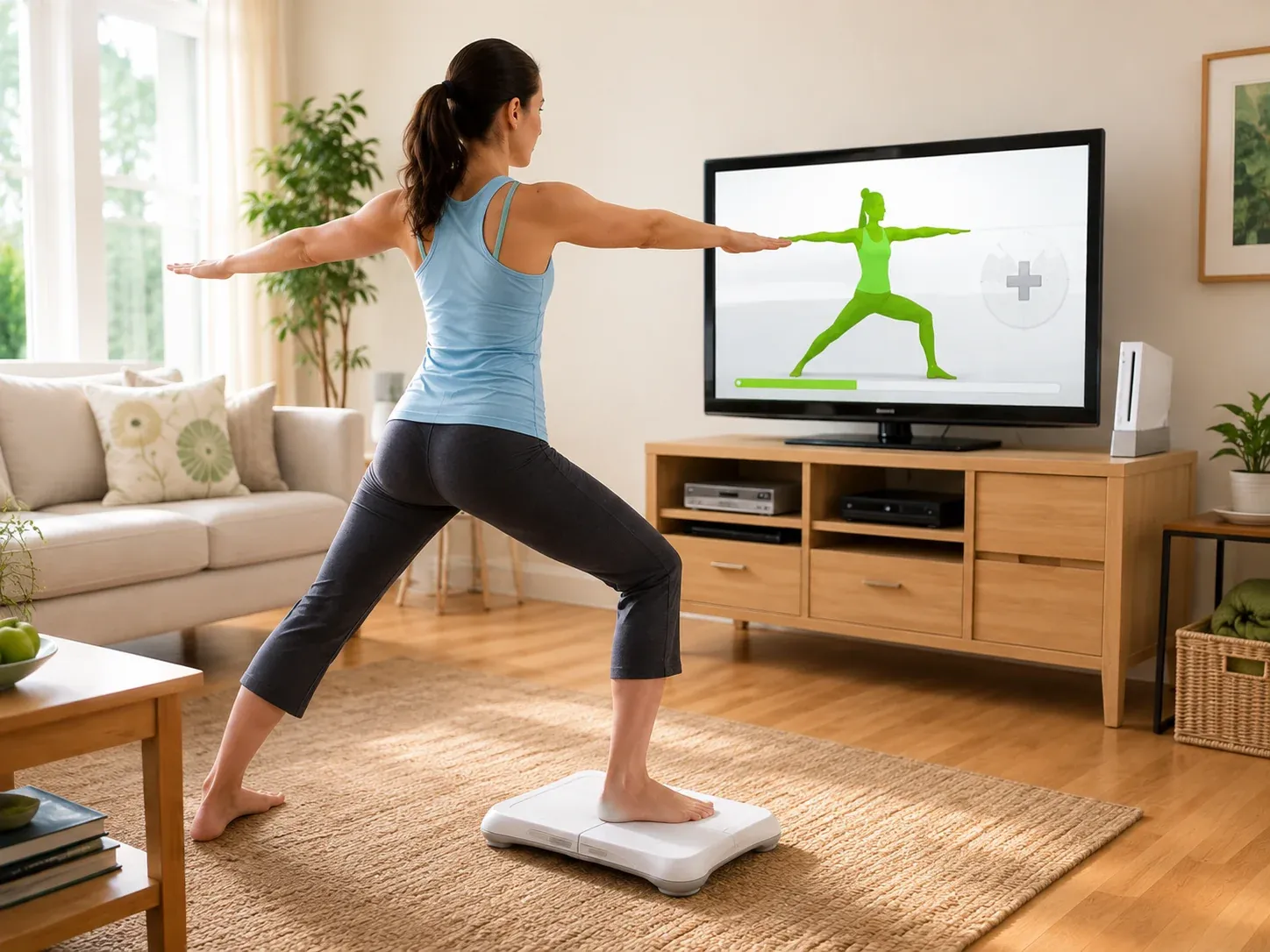
Nintendo pushed the concept even further with Wii Fit, released in the United States in 2008. The game introduced the Wii Balance Board, a scale-like accessory that measured changes in a player's weight and balance. Wii Fit offered yoga routines, strength exercises, aerobic activities, and balance games, further blurring the line between video games and other forms of entertainment.
For a time, the Wii seemed to be everywhere. Its appeal came not from convincing people that they needed the latest gaming technology, but from showing them an activity they could immediately imagine doing with friends or family. Someone could watch another person play Wii Bowling for a few seconds and understand the basic idea without needing to know anything about video games.
Motion Controls After the Wii
Nintendo understood that one of the biggest barriers to gaming was not necessarily cost or interest. It was complexity. Modern controllers could be intimidating to someone unfamiliar with them, but almost everyone understood how to swing a tennis racket or roll a bowling ball. By translating those familiar actions into gameplay, Nintendo made the console feel less like a piece of specialized gaming hardware and more like a new kind of interactive toy.
The success of the Wii quickly inspired competitors. Microsoft introduced the Kinect motion-sensing camera for the Xbox 360, while Sony released the PlayStation Move controller. For several years, motion controls became one of the biggest trends in gaming.
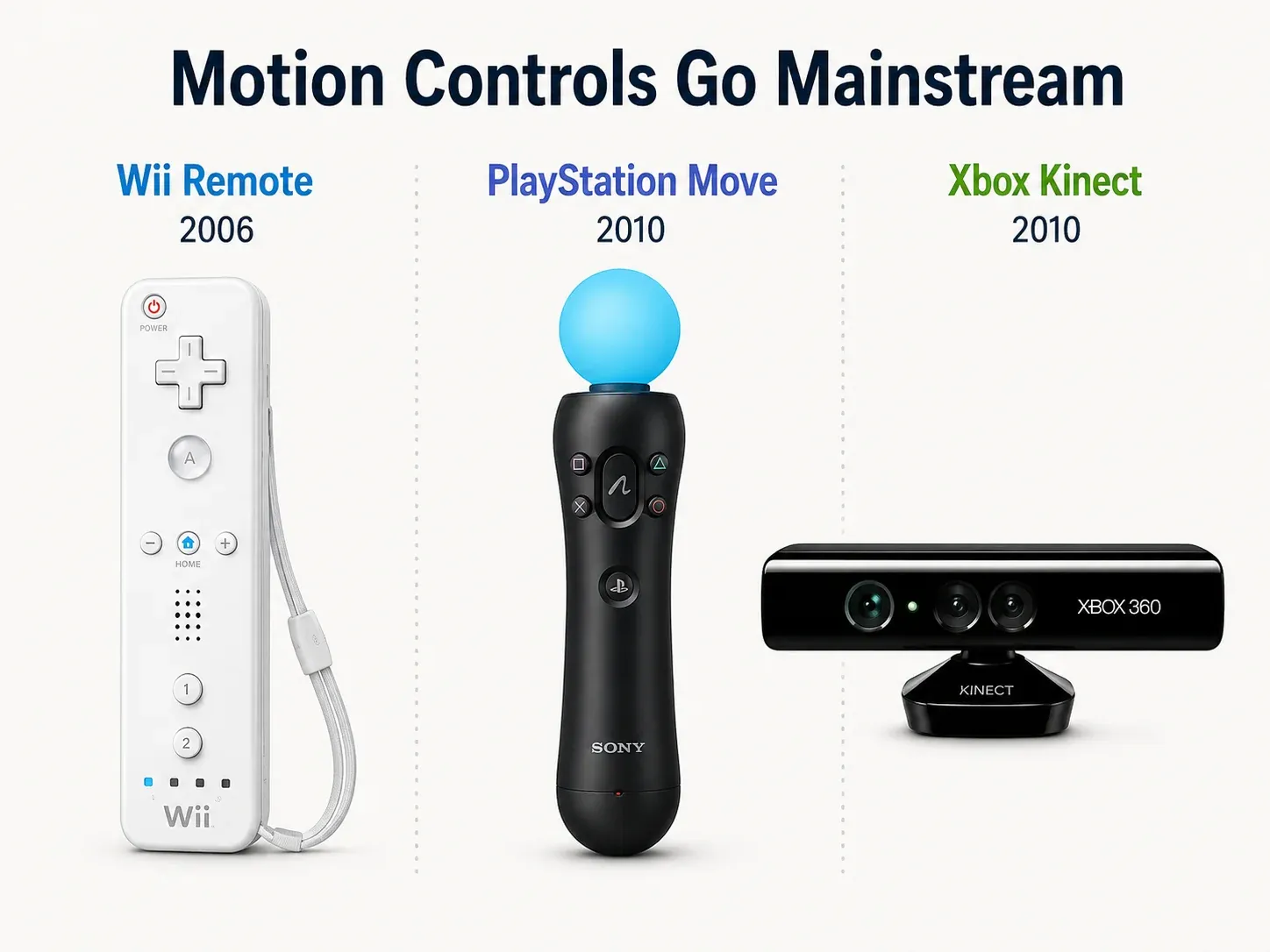
The craze eventually faded, however. Smartphones and tablets began attracting many of the casual players Nintendo had successfully brought into gaming, while dedicated console players increasingly returned to traditional controllers and more complex games. Nintendo attempted to follow the Wii with the Wii U in 2012, but the new system struggled to explain its identity and never came close to matching its predecessor's success.
The Wii’s Lasting Appeal
Nintendo later used a similar strategy when developing the Nintendo Switch. Once again, the company avoided a direct technological arms race with Sony and Microsoft and instead focused on a simple concept that could be understood immediately: a game console that worked both on a television and as a portable device.
The Wii had already proven that Nintendo did not need the most powerful hardware to succeed. It needed an idea that made people want to play.
For anyone who lived through the late 2000s, the Wii is also tied to a very specific kind of memory. It was the console that came out when relatives visited, when friends gathered in the living room, or when someone suggested playing "just one game" of bowling. The Miis appeared on screen, furniture was occasionally moved out of the way, and before long people who rarely touched video games were competing for strikes.
Nintendo didn't make the Wii successful by building the most technically advanced console of its generation. It succeeded by making gaming feel more approachable, more social, and more inclusive.
For a few years, the question wasn't whether someone considered themselves a gamer.
It was whether they wanted the next turn.
Recommended