
Exosquad at 33: The ’90s Cartoon That Treated Space War Like It Mattered
Thirty-three years after its premiere, Exosquad remains a remarkably ambitious animated war epic built on serialized storytelling, political consequence and unforgettable E-frames.
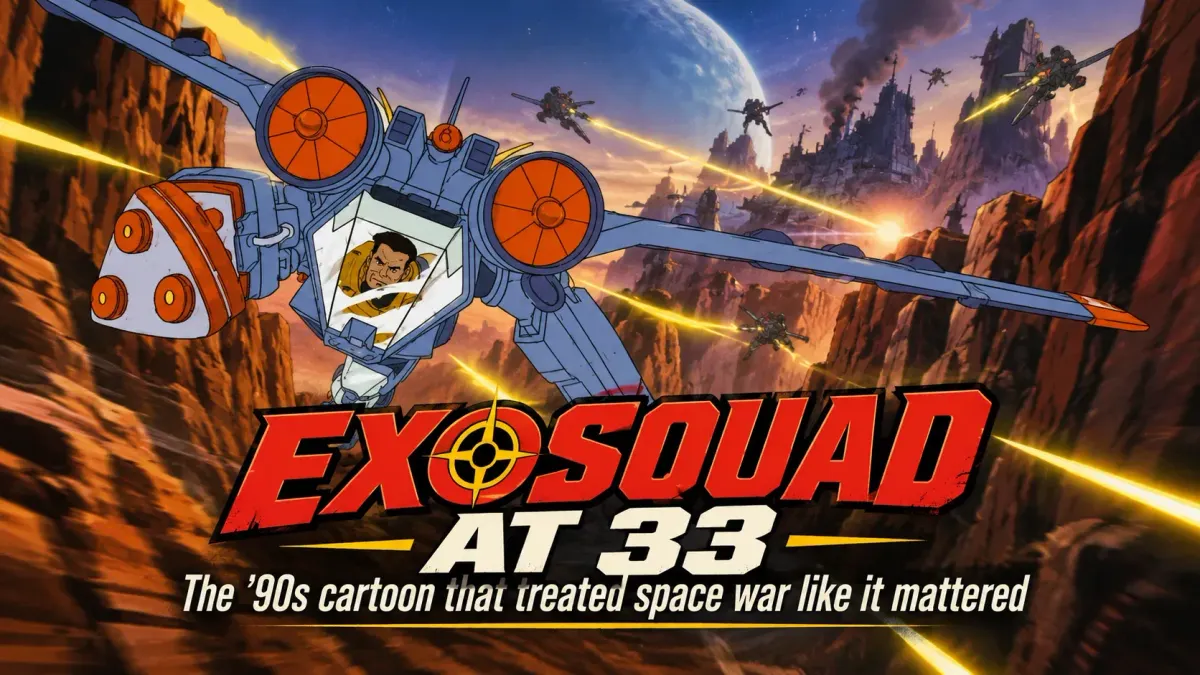
Thirty-three years after Exosquad premiered on American television, the ambitious animated war epic still feels less like a relic of Saturday morning than a blueprint for the serialized science-fiction television that followed.
On September 18, 1993, American audiences entered a future already living with the consequences of its own ambition. Humanity had spread across the solar system, engineered a new race to labor on Mars and built towering combat machines called E-frames. Then the civilization that created those wonders began to come apart.
That was the world of Exosquad.
Created by Jeff Segal and produced by Universal Cartoon Studios, the syndicated series arrived when action cartoons were still widely expected to reset the board at the end of every episode. Exosquad had other plans. Its first season told a continuous 13-part story; its second expanded the conflict across another 39 episodes. Victories carried a price, defeats altered the balance of power, and characters could not simply forget what had happened when the credits rolled.
Thirty-three years later, that ambition remains the reason Exosquad deserves more than a nostalgic footnote.
A solar system divided
Set in the early 22nd century, Exosquad begins with the Terrans—the humans of Earth, Venus and Mars—facing two escalating threats. Pirate clans raid shipping lanes, while the Neosapiens, a genetically engineered people created by humans and subjected to generations of exploitation, rise against their former masters.
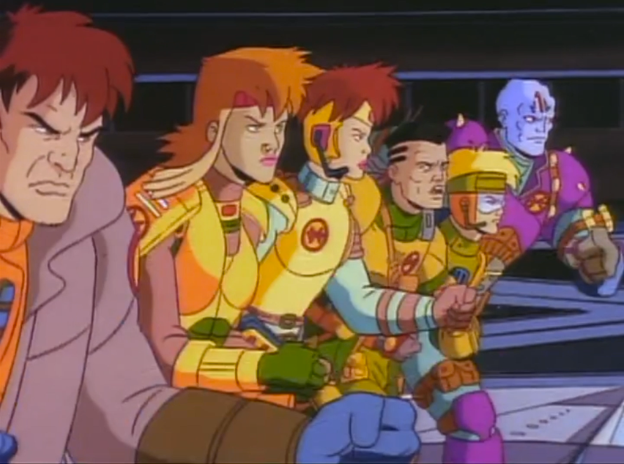
At the center of the series is Able Squad, an elite group of E-frame pilots led by Lt. J.T. Marsh. Their missions take them from asteroid fields and orbital battlefronts to occupied cities and the surfaces of other worlds. Around them, admirals, politicians, resistance fighters and rival commanders make decisions that can save—or sacrifice—entire populations.
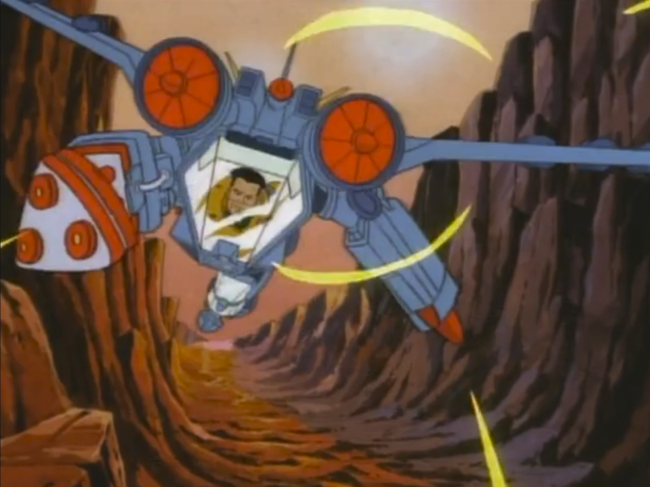
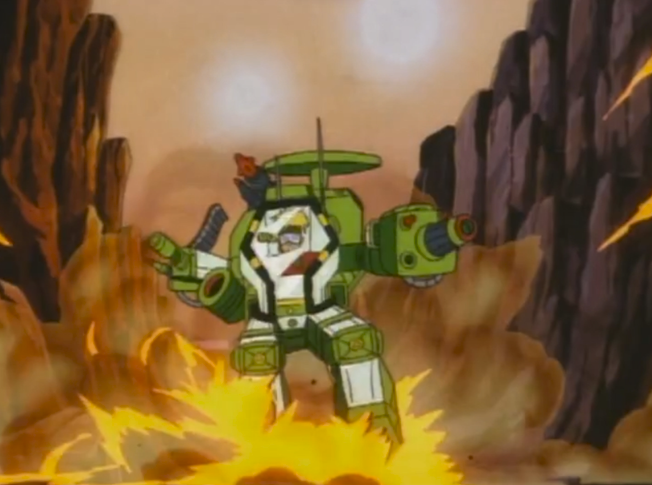
The show’s signature machines were its E-frames: powered exoskeletons large enough to function as personal spacecraft, heavy-weapons platforms and armored extensions of their pilots. Each design reflected its operator and battlefield purpose. They were perfect toy-shelf silhouettes, certainly, but the series made them feel like military equipment—launched, repaired, damaged, abandoned and sometimes destroyed.
It trusted its audience with a complicated war
The most remarkable thing about Exosquad was not that it depicted a war. Plenty of cartoons did that. It was that the series treated war as a chain of political choices, historical grievances and human consequences.
The Neosapien revolt is led by Phaeton, an authoritarian whose campaign becomes increasingly brutal. Yet the series never erases the injustice that made revolution possible. The Terrans created the Neosapiens, denied them equality and built prosperity on their labor. That history does not excuse Phaeton’s tyranny, but it prevents the conflict from collapsing into a simple story about humans fighting monsters.
Marsala, the Neosapien member of Able Squad, gives that tension a face. He opposes Phaeton without denying the suffering of his own people. His presence turns questions of loyalty, prejudice and identity into something personal for the squad—and for the audience. In a lesser show, he might have been reduced to “the alien teammate.” In Exosquad, he embodies the moral contradiction at the heart of the entire war.
The story moved forward—and remembered
Serialization gave Exosquad a sense of momentum rare in American children’s television of its era. Missions failed. Occupations continued. Alliances shifted. Characters were wounded, captured, separated from their units and forced to live with decisions made several episodes earlier.
That continuity made even straightforward action scenes more powerful. When Able Squad launched, viewers understood where its members had been, what they had lost and what the next mission might cost them. The team felt less like a lineup of action figures and more like a unit held together by training, affection, friction and necessity.
The series also understood that a military story needs more than hardware. J.T. Marsh’s discipline, Nara Burns’s intensity, Rita Torres’s command presence and Marsala’s divided heritage all mattered because the writing placed them inside a conflict larger than any single hero. The war changed them, and the series allowed those changes to accumulate.
Built to look like nothing else on American television
Exosquad began development under the name Exo-Force. In a later interview, executive producer Will Meugniot recalled that Playmates Toys had already partnered with Universal and proposed several key E-frame designs before he joined the project. Rather than conceal the toy line’s influence, the production turned those bold, unusual machines into part of the show’s identity.
Meugniot said he and Segal had both spent time in Tokyo and believed American television was ready for the kind of visual ambition and narrative sophistication they admired in Japanese animation. A 45-second pilot was animated by Sunrise in Japan, while Meugniot and the production team refined the characters, hardware and internal logic of the world.
The result did not simply imitate anime. It combined colorful, immediately readable character and machine designs with the structure of an American syndicated action series. Its battlefields stretched from narrow canyons to asteroid belts. Small squads operated beneath fleets composed of ships with radically different shapes and functions. The solar system felt inhabited, industrialized and strategically connected.
That scale made the conflict feel systemic. Able Squad could win a skirmish while the larger war worsened. A fleet could look impressive and still appear vulnerable among the asteroids. The show repeatedly reminded viewers that individual courage and strategic victory were not the same thing.
The opening was a mission statement
The Season 1 introduction compressed the show’s entire appeal into roughly a minute: pilots entering E-frames, machines diving through canyons, opposing fleets crossing the void, Able Squad charging toward deployment and weapons fire tearing across space.
It promised character, machinery and a war of enormous scale. More importantly, it presented those elements as parts of the same story. The pilots were never separate from the machines, and the spectacle was never separate from the conflict that gave it meaning.
The animation naturally shows its age. The confidence of that opening does not. Its strong colors, distinct silhouettes and rapid shifts in scale still explain the premise more effectively than pages of exposition could.
The victory that became an unfinished future
Across 52 episodes, Exosquad carried its central war much further than many serialized cartoons of its period were ever allowed to go. The struggle against Phaeton reaches a genuine conclusion, and the solar system is left to reckon with what the conflict changed.
Then the final episode, “Beyond Chaos,” opens the door to a new threat. Strange vessels appear at the edge of the known conflict, suggesting a future in which former enemies might have to face something neither side understands. The series ends with that possibility unresolved.
The cliffhanger is frustrating, but it is also fitting. Exosquad had spent two seasons arguing that history does not stop when one battle is won. Peace creates its own political and moral problems, and old divisions do not disappear because the principal villain has fallen.
Why Exosquad still matters
Modern television audiences are accustomed to season-long storytelling, flawed institutions, morally complicated enemies and action whose consequences persist. Exosquad was reaching for all of that in 1993, inside a syndicated animated series built around a line of toys.
Its achievement was not that every episode was flawless or that every idea was handled with equal depth. It was that the show consistently believed younger viewers could follow a large cast, remember political history and understand that injustice can help create a conflict without justifying the atrocities committed in its name.
Beneath the armor, starships and laser fire was a series willing to ask who builds a society, who benefits from it and what happens when exploitation is allowed to harden into war. It gave its heroes victories without pretending courage could erase consequences. It allowed its villains to emerge from recognizable grievances without confusing explanation with absolution.
That combination is why Exosquad remains worth rediscovering. Thirty-three years after its premiere, it looks less like an artifact of Saturday-morning television than a blueprint left waiting for the rest of television to catch up.
Want to see how those unmistakable characters, E-frames and space battles might translate to the screen today? Continue with our visual companion: What a Live-Action Exosquad Remake Could Look Like.
Research sources: U.S. premiere and episode dates: IMDb episode guide and Rotten Tomatoes, Season 1. Production background and visual development: ComicMix interview with executive producer Will Meugniot. Episode and archival production material: Exosquad Archive.
Recommended
What Would Your Wizarding Career Be?
Answer 25 personality questions and discover whether you're destined to be an Auror, Healer, Professor, Curse-Breaker, Wandmaker or another wizarding professional.
10 of the Most Recognizable Careers in the Harry Potter Wizarding World
From Aurors and Healers to Hogwarts professors and Quidditch players, explore 10 of the most recognizable jobs in the Harry Potter Wizarding World.
The Technology Graveyard: 25 Gadgets We Thought Would Last Forever
From VCRs and pagers to PalmPilots and portable DVD players, revisit 25 once-essential gadgets that technology left behind.