The Biggest Grocery Store Chains in America, Ranked by Number of Locations
Compare America’s 20 largest grocery store chains by U.S. locations, including Walmart, ALDI, Publix and Kroger, using September 2026 data.
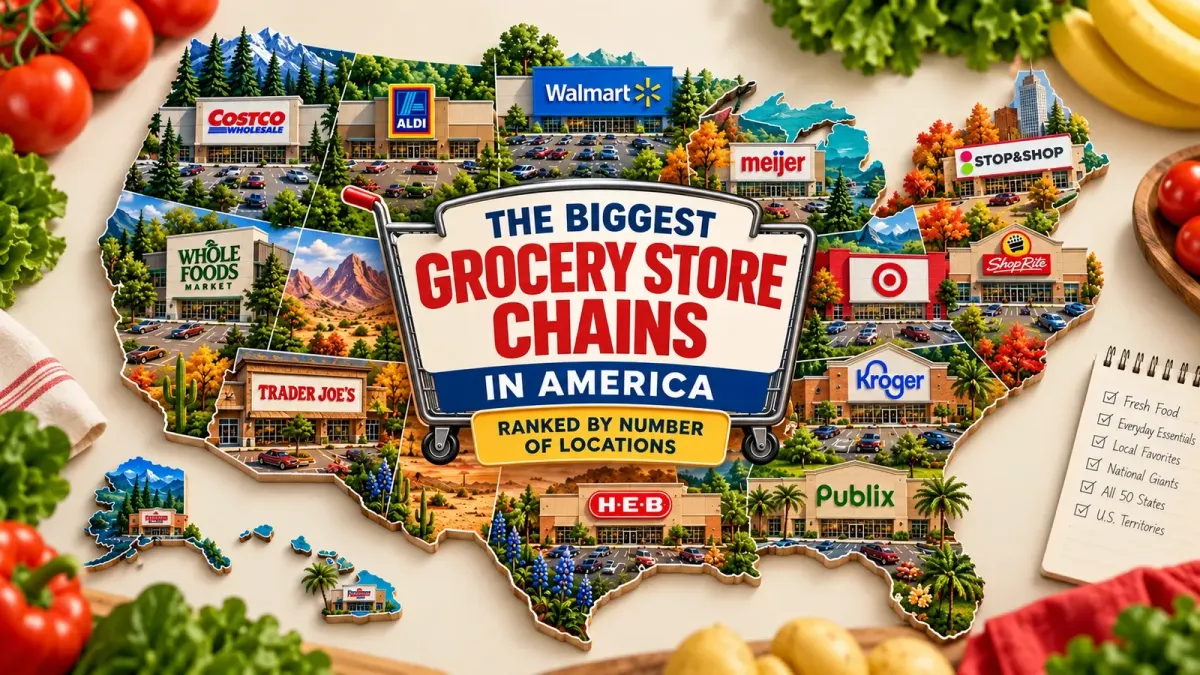
Kroger operates roughly 2,700 supermarkets, yet it ranks fifth on this list, below Publix. The reason is on the storefront: many Kroger-owned stores are called Ralphs, Fred Meyer, Harris Teeter or something else entirely. Count the names shoppers recognize rather than the companies behind them, and the order changes.
Walmart still leads by a wide margin. But farther down, the ranking brings together businesses that look very different from one another: warehouse clubs, compact discount grocers and regional supermarkets with hundreds of stores concentrated in a handful of states. Location counts reveal how widely a chain is available, even when its reputation suggests something bigger—or smaller.
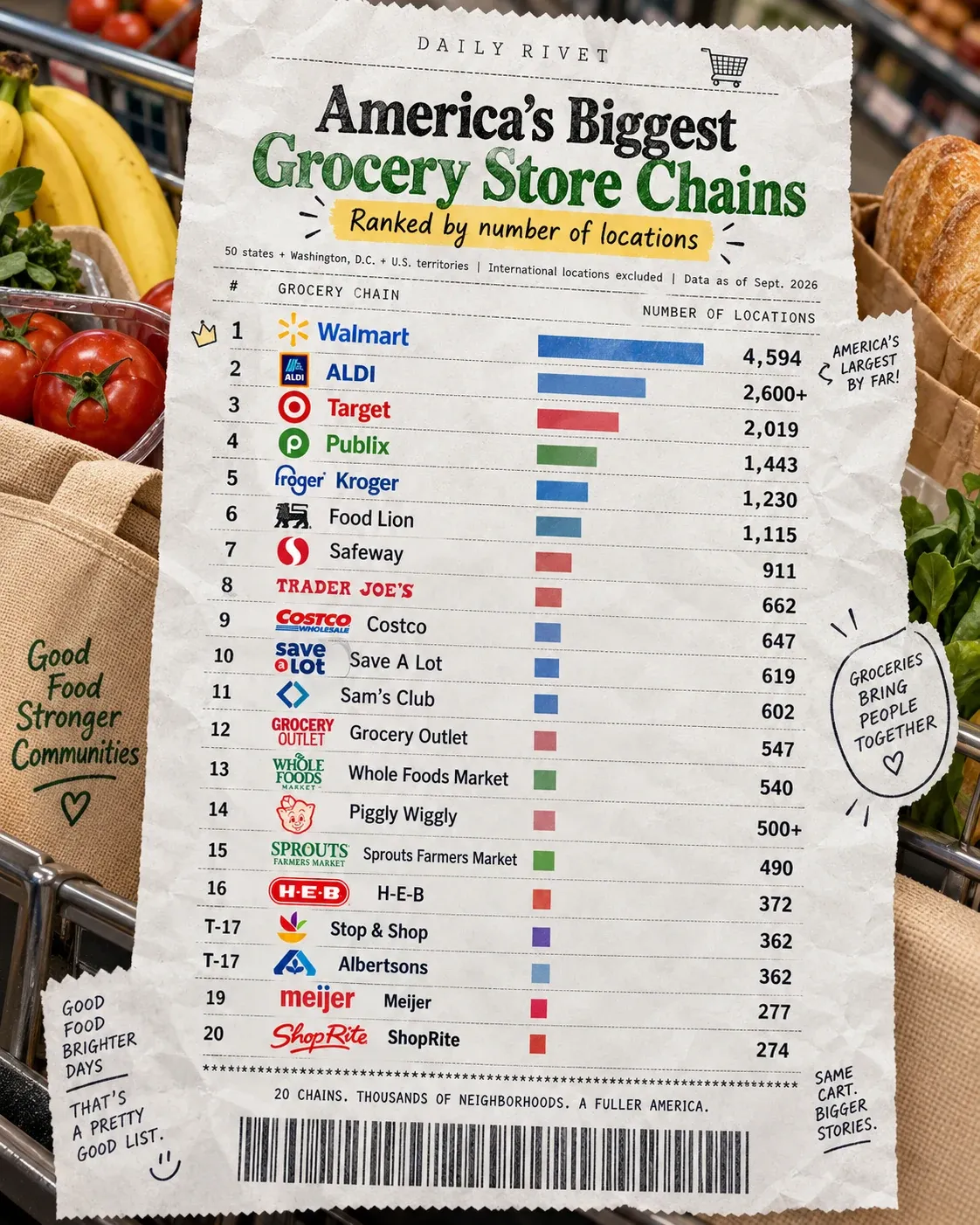
We ranked individual store banners, separating Food Lion from Stop & Shop, Safeway from Albertsons, and Whole Foods from its owner, Amazon. Walmart, Target, Costco and Sam’s Club are included because groceries form a substantial part of their everyday business; this is a list of places people buy food, extending beyond conventional supermarkets.
The counts cover the 50 states, Washington, D.C., and U.S. territories, excluding international stores. They draw on company reports, SEC filings and store directories available through September 2026. Reporting dates differ, and some chains publish rounded totals, so the figures should be read as a documented snapshot.
America’s 20 Biggest Grocery Store Chains
| Rank | Grocery chain | U.S. locations |
|---|---|---|
| 1 | Walmart | 4,594 |
| 2 | ALDI | 2,600+ |
| 3 | Target | 2,019 |
| 4 | Publix | 1,443 |
| 5 | Kroger | 1,230 |
| 6 | Food Lion | 1,115 |
| 7 | Safeway | 911 |
| 8 | Trader Joe’s | 662 |
| 9 | Costco | 647 |
| 10 | Save A Lot | 619 |
| 11 | Sam’s Club | 602 |
| 12 | Grocery Outlet | 547 |
| 13 | Whole Foods Market | 540 |
| 14 | Piggly Wiggly | 500+ |
| 15 | Sprouts Farmers Market | 490 |
| 16 | H-E-B | 372 |
| T-17 | Stop & Shop | 362 |
| T-17 | Albertsons | 362 |
| 19 | Meijer | 277 |
| 20 | ShopRite | 274 |
1. Walmart — 4,594 locations
Walmart’s lead comes from three kinds of stores: 3,569 Supercenters, 351 traditional discount stores and 674 Neighborhood Markets across the United States and Puerto Rico. Together they account for 4,594 locations, before adding any Sam’s Clubs.
The Supercenters supply most of that reach, combining a grocery shop with the rest of a general-merchandise store. Neighborhood Markets provide a smaller format focused on food and everyday essentials. A supermarket-only ranking would leave out much of this network, even though it is where many households do their regular grocery shopping.
2. ALDI — More Than 2,600 locations
ALDI’s compact stores add up to a network larger than Target’s and more than twice the size of the Kroger banner. In September 2026, the company reported more than 2,600 U.S. locations and said it expected to approach 2,800 as expansion continued.
Those stores operate under essentially one name. Where a shopper might encounter several different Kroger-owned chains while traveling across the country, ALDI’s expansion keeps putting the same sign above the door. Its second-place position reflects how far that single discount-grocery brand has spread.
3. Target — 2,019 locations
Target reported 2,019 stores in its quarterly filing, measured as of August 1, 2026. Food shares those stores with clothing, electronics and other merchandise, but fresh, frozen and packaged groceries have become a regular part of the offering. Including Walmart while excluding Target would draw a difficult line between two retailers that both combine groceries with general merchandise.
4. Publix — 1,443 locations
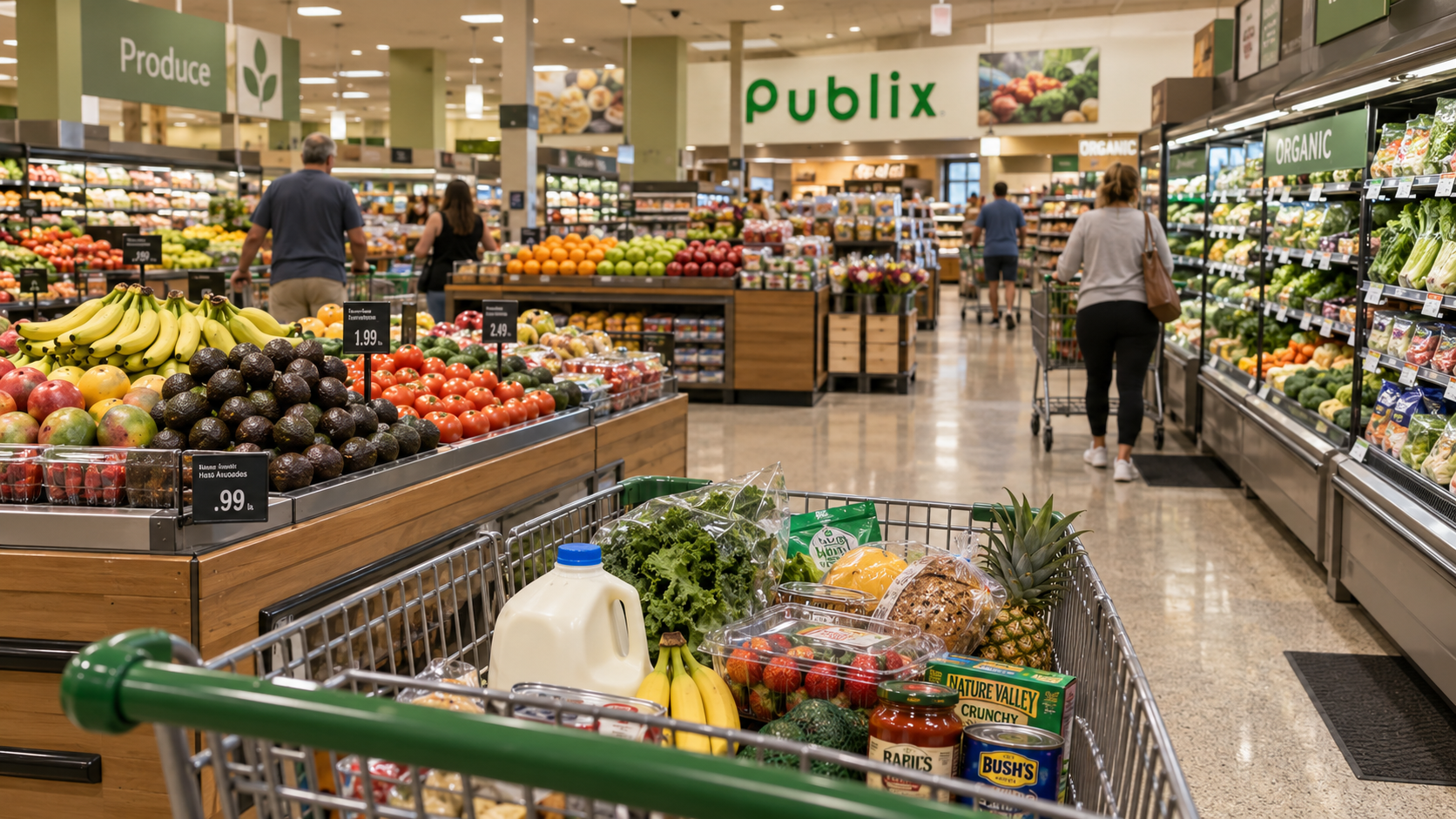
For a shopper in Florida, Publix’s fourth-place ranking may seem unsurprising. Close to 900 of its 1,443 stores are in that state, with the rest of the employee-owned chain concentrated elsewhere in the Southeast.
That is a substantial network to fit into a relatively small part of the country. Publix can be a routine sight in one community and entirely absent from another, without needing national coverage to outrank several chains whose names are familiar nationwide.
5. Kroger — 1,230 locations
Kroger’s store directory lists 1,230 locations carrying the Kroger name. Its parent company operates roughly 2,700 supermarkets overall, including Ralphs, Fred Meyer, Harris Teeter, King Soopers, Fry’s and Smith’s.
The difference is large enough to change how readers interpret the ranking. Fifth place describes the reach of the Kroger sign, rather than the full company. Someone shopping at a different regional banner may be buying from the same business without seeing the Kroger name on the building.
6. Food Lion — 1,115 locations
Food Lion’s approximately 1,115 supermarkets are concentrated in the Southeast and Mid-Atlantic. Like Publix, it reaches more than a thousand locations within a regional territory. Its owner, Ahold Delhaize, also operates Stop & Shop and other U.S. chains, giving the parent company a wider reach than the Food Lion storefronts counted here.
7. Safeway — 911 locations
Safeway’s current directory lists 911 stores, considerably more than the 362 carrying the Albertsons name. Both belong to Albertsons Companies, whose total network exceeds 2,000 supermarkets across banners that also include Jewel-Osco, ACME and Vons.
The parent’s name can therefore give a misleading impression of what its stores look like on the ground. Within this company, Safeway is the larger of the two separately ranked banners.
8. Trader Joe’s — 662 locations
Trader Joe’s reaches approximately 662 locations with stores much smaller than a Walmart Supercenter and a narrower product selection than most conventional supermarkets. Private-label products and a more limited assortment are central to its format.
Its position alongside Costco makes the limitations of a store-count ranking easy to see. A compact Trader Joe’s and a large warehouse each count as one location, regardless of how much floor space, inventory or sales that location represents.
9. Costco — 647 locations
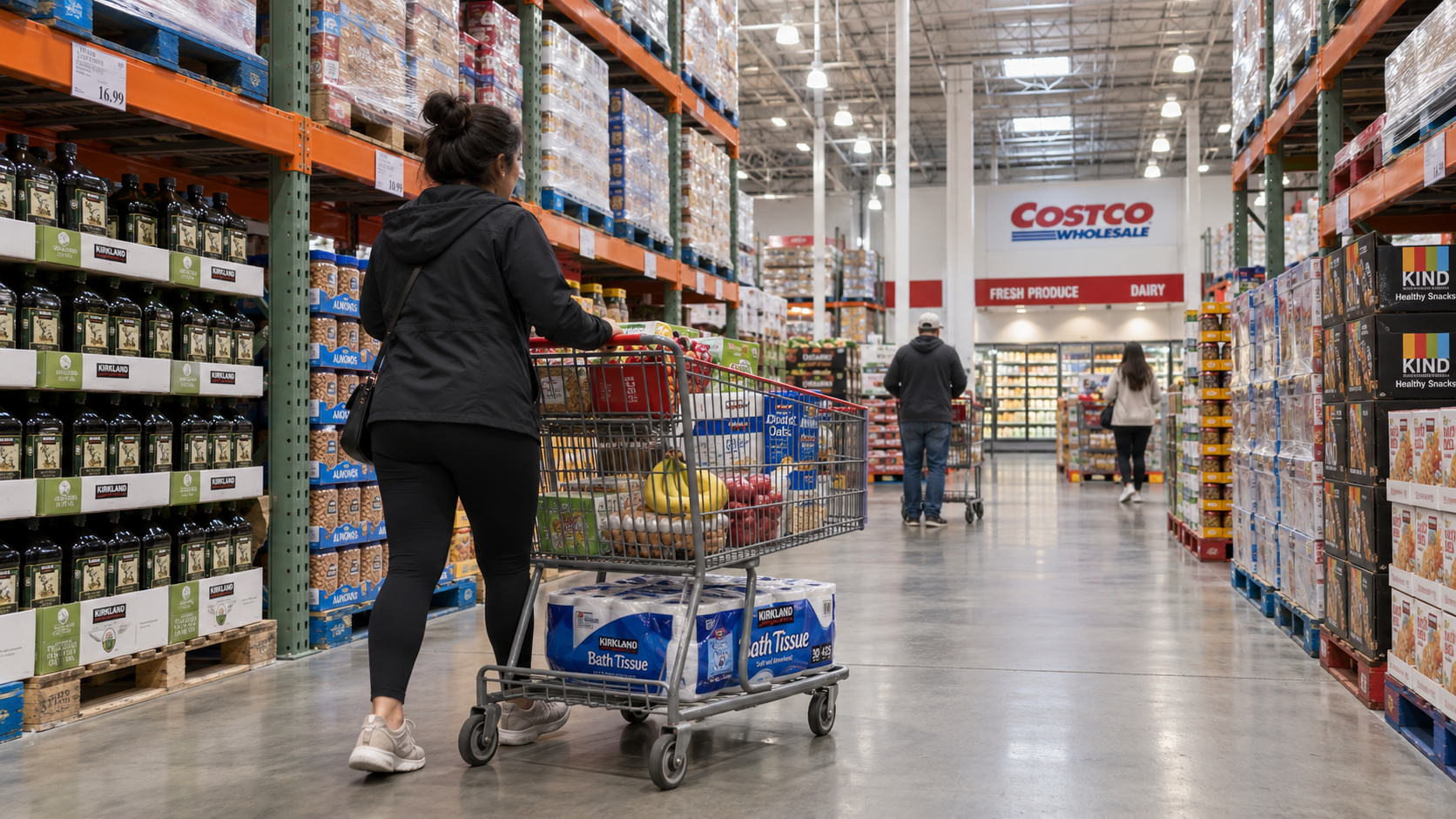
Costco reported 647 warehouses in the United States and Puerto Rico in September 2026. Fresh meat, produce, dairy, bakery goods, frozen food and bulk pantry items make those warehouses part of many customers’ grocery routine, even though the membership model and package sizes differ from a conventional supermarket. Overseas Costco locations are excluded.
10. Save A Lot — 619 locations
Save A Lot’s count needs more care than most. The discount chain has historically described a network of roughly 650 stores, while the current location data used for this ranking identifies approximately 619 active locations. We use the latter figure, which places it just above Sam’s Club.
Many of those stores operate through licensed independent owners. A shared sign ties the network together, but ownership is less centralized than at Walmart or Publix, adding another complication when reconciling broad company descriptions with individual store listings.
11. Sam’s Club — 602 locations
Sam’s Club adds 602 U.S. and Puerto Rico locations to Walmart’s wider business. It has its own name, membership and warehouse-club format, so these stores sit alongside Costco in the ranking rather than being added to Walmart’s 4,594 locations.
12. Grocery Outlet — 547 locations
Grocery Outlet reported 547 stores in 16 states as of July 2026. Its independently operated stores have spread beyond the chain’s original West Coast concentration, although recent closures of underperforming locations have pulled the total down. Older figures may therefore describe a larger network than the one used here.
13. Whole Foods Market — 540 locations
Whole Foods’ 540 U.S. stores put it only seven locations behind Grocery Outlet. The narrow gap brings two different grocery-market positions together in the ranking: a discount grocer and a chain associated with natural and organic food.
Amazon has owned Whole Foods since 2017. The stores nevertheless retain the Whole Foods identity that customers visit, which is the unit this list measures.
14. Piggly Wiggly — More Than 500 locations
Piggly Wiggly describes its network as more than 500 stores across 18 states. Many are independently owned, making a continuously updated exact count harder to establish. The company’s rounded description is retained here; it should not be read as an exact distance from the chains immediately above or below it.
15. Sprouts Farmers Market — 490 locations
Sprouts reported 490 stores in 25 states as of June 28, 2026. Produce, natural foods and health-oriented products define its offering as it expands into additional markets. Its network approaches 500 locations, though it remains smaller than Trader Joe’s and far below ALDI’s store count.
16. H-E-B — 372 locations
All approximately 372 stores counted under the H-E-B banner are in Texas. Central Market, Joe V’s Smart Shop and other separately named formats owned by the company are excluded.
H-E-B gives the regional story its clearest example: hundreds of stores within one state can create a substantial local presence while leaving the chain well down a national location ranking. For shoppers outside its territory, that presence is easy to underestimate.
Tie-17. Stop & Shop — 362 locations
Stop & Shop’s state-by-state directory supports a total of 362 supermarkets across Connecticut, Massachusetts, New Jersey, New York and Rhode Island. It is another Ahold Delhaize banner, serving a different regional market from Food Lion and operating about a third as many stores.
Tie-17. Albertsons — 362 locations
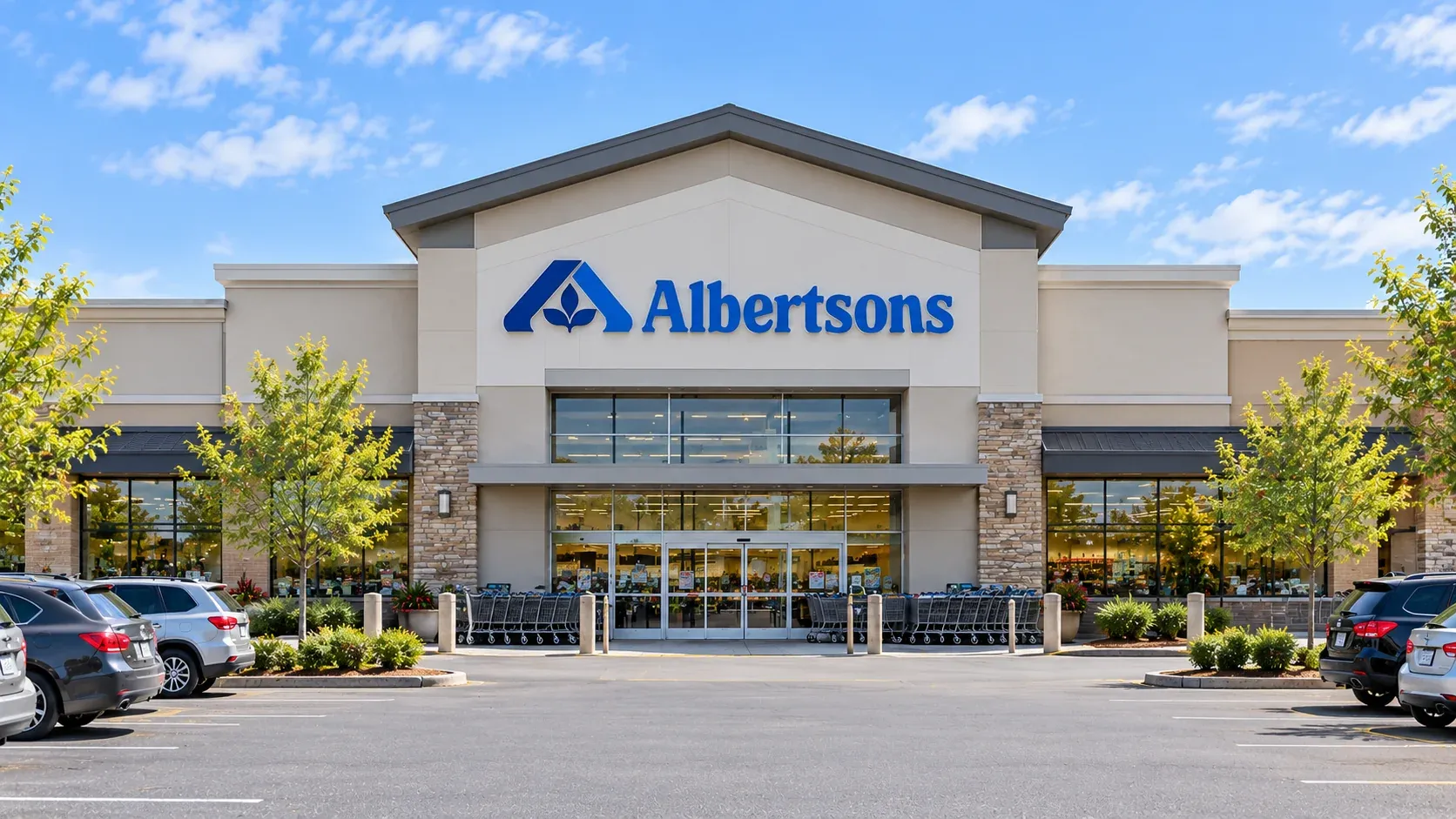
The 362 locations in this ranking are stores carrying the Albertsons name, tying the chain with Stop & Shop. Albertsons Companies, the parent business, also owns Safeway, Jewel-Osco, Vons and other regional chains, but their stores are excluded from this total.
19. Meijer — 277 locations
Meijer’s approximately 277 namesake stores are predominantly in the Midwest. Its supercenters combine a full grocery offering with clothing, electronics, pharmacy products and other departments. In format, it belongs nearer Walmart and Target than a food-only supermarket, although its geographic reach is much more regional.
20. ShopRite — 274 locations
ShopRite takes the final position with 274 locations across Connecticut, Delaware, Maryland, New Jersey, New York and Pennsylvania, according to its state-by-state directory. Stores are operated by members of Wakefern Food Corp., so the common banner covers businesses with different ownership.
Its place at the cutoff is close: Meijer is only three stores ahead, and BJ’s Wholesale Club, with 267 clubs, is seven behind. Changes affecting a handful of stores can matter more here than they do near the top of the list.
What the Ranking Reveals About Grocery Shopping
Walmart’s lead is the clearest national finding. Even without Sam’s Club, its nearly 4,600 locations exceed ALDI’s reported total by roughly 2,000 and amount to more than three times Publix’s network. The breadth of that general-merchandise business is also part of the geography of American grocery shopping.
Beyond Walmart, the list gives a less uniform picture. Publix and Food Lion each operate more than a thousand stores while remaining concentrated in particular regions. H-E-B fits hundreds into Texas alone. A chain can occupy a large part of a shopper’s everyday world without appearing in much of the rest of the country.
National recognition and local availability therefore do not always move together. Trader Joe’s and Whole Foods are widely recognized names, yet each has fewer stores than Food Lion. Meanwhile, a customer moving between regional chains may be changing storefronts without changing corporate owners: Ahold Delhaize’s banners include Food Lion, Stop & Shop, Hannaford, Giant Food and The GIANT Company, while Kroger and Albertsons Companies operate their own collections of local names. The ranking captures what shoppers encounter; a ranking of owners would describe a different kind of scale.
For a look beyond groceries, see our ranking of the retail companies with the most U.S. stores.
Just Outside the Top 20
BJ’s Wholesale Club’s 267 clubs place it close to the cutoff. Harris Teeter follows with roughly 250 locations, while Lidl has surpassed 200 U.S. stores and Jewel-Osco operates about 190. Other regional names outside the list include The GIANT Company, Hannaford, Giant Eagle, Giant Food, ACME Markets, WinCo Foods and Wegmans.
Their absence says little about their importance within a particular market. With this list’s cutoff around 275 stores, even an established regional chain can fall short of the top 20.
Methodology
DailyRivet ranked individual consumer-facing grocery banners by location count, separating brands that share a parent company. General-merchandise retailers and warehouse clubs were included when groceries form a substantial part of the everyday store offering. Counts cover the 50 states, Washington, D.C., and U.S. territories, including Puerto Rico; international locations are excluded.
Figures come from company disclosures, SEC filings, official store directories and location data available through September 2026. They reflect different reporting dates rather than a single simultaneous census. Rounded and estimated counts retain qualifiers such as “approximately,” “more than,” or a plus sign. In particular, open-ended totals such as Piggly Wiggly’s “500+” limit the precision of its position relative to neighboring entries.
Recommended