America’s Largest School Districts: How the Rankings Changed Over 30 Years

Thirty years ago, the list of America’s largest school districts looked noticeably different from the one we see today. New York City and Los Angeles already towered over the rest of the country, while Chicago, Philadelphia, Detroit and other traditional big-city school systems occupied many of the highest positions. Florida was represented by several enormous countywide districts, but many of the fast-growing suburban systems that now rank among the nation’s largest were still much farther down the list.
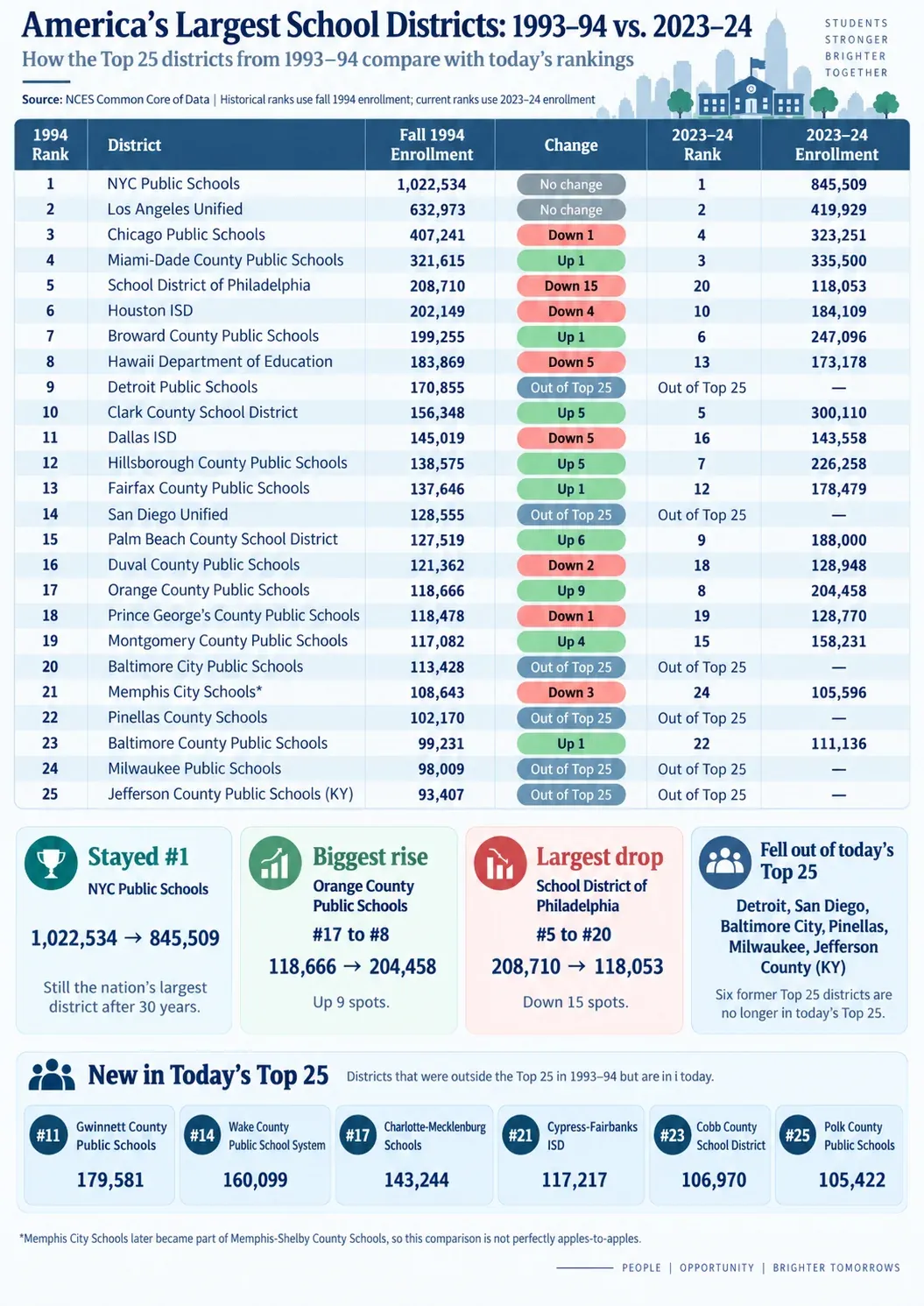
Three decades later, some of those familiar names remain near the top, but the number of students behind them — and the geography of where America’s largest school systems are located — has shifted significantly. Data from the National Center for Education Statistics’ Common Core of Data makes it possible to compare the country’s largest districts using the same federal source across both periods. Looking at fall 1994 enrollment alongside the latest complete 2023–24 figures reveals a broad movement away from several older urban school systems and toward fast-growing districts in the South and West.
New York City Public Schools is still the largest school district in America, with 845,509 students in the 2023–24 NCES data. Los Angeles Unified remains second with 419,929 students, while Miami-Dade County Public Schools has moved into third place.
New York and Los Angeles Still Lead the Country
One of the most striking parts of the comparison is how little the very top of the ranking has changed. New York City remains by far the largest public school system in the United States. NCES counted 1,022,534 students in the district in fall 1994. By 2023–24, enrollment had fallen to approximately 845,509 students, a decline of roughly 177,000 students, or about 17%.
Despite that decrease, New York has comfortably retained the No. 1 position.
Los Angeles Unified has followed a similar path. The district had 632,973 students in fall 1994 compared with approximately 419,929 students today. That is a drop of more than 213,000 students, yet Los Angeles remains the second-largest district in the country.
Together, New York and Los Angeles illustrate one of the broader patterns in the data. America’s two largest school districts are still America’s two largest school districts, but both are considerably smaller than they were three decades ago.
Several Traditional Big-City Districts Have Shrunk
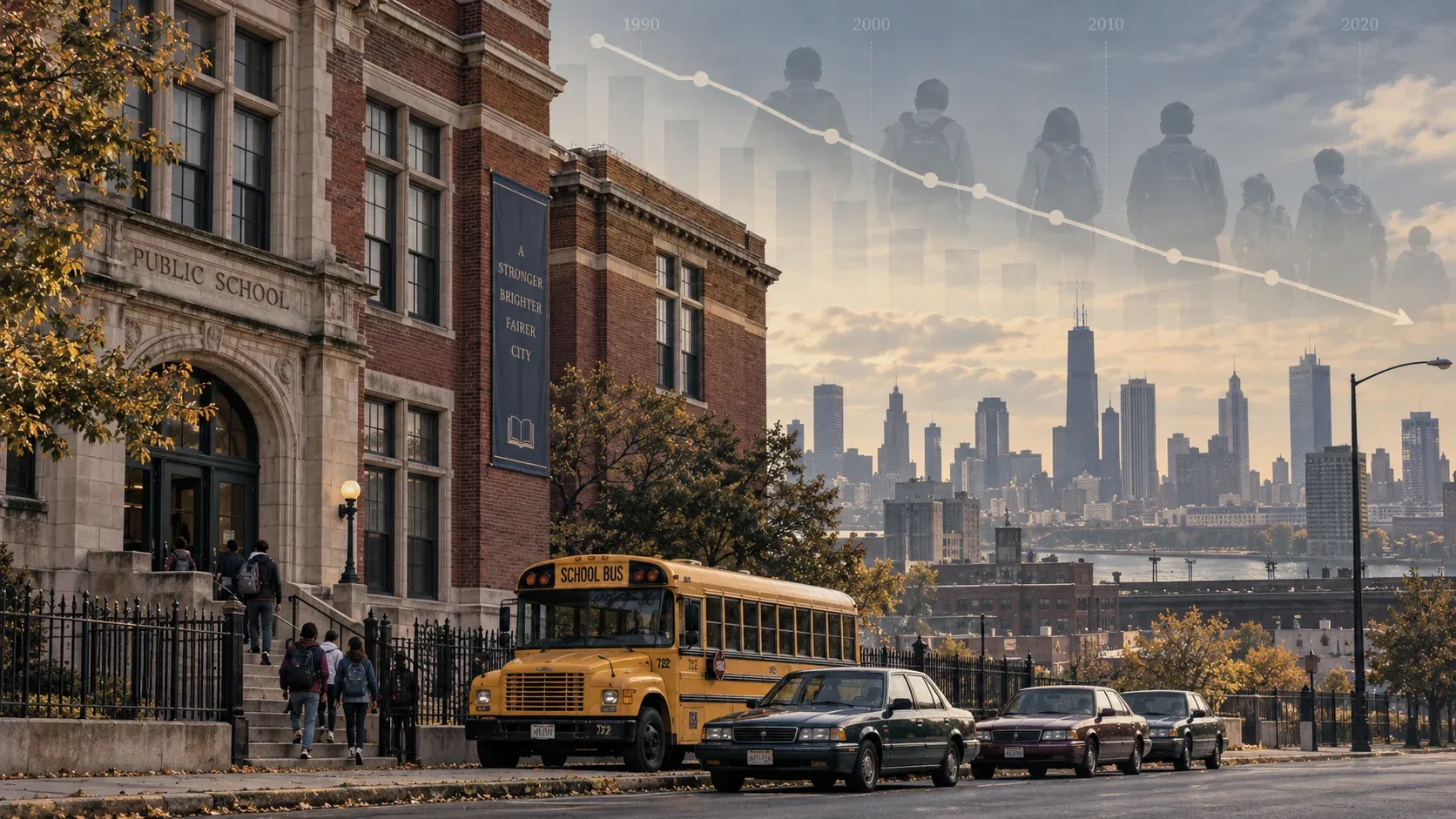
Farther down the list, the changes are more dramatic. Chicago Public Schools enrolled 407,241 students in fall 1994. Its modern enrollment is approximately 323,251, a decline of about 21%. Chicago remains one of the largest districts in the country, but it has slipped from third to fourth as Miami-Dade County moved ahead.
Philadelphia has experienced an even larger shift. In the mid-1990s, the School District of Philadelphia ranked fifth nationally with 208,710 students. Today, it enrolls approximately 118,053, a decline of more than 90,000 students, or roughly 43%. That drop has pushed Philadelphia from No. 5 to around No. 20 nationally.
Detroit’s transformation has been even more significant. Detroit Public Schools had 170,855 students in fall 1994, making it the ninth-largest district in the country. Today, Detroit is no longer anywhere close to the national Top 25. Milwaukee, which had 98,009 students in 1994, has followed a similar downward trajectory.
These districts remain important urban school systems, but their scale relative to rapidly growing districts elsewhere has changed substantially.
Florida Became Even More Dominant
Florida tells a very different story. Because the state generally organizes public education through large countywide districts, several Florida systems were already among the country’s largest in the 1990s. Many of them have continued to grow.
Miami-Dade County Public Schools had 321,615 students in fall 1994 and now has approximately 335,500, enough to move from fourth to third nationally. Broward County grew from 199,255 students to roughly 247,096, while Palm Beach County increased from 127,519 to approximately 188,000.
The Tampa and Orlando areas experienced some of the strongest growth. Hillsborough County Public Schools increased from 138,575 students to approximately 226,258, while Orange County Public Schools rose from 118,666 to roughly 204,458.
Orange County’s rise is especially notable because it moved from No. 17 nationally in 1994 to No. 8 today. The combination of Florida’s countywide district structure and decades of population growth has made the state one of the most prominent forces in the modern rankings.
Clark County Became One of the Country’s Biggest Districts
Clark County School District, which includes Las Vegas and surrounding communities, is another major growth story. In fall 1994, Clark County ranked 10th nationally with 156,348 students. By 2023–24, enrollment had grown to approximately 300,110, pushing the district into the No. 5 position.
That growth reflects the explosive expansion of the Las Vegas metropolitan area over the past several decades. Clark County now enrolls nearly twice as many students as it did in the mid-1990s and stands alongside New York, Los Angeles, Miami-Dade and Chicago as one of the country’s five largest school systems.
The Rise of the Sun Belt Suburbs
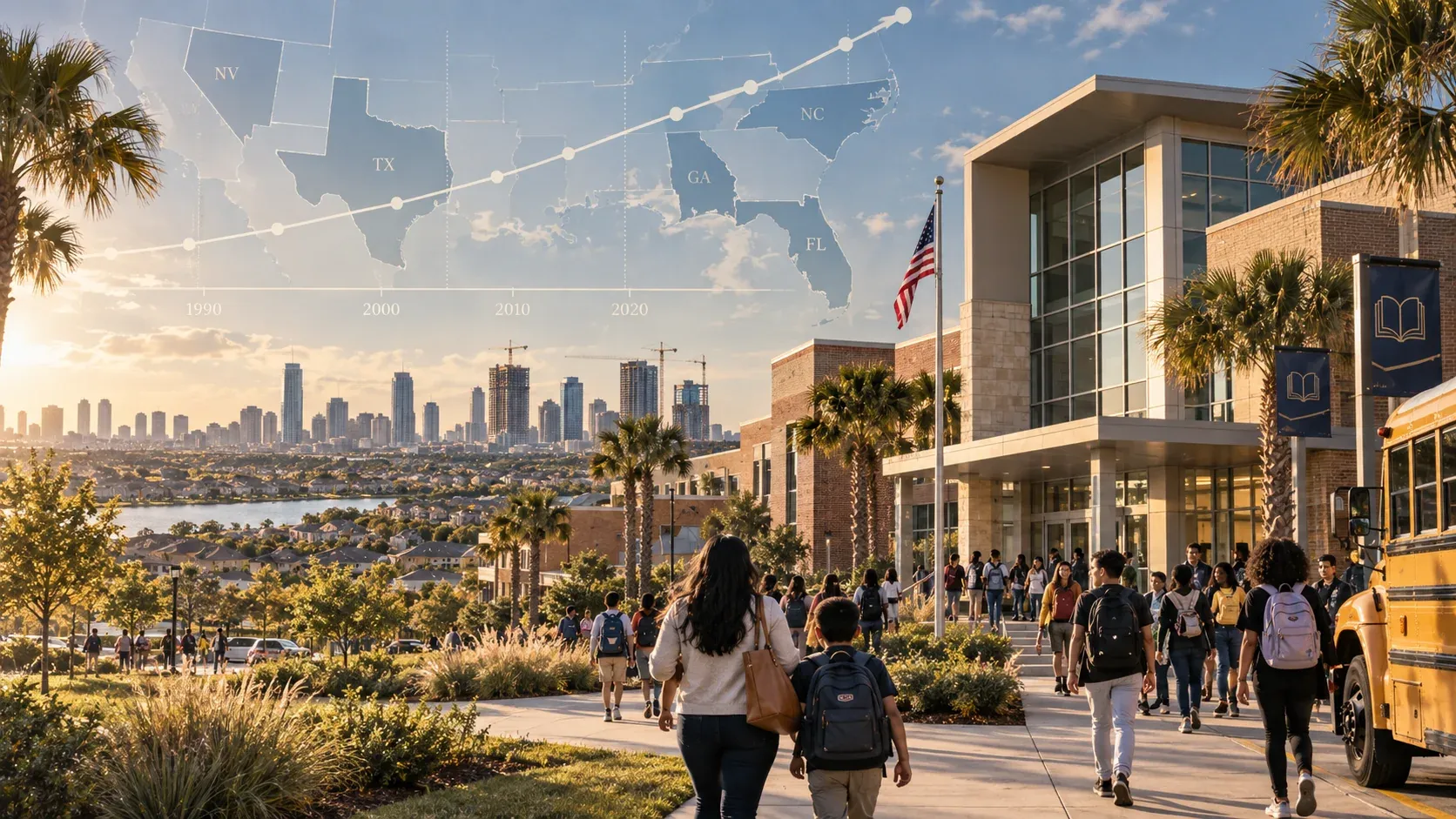
Some of the most revealing changes involve districts that were not even in the Top 25 three decades ago.
Gwinnett County Public Schools in suburban Atlanta had 80,220 students in fall 1994, which placed it around 33rd nationally. Today, it enrolls approximately 179,581 students and ranks near the national Top 10.
Cypress-Fairbanks Independent School District outside Houston provides an even more dramatic example. It had only 49,364 students in 1994, ranking 74th nationally, but today serves more than 117,000 students and ranks among the country’s 25 largest districts.
Wake County, Charlotte-Mecklenburg and Cobb County have also moved into the modern Top 25 as the metropolitan areas around Raleigh, Charlotte and Atlanta expanded. These districts illustrate how much of the nation’s population growth has shifted toward Southern and Sun Belt suburbs.
Rather than being dominated almost entirely by older central-city systems, the modern ranking now includes large suburban and countywide districts serving rapidly growing metropolitan regions.
The Biggest Districts Are Not Always in the Biggest Cities
That shift also highlights an important limitation when comparing district size. A large school district does not necessarily correspond directly to a large city.
Florida’s districts typically cover entire counties, while Clark County includes Las Vegas and a huge surrounding area. Fairfax County, Gwinnett County, Wake County and Cobb County similarly serve large suburban populations rather than only one central city.
By contrast, some older urban districts operate within narrower geographic boundaries. That means the rankings reflect not only population growth and decline, but also how states and regions organize their public school systems.
Even with that caveat, the broader trend is clear. The largest school districts increasingly reflect the parts of the country that have experienced the strongest population growth over the past 30 years.
A Very Different Map of American Education
Taken together, the rankings show how much the geography of American public education has changed.
New York remains No. 1 despite losing roughly 177,000 students. Los Angeles remains No. 2 despite losing more than 200,000. Philadelphia has lost more than 40% of its enrollment and fallen from fifth to around 20th. Detroit, San Diego, Baltimore City, Milwaukee, Pinellas County and Jefferson County in Kentucky are no longer among the nation’s 25 largest districts.
At the same time, Clark County, Orange County, Hillsborough County, Gwinnett County, Wake County, Charlotte-Mecklenburg, Cypress-Fairbanks and other fast-growing systems have moved sharply upward.
The result is a national ranking that still contains many familiar names, but represents a much different map of where America’s school-age population now lives.
Thirty years ago, the list of America’s largest school districts was dominated more heavily by the country’s traditional urban centers. Today, it increasingly reflects the growth of the South, the Sun Belt and the suburbs surrounding some of America’s fastest-growing metropolitan areas.
Recommended