How The Oregon Trail Became a Computer-Lab Classic
Before the wagon crossed a classroom monitor, the game arrived on a roll of paper. Its journey into schools took teachers, shared software and an ambitious remake.
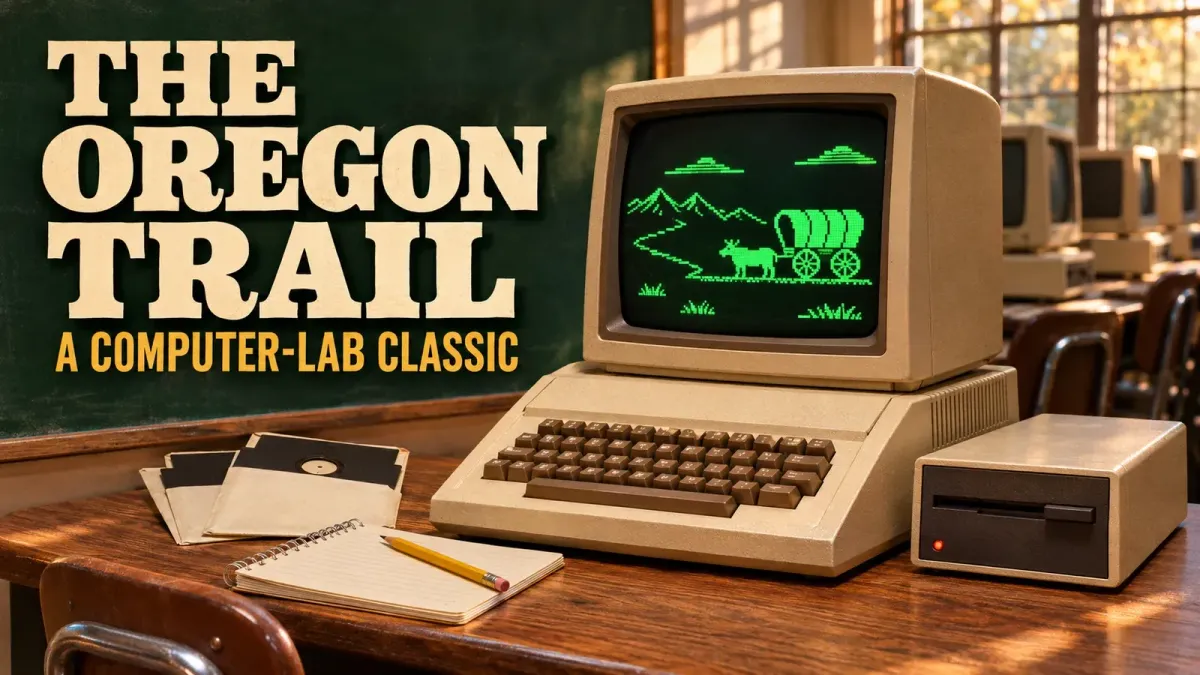
For players who met The Oregon Trail in a school computer lab, the memory often starts with a decision: buy more food, stop to hunt, or risk the river. A lesson about the past could suddenly become an argument about what to do next.
That familiar screen came well into the game’s life. The first version had no screen at all. And the route from one Minnesota classroom to a place in school culture depended on something less memorable than a wagon disaster: getting useful software into teachers’ hands.
Watch: The Oregon Trail Gameplay by Shortmandesigner.
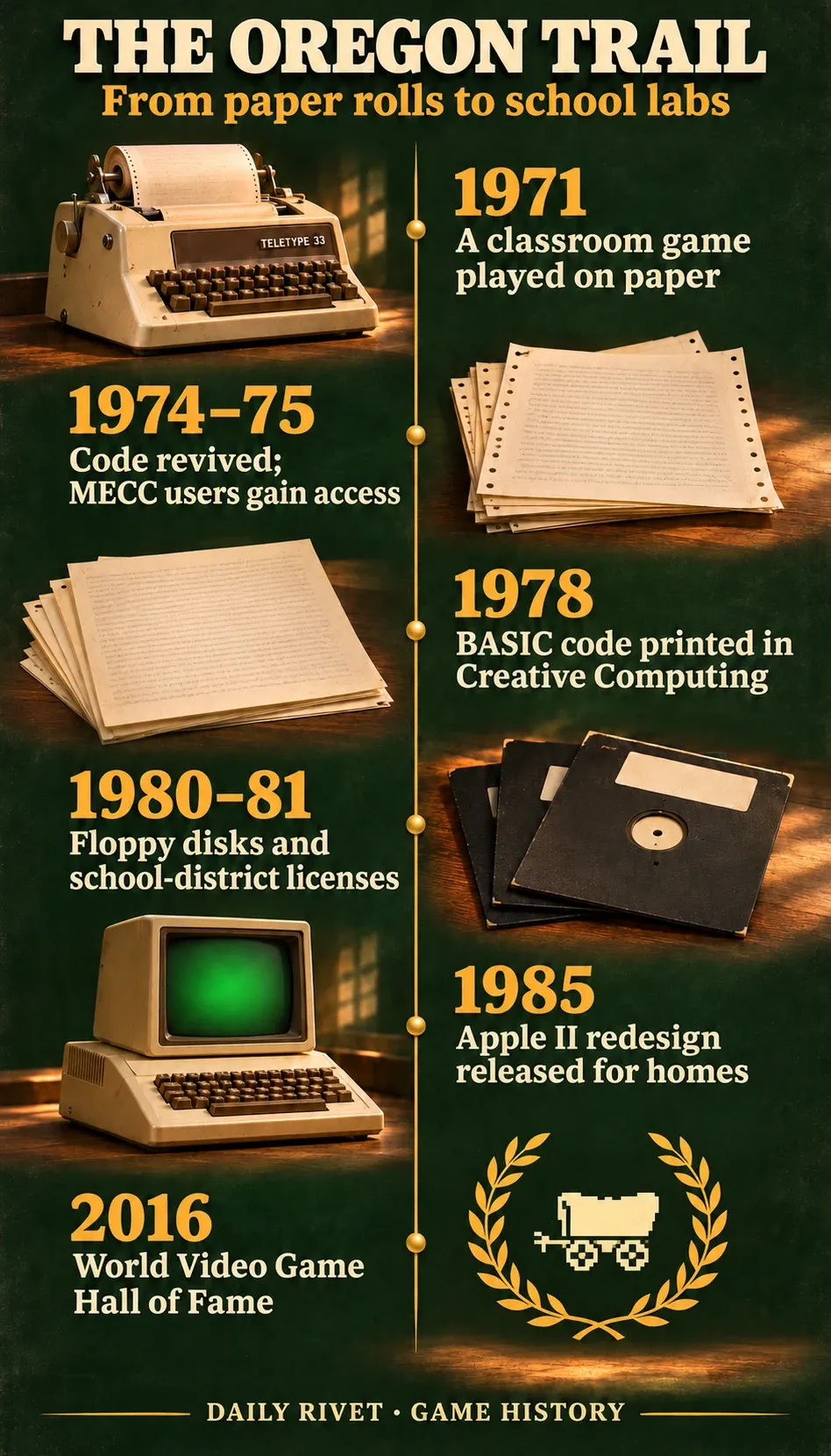
1971: the trail came out on paper
Don Rawitsch, Bill Heinemann and Paul Dillenberger were student teachers from Carleton College when they built the original game. Rawitsch was preparing a history unit on westward migration; Heinemann and Dillenberger brought their knowledge of BASIC programming.
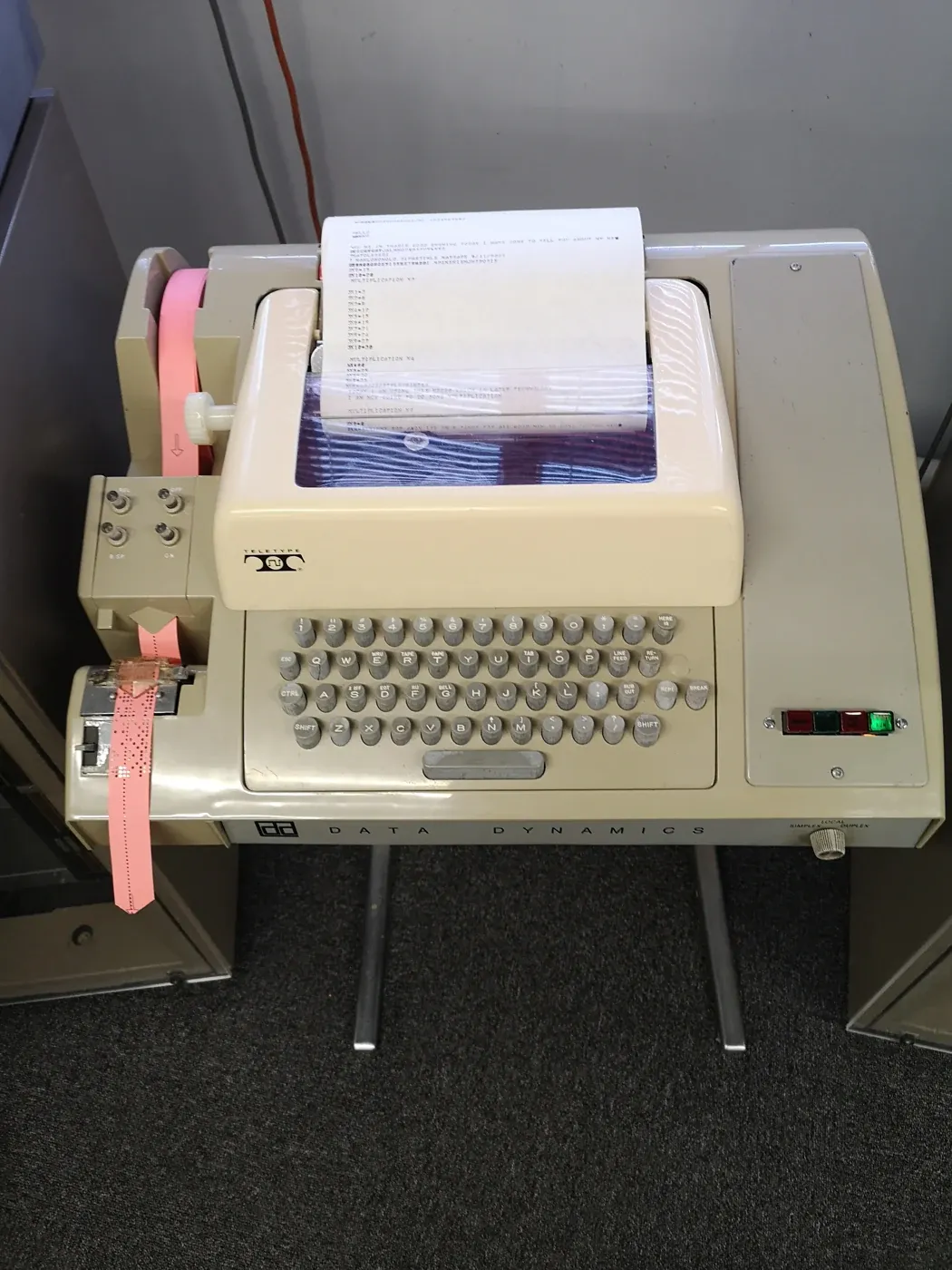
In his later GDC presentation, Rawitsch dated the classroom unveiling to December 3, 1971, after two weeks of development. Students used a teletype connected to a remote computer. Its answers printed on a paper roll, without graphics.
Even hunting was a typing challenge. Players had to enter a prompted word quickly and correctly. The suspense came from waiting for the machine’s response, then discovering what the decision had cost.
The experiment could have ended with the teaching assignment. Rawitsch removed the program when practice teaching finished, but kept a printed copy of its code. That paper backup gave the game another chance.
1974–75: a second life at MECC
Rawitsch joined the Minnesota Educational Computing Consortium, better known as MECC, in 1974. The organization needed programs for its school computing system, and he had one worth rescuing.
According to designer R. Philip Bouchard’s account of the early versions, Rawitsch typed the preserved code back in during Thanksgiving. He also revised the game’s random events using travelers’ diaries. In 1975, OREGON, as it was then called, became available to users of MECC’s system.
The research mattered beyond the program itself. The Strong’s MECC archive describes a 1977 manual with teaching guidance, reading suggestions and historical documentation. Teachers had material for a lesson, rather than just a game to switch on.
Diaries informed the event probabilities, but that does not make the simulation a complete account of migration. Its organizing perspective was the emigrant’s journey. The National Park Service’s trail interpretation also emphasizes Indigenous homelands and the losses brought by colonization, disease and expanding emigrant traffic. Reaching Oregon was only one part of that history.
1978–81: how the game reached more desks
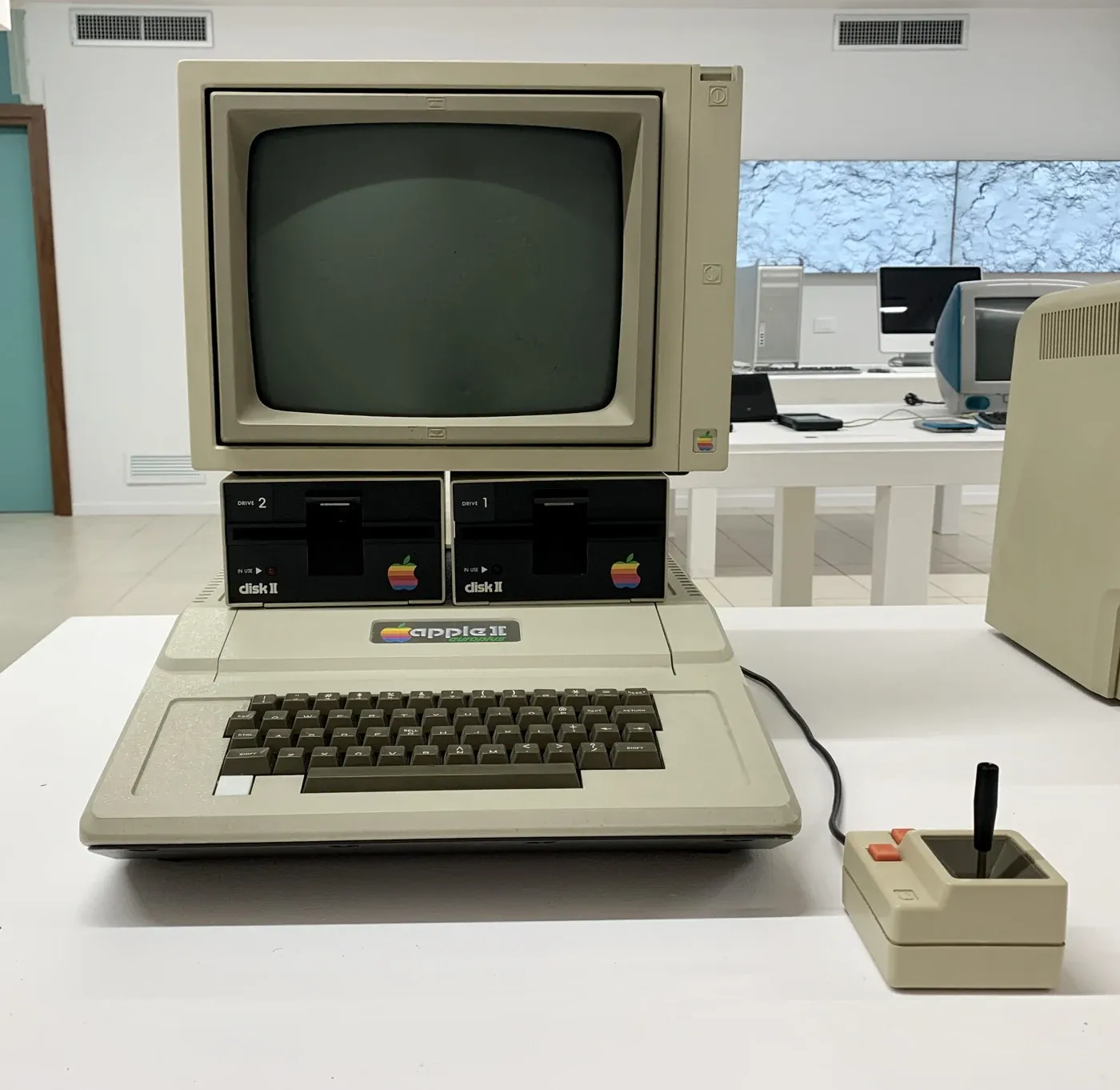
The next stage involved both hardware and distribution. The Strong records MECC’s interest in the Apple II in 1978 and its subsequent large purchases of the computers for schools.
The program itself became easier to circulate, too. Rawitsch published its BASIC listing in Creative Computing in 1978. Adaptations followed as personal computers spread.
Bouchard’s chronology identifies a particularly practical milestone in 1980: Elementary Volume 6, a floppy-disk collection containing OREGON and four other social-studies simulations. In 1981, MECC began offering out-of-state school districts annual site licenses that allowed them to copy its Apple II software.
Those arrangements help explain the game’s reach. It could travel as part of a school software collection, with a licensing system built for districts rather than a separate retail purchase for every classroom.
1985: rebuilding the game people remember
The classic Apple II edition was a substantial redesign. Bouchard received the assignment in October 1984, with instructions to build for the home market.
His firsthand design account names a core team that included programmer John Krenz, artist Charolyn Kapplinger, researcher Shirley Keran and programmer Bob Granvin. They reconsidered the game’s structure and rebuilt its software, working within the Apple II’s limited memory and floppy-disk storage.
Bouchard explains that choosing an occupation determined starting money and therefore difficulty. Shopping became an encounter with Matt at his general store, giving the supply decisions a human face.
Hunting changed as well. The teletype’s rapid typing had already given way to simple graphics in the earlier Apple II game. For the redesign, the team created a keyboard-controlled hunter who could walk and aim in eight directions. These were different editions, not features that had all existed since 1971.
The new game reached the home market in August 1985. Bouchard recalls that schools pushed back when it was initially excluded from MECC’s site licenses; it joined the school program in 1985–86, with a teacher’s manual.
A lesson worth another turn
Students could make a plan, watch it unravel and try a different approach. The computer supplied consequences, while players supplied the debate.
In 2016, The Strong inducted The Oregon Trail into its World Video Game Hall of Fame.
Recommended