
The Year Was 1981: MTV Changed the Way America Discovered Music
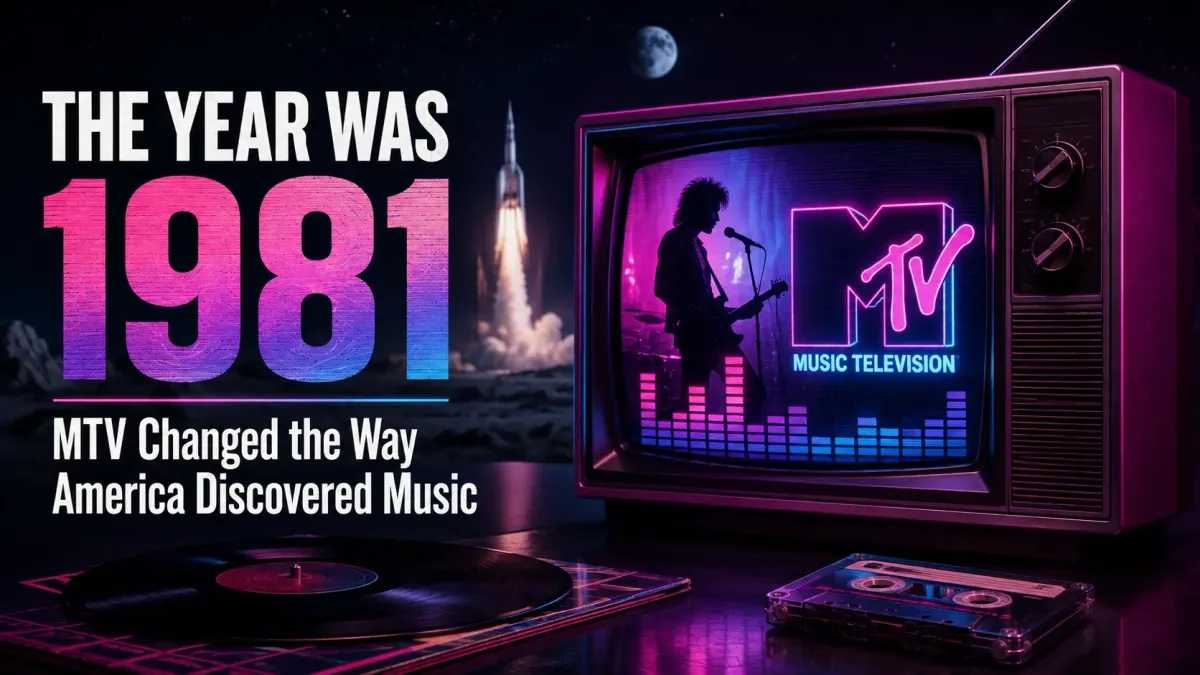
On August 1, 1981, a new cable channel signed on with footage of the Apollo moon landing and the words, “Ladies and gentlemen, rock and roll.” Moments later, MTV aired its first music video: “Video Killed the Radio Star” by The Buggles. The song choice was fitting. MTV was about to change the relationship between music, television, fashion, and celebrity.
Before MTV, most Americans discovered new music primarily through radio, records, concerts, and occasional television appearances. Music videos already existed, but MTV created something different: a television channel devoted to playing them throughout the day. Instead of radio DJs introducing records, MTV used VJs, or video jockeys, to introduce artists and videos. Suddenly, fans were not only hearing their favorite musicians—they were seeing them over and over again.
MTV's debut was much smaller than its later cultural reputation might suggest. Cable television was still expanding in 1981, and the network was initially available in only a limited number of homes. Smithsonian notes that MTV employees even gathered at a bar in New Jersey to watch the launch because the channel wasn't available in Manhattan. But as cable systems added MTV, its audience grew quickly.
That growing audience changed what it meant to become a music star. Image had always mattered in popular music, but MTV made it nearly impossible to separate a song from the person performing it. Clothing, hairstyles, dancing, sets, and storytelling became important parts of promoting a record. Artists who understood the visual side of the medium had a major advantage, and bands such as Duran Duran used cinematic videos to help reach American audiences during the early 1980s.
MTV's early programming was not without controversy. Black artists were significantly underrepresented during the network's first years, an issue famously raised by David Bowie during a 1983 MTV interview. Michael Jackson's enormous success soon demonstrated how powerful the network could be when music and visuals came together. Videos such as “Billie Jean,” “Beat It,” and “Thriller” became cultural events and helped push both Jackson and MTV to new levels of popularity.
The biggest change MTV brought may have been the way people remembered music. A song could now become permanently connected to a specific image, dance, outfit, or storyline. Fans didn't just remember what a song sounded like—they remembered what it looked like. Record companies responded by investing more heavily in music videos, and during the 1980s the format evolved into an art form of its own.
MTV eventually expanded far beyond music videos, adding news, award shows, animation, reality television, and other programming. But its original impact remains easy to see today. Modern artists routinely launch songs alongside elaborate videos, carefully crafted visual identities, and social-media campaigns. The technology has changed, but the idea MTV helped popularize remains the same: music is something audiences experience with their eyes as well as their ears.
When MTV launched in 1981, few viewers could even receive the channel. Within a few years, it had become one of the defining forces in American youth culture. “Video Killed the Radio Star” didn't actually kill radio, but MTV permanently changed what it meant to discover a new music star.
Recommended
What Would Your Wizarding Career Be?
Answer 25 personality questions and discover whether you're destined to be an Auror, Healer, Professor, Curse-Breaker, Wandmaker or another wizarding professional.
10 of the Most Recognizable Careers in the Harry Potter Wizarding World
From Aurors and Healers to Hogwarts professors and Quidditch players, explore 10 of the most recognizable jobs in the Harry Potter Wizarding World.
Exosquad at 33: The ’90s Cartoon That Treated Space War Like It Mattered
Thirty-three years after its premiere, Exosquad remains a remarkably ambitious animated war epic built on serialized storytelling, political consequence and unforgettable E-frames.