The Biggest Battles in Exosquad
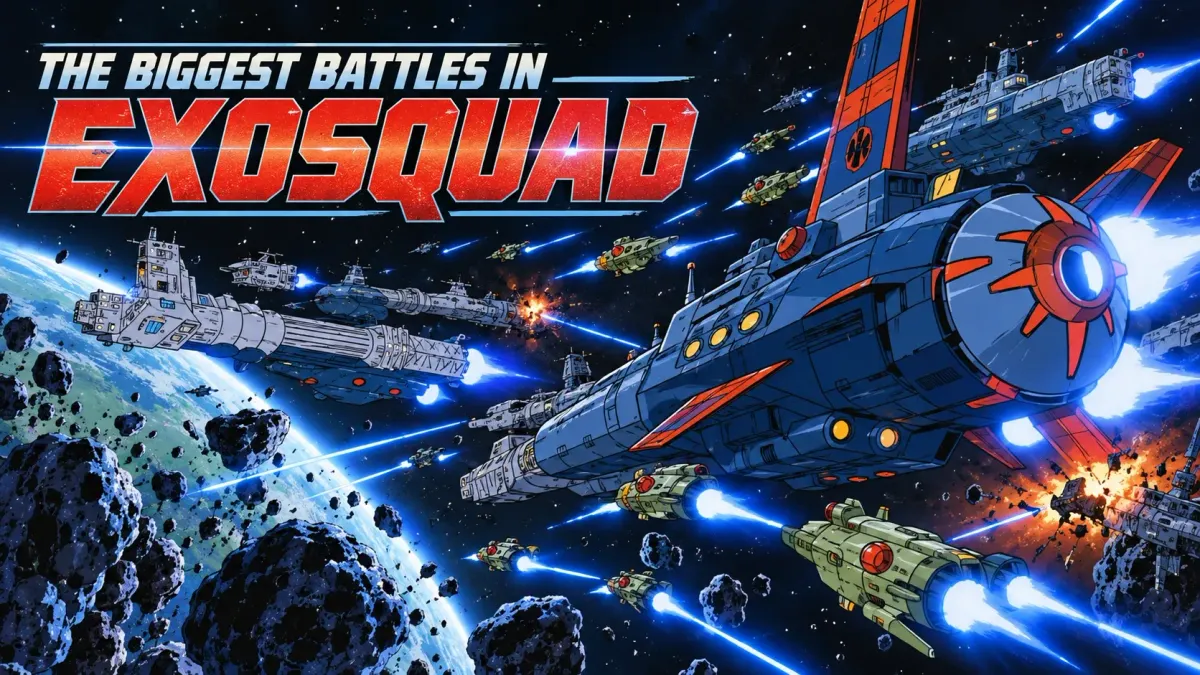
Exosquad wasn't a cartoon where the heroes fought a battle on Saturday morning and everything went back to normal by the following week. The war kept moving. Planets changed hands, fleets were destroyed, characters died, and victories often came with consequences that carried into the next episode.
That was one of the things that made Exosquad feel so different from most animated shows of the early 1990s. Once Phaeton's Neosapien forces launched their revolt, the series stopped feeling like a collection of isolated missions and became something much larger: an extended interplanetary war story that stretched across Earth, Venus, Mars, the Moon and the outer Solar System.
The Exofleet suffered major defeats, regrouped, formed an uneasy alliance with the Pirate Clans and gradually fought its way back toward the Homeworlds. Some engagements lasted only part of an episode, while others unfolded across several installments and completely changed the direction of the war.
These are the biggest battles in Exosquad, ranked by their scale, importance to the larger conflict and impact on the story.
Warning: Major Exosquad spoilers ahead.
10. The Exofleet vs. the Pirate Clans
Season 1, Episodes 1–3
Episodes: Pirate Scourge, Seeds of Deception and Hidden Terrors
Before the Neosapien War truly begins, Exosquad initially appears to be setting up a very different conflict. The Homeworlds Congress sends much of the Exofleet into the outer Solar System to deal with Jonas Simbacca and the Pirate Clans after a series of increasingly serious attacks on Terran shipping.
The Pirates prove to be far more dangerous than Exofleet commanders expected. They understand the outer planets, know how to use ambushes effectively and are capable of making a technologically superior military force pay for every advance. The Exofleet eventually gains the upper hand during a costly engagement around Enceladus and prepares to push toward the Pirate base at Tethys.
Then the entire situation changes.
While much of the Exofleet has been drawn away from the Homeworlds, Phaeton launches the Neosapien uprising. Earth, Venus and Mars suddenly face an enemy that has been quietly preparing for war while humanity's primary military force is operating far away.
That makes the Pirate campaign important for reasons well beyond the fighting itself. It becomes the strategic distraction that leaves humanity dangerously exposed at exactly the wrong moment. It also sets up one of the series' most important political shifts, because the Pirate Clans eventually go from being one of Exofleet's greatest enemies to one of its most valuable allies.
The opening campaign establishes something Exosquad would return to repeatedly: alliances can change, enemies can become partners, and what happens on one battlefield can dramatically reshape the rest of the war.
9. The Second Battle of Venus
Season 1, Episode 9
Episode: Sabotage
Early in the Neosapien War, the Exofleet desperately needs something that resembles a victory. Phaeton's forces have seized the initiative across the Homeworlds, and the Neosapiens now control much of the industrial and military infrastructure of Earth, Venus and Mars.
Venus becomes one of the first opportunities for Exofleet to strike back. Rather than simply attacking the planet head-on, the operation depends on neutralizing its defenses from within and creating an opening for the larger military force.
The resulting success is important, but it is not decisive. The Exofleet can still win individual engagements without fundamentally changing the strategic situation. Phaeton continues to control the Homeworlds, and his forces still possess enormous advantages in resources, production and territory.
That is what makes the battle meaningful. It does not mark the beginning of a sudden comeback, but it proves that the Neosapiens are not unbeatable. For an Exofleet that has spent much of the early war reacting to disaster, even a limited victory matters.
8. The Blockade of Io
Season 2, Episodes 1–5
Episodes: The Gathering, The Embassy, Pirate's Ransom, Ultimate Weapon and Expendable
By the beginning of Season 2, the Exofleet is in a dangerous position. Io has effectively become one of its last major refuges, and the Neosapiens are tightening a blockade around it. Exofleet does not simply need to win another battle. It needs a way to survive long enough to continue the war.
The answer comes from the least likely place imaginable: the Pirate Clans.
Commander Marsh, Alec DeLeon and the others become part of an effort to secure an alliance with Jonas Simbacca. The negotiations are difficult because the two sides have recently been enemies, the Pirate Clans are divided among themselves, and Phaeton has every reason to prevent the alliance from succeeding.
At the same time, the military pressure around Io continues to build. That is what makes this stretch of episodes so effective. The biggest strategic weapon is not an E-frame or a new battleship. It is diplomacy.
The eventual Exofleet-Pirate alliance gives Admiral Winfield access to additional ships, experienced fighters, bases and technology that the Neosapiens are not prepared to counter. The blockade that was supposed to crush the resistance instead helps create the coalition that will eventually push Phaeton back toward Earth.
7. The Battle of Ceres
Season 2, Episode 7
Episode: The Last Man
Not every important battle in Exosquad involves massive fleets exchanging fire above a planet. Some of the most important moments in the war come from strategy, positioning and deception.
The fighting around Ceres is a good example. By this point, the Exofleet and its allies are no longer thinking only about survival. Their operations increasingly involve drawing Neosapien forces into the wrong place, creating diversions and shaping the battlefield before the larger push toward the Homeworlds begins.
That change in mindset is significant. Earlier in the war, the Exofleet constantly reacted to Phaeton. By this point in Season 2, Phaeton is increasingly being forced to react to the Exofleet.
Ceres may not have the spectacle of Venus, the Moon or the final attack on Earth, but it represents an important turning point. Humanity is no longer simply trying to hold on. It is beginning to plan how to win.
6. The Liberation of Mercury
Season 2, Episode 11
Episode: The First Step
The title of the episode says almost everything. Mercury is the first real step in the Exofleet's long campaign back toward the Homeworlds.
The battle is important because of what it represents. For most of the war, the surviving Terran military has been fighting from the outside looking in. Earth, Venus and Mars remain under Neosapien control, while the Exofleet has been pushed into the outer Solar System and forced to operate from increasingly distant bases.
Mercury changes that direction.
The Exofleet is no longer retreating farther from Earth. It is beginning to move back toward it. The operation also gives Kaz Takagi a major role as he faces one of the Neosapiens' most dangerous E-frame pilots, adding a personal dimension to the larger strategic battle.
Mercury may not be the most valuable world in the Solar System, but its liberation carries enormous psychological weight. From this point forward, the central question is no longer whether Exofleet can survive. It is how far the offensive can go.
5. The Liberation of Venus
Season 2, Episodes 14–16
Episodes: Behind the Shield, Venus Rising and Miracle
If Mercury proves that the Neosapiens can be pushed back, Venus proves that one of the major Homeworlds can actually be liberated.
The campaign begins with the Exofleet confronting the GRAF shield, a powerful planetary defense system capable of threatening the attacking fleet before it can establish control. Once that obstacle is overcome, the fighting moves deeper into the planet and the Neosapiens begin preparing for the possibility that Venus could be lost.
The situation grows even more dangerous when Draconis threatens the planet rather than allow it to fall intact. Even after the Exofleet gains the advantage, Phaeton is not willing to simply accept defeat. In Miracle, the Neosapiens launch another major attempt to reverse the outcome and retake Venus.
What makes this sequence so effective is that it feels like a true planetary campaign rather than a single battle. There are defenses to penetrate, fleets to defeat, cities to secure and counterattacks to survive. Winning requires much more than destroying one enemy E-frame.
When Venus finally falls, the strategic balance of the war has unmistakably shifted. For the first time, one of the major Homeworlds is back under Exofleet control, and Phaeton's empire is no longer expanding. It is shrinking.
4. The Battle of Mars
Season 2, Episodes 22–26
Episodes: Fire Ship, Martian Luck, The Lost Patrol, Call of the Unknown and Heart of Mars
The battle for Mars should have been another major step toward defeating Phaeton. Instead, it becomes one of the strangest and most devastating campaigns in the entire series.
Mars matters enormously. It has long been one of the industrial centers of the Homeworlds, has deep historical ties to the Neosapiens and is supposed to become the new home of the Pirate Clans as part of their agreement with the Exofleet.
Then Able Squad discovers something beneath the Martian surface that neither side fully understands: an alien installation.
The discovery changes the campaign completely. Terran and Neosapien forces become caught up in the mystery while the larger battle continues around them, and the fighting eventually triggers a catastrophe that no one can reverse.
Mars is destroyed.
The importance of that moment is difficult to overstate. The heroes do not capture Mars, and the villains do not retain control of it. The planet itself ceases to exist.
The destruction also has consequences that stretch beyond the Neosapien War because the alien technology beneath the surface sends a signal into deep space, helping set up the mysterious new threat introduced at the end of the series.
In a show filled with battles, Mars is one of the clearest reminders that sometimes there is no real winner.
3. The Fourth Battle of Venus
Season 2, Episode 31
Episode: The Price of Courage
By the later stages of the war, Phaeton's empire is beginning to collapse, but that does not mean the Neosapiens are no longer dangerous. In The Price of Courage, they launch a major offensive intended to retake Venus and reverse the momentum of the conflict.
The battle matters because Venus has become much more than another planet. Its liberation proved that Phaeton could lose one of the Homeworlds. If the Neosapiens were able to take it back, the military consequences would be serious, but the psychological impact might be even greater.
Phaeton therefore commits heavily to the offensive, hoping to show that the Exofleet's victories can still be undone.
Instead, the attack fails.
Earlier in the war, the Neosapien Commonwealth could absorb enormous losses because it controlled the resources and industrial capacity of the Homeworlds. By this stage, that advantage has eroded. Ships, E-frames and troops lost in a failed offensive are becoming increasingly difficult to replace.
The battle therefore marks another major step toward the end of the war. The Exofleet is not simply taking territory anymore. It is steadily destroying the military strength Phaeton needs to continue fighting.
2. The Battle of the Moon
Season 2, Episode 34
Episode: One Small Step
If there is one episode that shows how far Exosquad was willing to go compared with most animated series of its era, it may be One Small Step.
The Moon is the final major obstacle before Earth. If the Exofleet can take it, humanity will have a staging point directly outside the Neosapien capital. Phaeton understands the danger and commits major forces to prevent that from happening.
The fighting becomes intense, but the most important moment comes when Alec DeLeon and Colleen O'Reilly confront General Typhonus. They defeat him, but DeLeon is mortally wounded in the process.
Knowing he has little time left, DeLeon uses Typhonus' communications system to send a false message that makes it appear the Neosapien forces are surrendering or retreating. Phaeton's paranoia does the rest. Convinced that his own troops have betrayed him, he activates the self-destruct systems built into their E-frames.
The result is devastating. Phaeton destroys much of his own army, the Moon falls to the Exofleet, and the route to Earth is finally open.
But the victory comes at a tremendous price. DeLeon dies after turning Phaeton's greatest weakness against him.
That is what makes the battle so memorable. It is not won because the Exofleet has the largest fleet or the most powerful weapon. It is won because one dying soldier understands his enemy well enough to manipulate him at exactly the right moment.
1. The Liberation of Earth and the Battle of Phaeton City
Season 2, Episodes 35–38
Episodes: Fifth Column, The Last Jump, The Night Before Doomsday and Abandon Hope
There really could not be another battle at number one. Everything in Exosquad has been building toward the return to Earth.
After the Moon falls, Admiral Winfield launches the long-awaited invasion while Sean Napier and the Earth Resistance rise against the Neosapian occupation from within. Instead of one isolated battle, the liberation becomes a coordinated campaign taking place across several fronts at once.
Resistance fighters attack Neosapien positions on the surface while Exofleet troops descend from orbit. Jumptroopers target key military installations, and Able Squad becomes involved in the increasingly desperate effort to reach Phaeton before he can use his final weapon.
By The Night Before Doomsday, the Neosapien regime is visibly collapsing. Some commanders begin to understand that the war is lost, but Phaeton refuses to accept defeat. Rather than surrender Earth, he prepares to destroy it.
That decision transforms the final campaign from a military victory into a race against extinction.
In Abandon Hope, Able Squad fights its way into the complex beneath Phaeton City while Marsh remains a prisoner. Phaeton attempts to activate the doomsday weapon, but sabotage prevents his plan from succeeding. Nara Burns, Marsala and Kaz Takagi eventually reach the central chamber, and Nara kills Phaeton.
With Phaeton dead, the Neosapien War is effectively over.
What makes the final battle work so well is that it feels earned. The Exofleet matters, the Earth Resistance matters and the alliance with the Pirate Clans matters. The liberation of Mercury and Venus matters. The destruction of Mars matters. DeLeon's sacrifice on the Moon matters.
Every major event has pushed the war one step closer to this moment.
That sense of continuity is one of the main reasons Exosquad still feels so ambitious decades later.
Exosquad Made Its Battles Mean Something
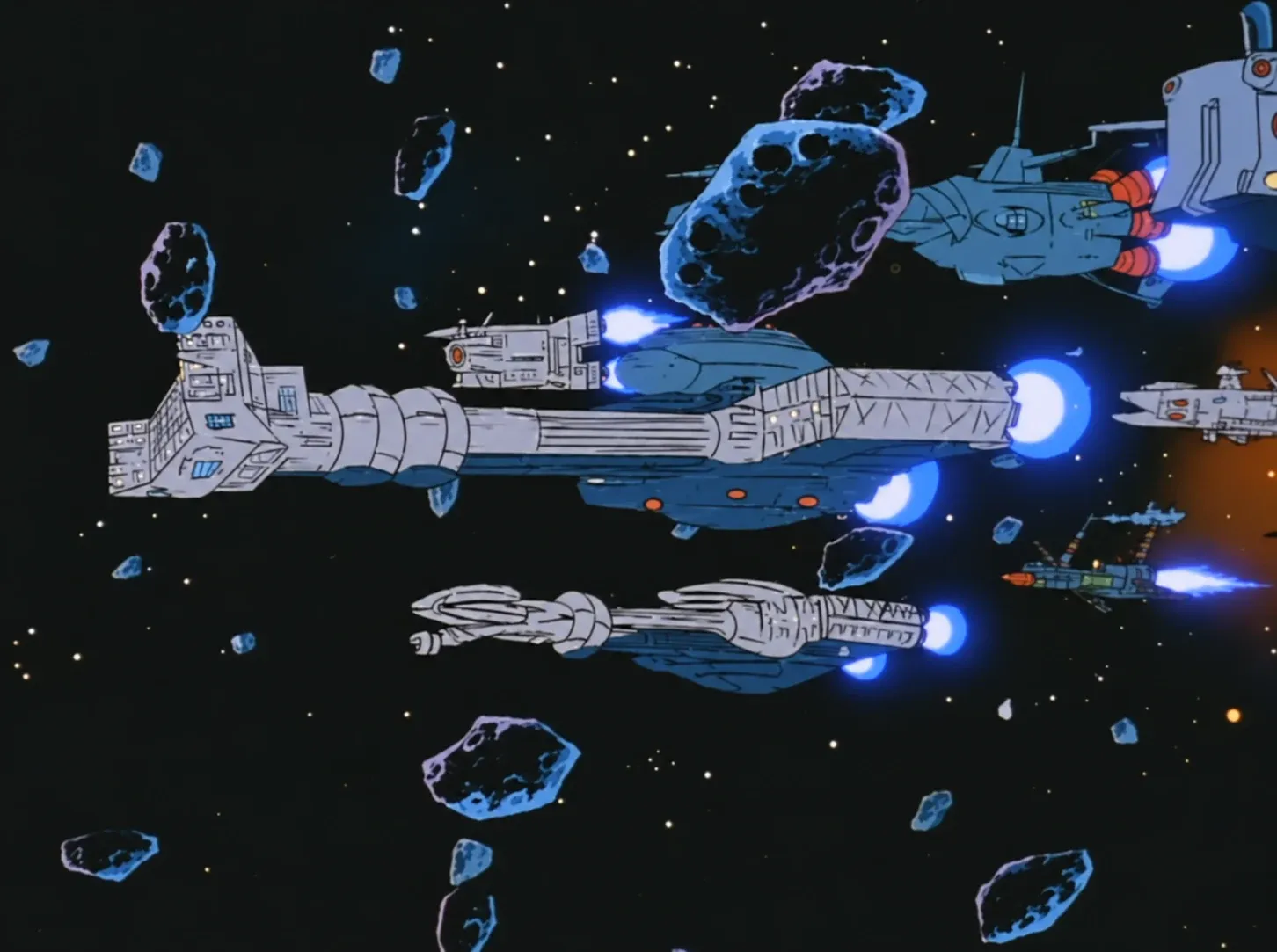
Plenty of animated shows had impressive battles in the 1990s, but Exosquad did something different. It built an actual war.
The Exofleet could lose a battle and spend several episodes dealing with the consequences. Captured territory remained captured. Destroyed ships stayed destroyed. Political alliances changed the strategic balance, and characters who died did not simply return when the next adventure began.
Even the geography of the conflict mattered. The Neosapiens begin the war by taking control of the Homeworlds and pushing humanity outward. The Exofleet rebuilds in the outer Solar System, its alliance with the Pirate Clans gives it a chance to go back on the offensive, and Mercury becomes the first step home.
Venus becomes the first major Homeworld to be liberated. Mars is destroyed before either side can truly claim victory. The Moon becomes the final gateway to Earth, and the fall of Phaeton City finally brings the war to an end.
Seen individually, these are some of the best action sequences in Exosquad. Seen together, they form something far more ambitious: a two-season military campaign that moves across the Solar System and continually builds on what came before.
More than three decades later, that is still one of the biggest reasons Exosquad feels unlike almost any other Saturday-morning cartoon of its era.
Recommended