
The Day Nickelodeon Changed Cartoons Forever
On one Sunday in August 1991, Nickelodeon debuted Doug, Rugrats and The Ren & Stimpy Show—three wildly different cartoons that helped define a network and a generation.
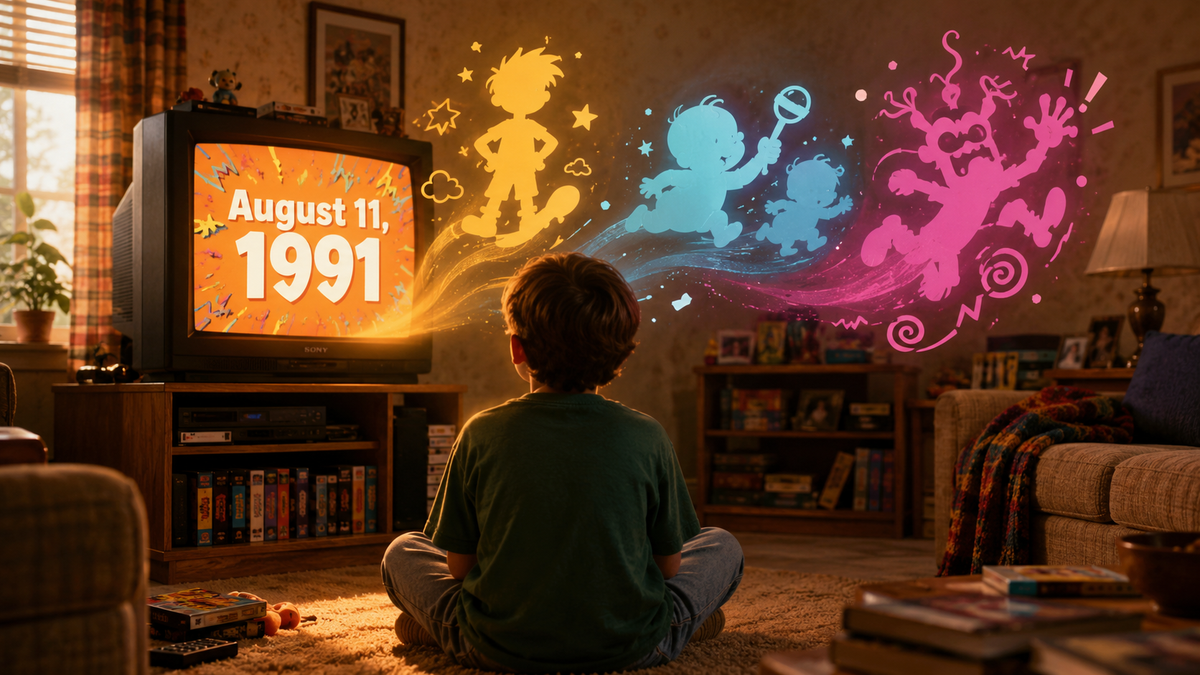
On August 11, 1991, Nickelodeon premiered Doug, Rugrats and The Ren & Stimpy Show on the same day. The three original Nicktoons did more than give kids something new to watch—they helped create the Nickelodeon generation.
There are television premieres, and then there are days that quietly change an entire network. Sunday, August 11, 1991, was one of those days. That morning, Nickelodeon introduced American kids to three brand-new animated series as part of a 90-minute block, marking the first shows launched under the network’s new Nicktoons banner.
Looking back more than three decades later, the lineup seems almost impossibly strong. One show followed an anxious middle-schooler named Doug Funnie. Another viewed the adult world from the floor-level perspective of Tommy Pickles and his fellow babies. The third paired an emotionally unstable Chihuahua with an extraordinarily dim cat. They could not have been more different, and that was precisely the point.
Before Nicktoons
Nickelodeon had already developed a distinctive personality through children’s programming and live-action series, but cartoons were not yet the center of its universe. The network aired animation produced elsewhere without owning a defining library of animated characters.
That began to change when Nickelodeon embraced a more creator-driven approach. Instead of building every cartoon around an established toy, licensed character or familiar property, the network gave individual creators room to pitch distinctive ideas and visual styles. The result was three shows that looked and behaved nothing alike—and Nickelodeon put all three on television on the same morning.
Doug
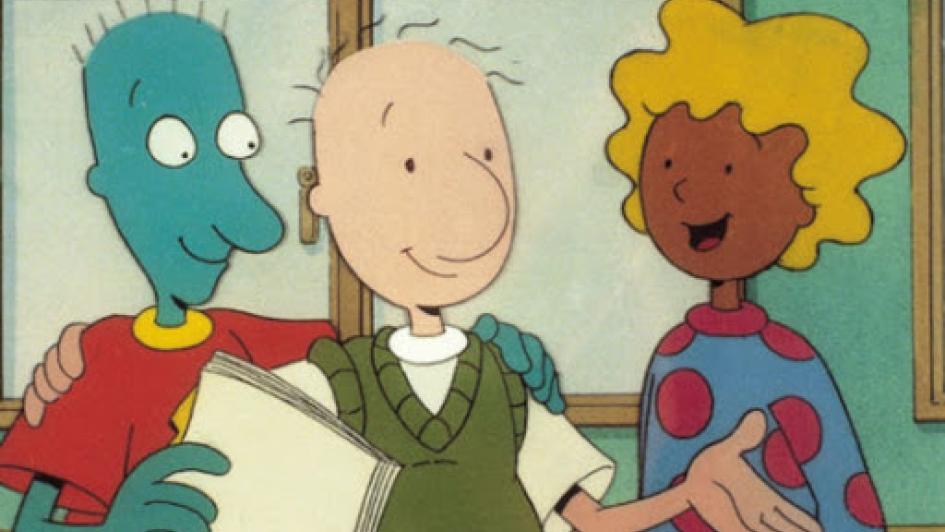
Of the original Nicktoons, Doug was the most grounded. Created by Jim Jinkins, the series followed 11-year-old Doug Funnie as he adjusted to life in Bluffington. He worried about school, embarrassing himself, what classmates thought of him and, above all, Patti Mayonnaise. Skeeter Valentine, Roger Klotz, his theatrical sister Judy and his dog Porkchop filled out a world that was exaggerated enough for a cartoon but still recognizable to kids.
Doug narrated his experiences through a journal, turning ordinary anxieties into elaborate fantasies. When reality was not interesting enough, his imagination transformed him into Quailman. Yet the real stakes were usually smaller and more relatable: surviving embarrassment, making a friend or finding the courage to do the right thing. That ordinariness made Doug remarkably easy to understand.
Rugrats
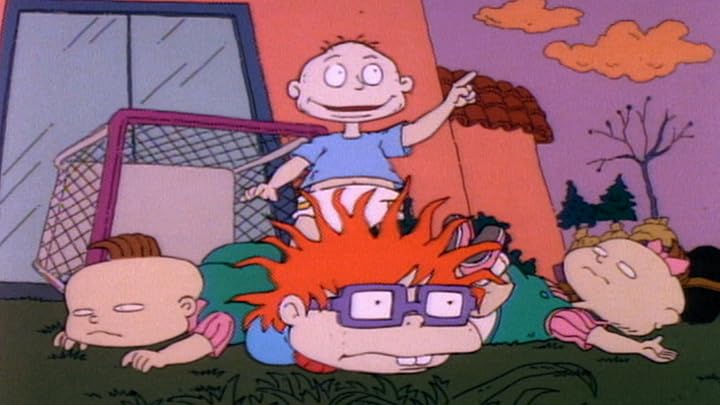
If Doug showed childhood through the eyes of an older kid, Rugrats went much lower—literally. Created by Arlene Klasky, Gábor Csupó and Paul Germain, the series imagined the world from the perspective of babies. Tommy Pickles and his friends Chuckie, Phil and Lil could turn a trip across the living room into an expedition because the babies understood adult conversations in their own wonderfully mistaken way.
Angelica, older and far more capable of communicating with adults, often served as the bridge—and frequent troublemaker—between the babies and the grown-up world. The series eventually ran for nine seasons and inspired theatrical films, spinoffs and a later revival, but none of that was guaranteed in 1991. Production initially stopped after 65 episodes before rerun popularity and successful specials helped return the show to production. By the end of the decade, Tommy Pickles and his friends were part of the visual language of 1990s childhood.
The Ren & Stimpy Show
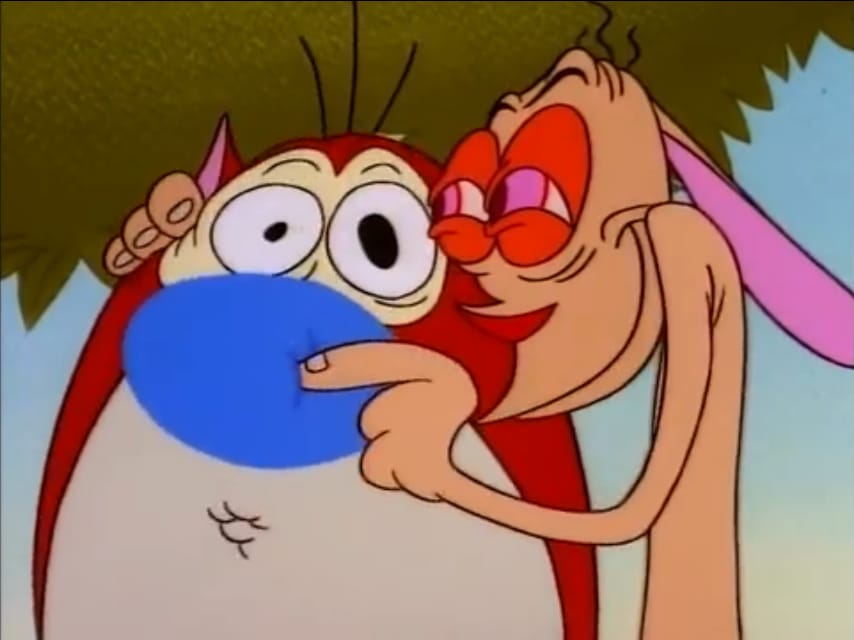
Then there was The Ren & Stimpy Show. If Doug was relatable and Rugrats was imaginative, Ren and Stimpy felt like someone had tuned a children’s television set to another dimension. Ren Höek was an explosive Chihuahua; Stimpson J. Cat was his enormously enthusiastic and spectacularly unintelligent companion.
The animation could suddenly become grotesquely detailed. Characters twisted into bizarre expressions, stories embraced absurdity and jokes sometimes seemed aimed as much at the adults in the room as the children. Its willingness to push boundaries occasionally brought the show into conflict with Nickelodeon’s standards department, but its extreme expressions, surreal humor and artist-driven style also demonstrated that television animation did not have to look or behave like everything that came before it.
Three cartoons, three different ideas
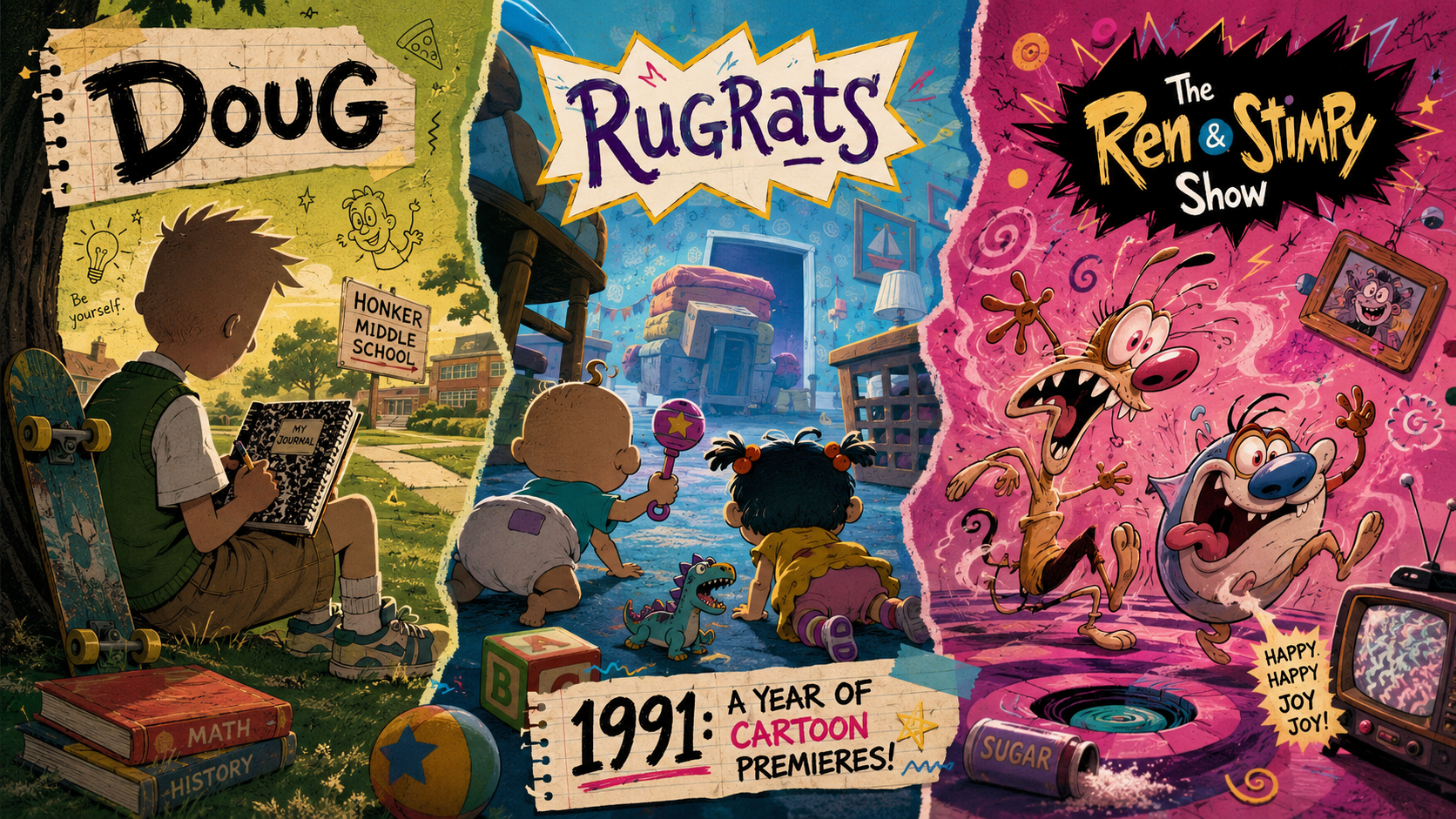
What makes August 11, 1991, so remarkable is how little the three shows shared. Doug was a coming-of-age story, Rugrats was childhood imagination seen through babies’ eyes and Ren & Stimpy was cartoon chaos. Nickelodeon was not betting on a single formula; it was betting on different creative voices.
That philosophy opened the door for Rocko’s Modern Life, Aaahh!!! Real Monsters, Hey Arnold!, The Angry Beavers, CatDog, The Wild Thornberrys and SpongeBob SquarePants. The characters and animation styles changed, but the expectation that a Nickelodeon cartoon should have an unmistakable personality survived.
The timing could not have been better
The Nicktoons arrived during an extraordinary period for American animation. The Simpsons had shown that prime-time animation could become a cultural phenomenon, Warner Bros. had Tiny Toon Adventures, Disney television animation had produced series such as DuckTales, and Cartoon Network was still more than a year from launching. Nickelodeon suddenly possessed something it had never had before: animated characters that belonged unmistakably to Nickelodeon.
Those characters could anchor commercials, magazines, merchandise, video games and eventually theatrical films. More importantly, viewers associated them with one destination. Nickelodeon was becoming more than a cable channel that happened to show children’s programs. It was becoming a place kids recognized by its sound, orange logo, attitude and growing universe of characters.
Recommended
What Would Your Wizarding Career Be?
Answer 25 personality questions and discover whether you're destined to be an Auror, Healer, Professor, Curse-Breaker, Wandmaker or another wizarding professional.
10 of the Most Recognizable Careers in the Harry Potter Wizarding World
From Aurors and Healers to Hogwarts professors and Quidditch players, explore 10 of the most recognizable jobs in the Harry Potter Wizarding World.
Exosquad at 33: The ’90s Cartoon That Treated Space War Like It Mattered
Thirty-three years after its premiere, Exosquad remains a remarkably ambitious animated war epic built on serialized storytelling, political consequence and unforgettable E-frames.