Pong: From a 1972 Bar Test to the Family TV
From Allan Alcorn’s quarter-filled prototype at a Sunnyvale bar to a Sears home console, Pong made the next move easy to understand.
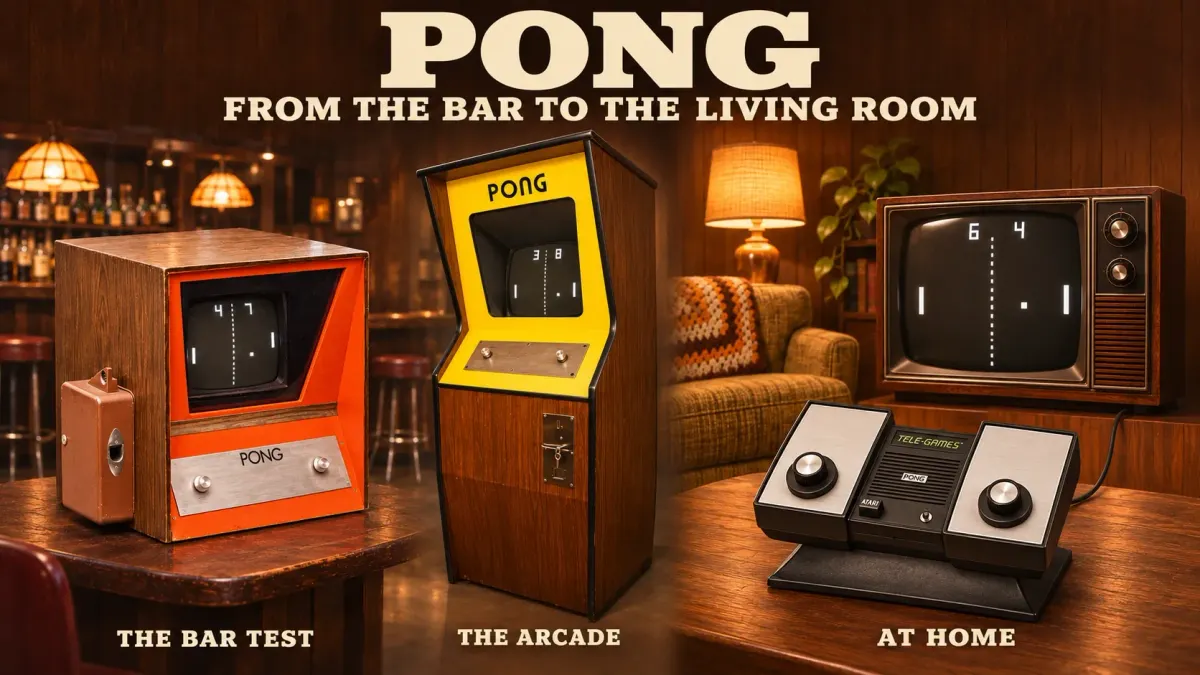
In 1972, a wooden cabinet at Andy Capp’s bar in Sunnyvale, California, gave customers a new reason to put down a quarter. On its screen, two white paddles sent a small ball back and forth. Each player had a knob. The contest was easy to recognize, even if the machine itself was unfamiliar.
Engineer Allan Alcorn built the prototype for Atari and later donated it to the Computer History Museum, where it remains in the collection.
A game you could understand by watching
Pong put a version of table tennis on a television screen. Turn the knob to move your paddle, meet the approaching ball, then follow it across to the other player. Miss a return and the other side scores.
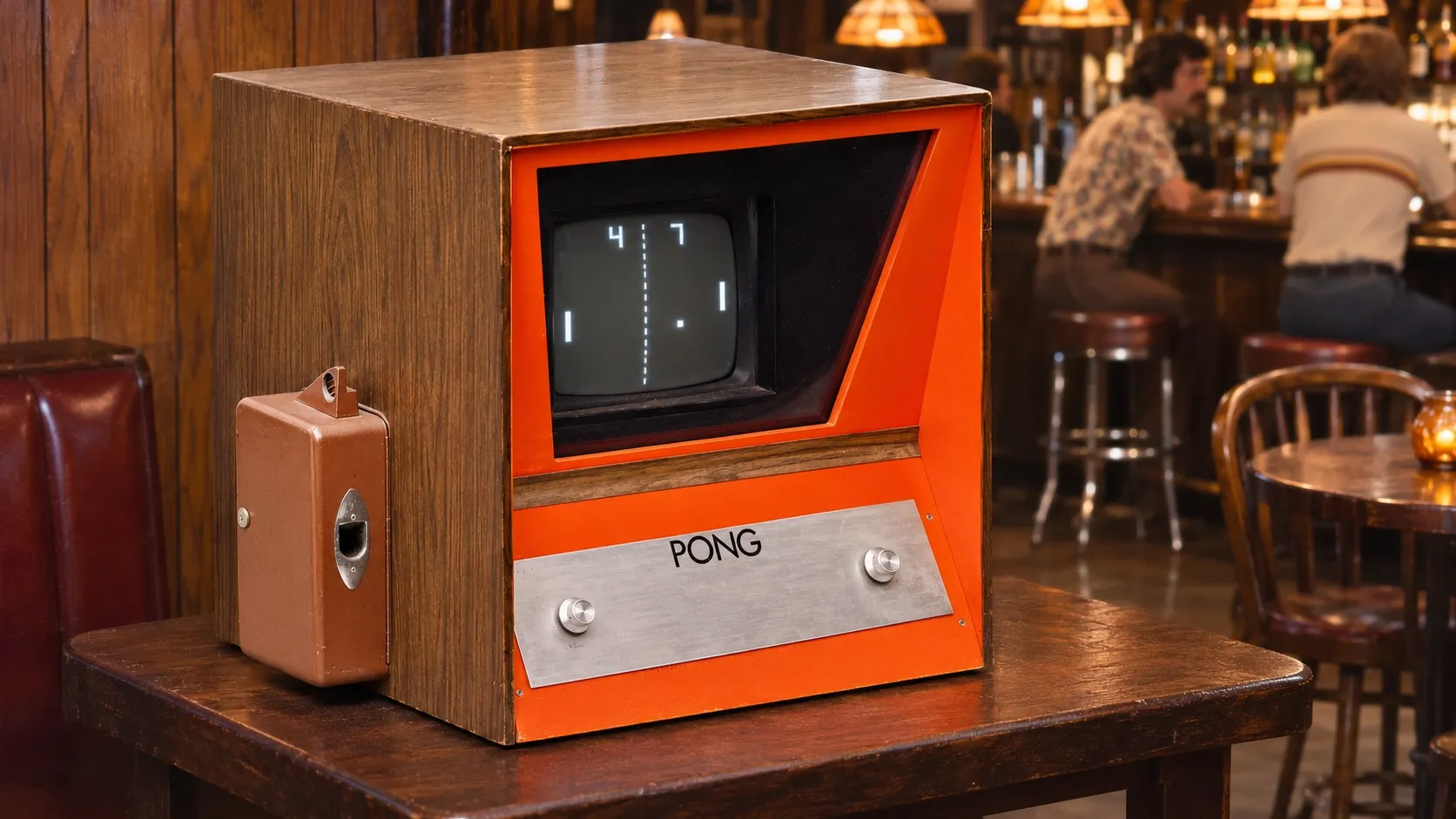
Atari founder Nolan Bushnell assigned Alcorn the project in 1972. Alcorn turned the idea into a working coin-operated prototype within months.
There were games before Pong
Pong was not the first video game. The Magnavox Odyssey already offered an electronic tennis game. Atari’s version brought a simple two-player contest into bars and other public venues.
The service call with a full coin catcher
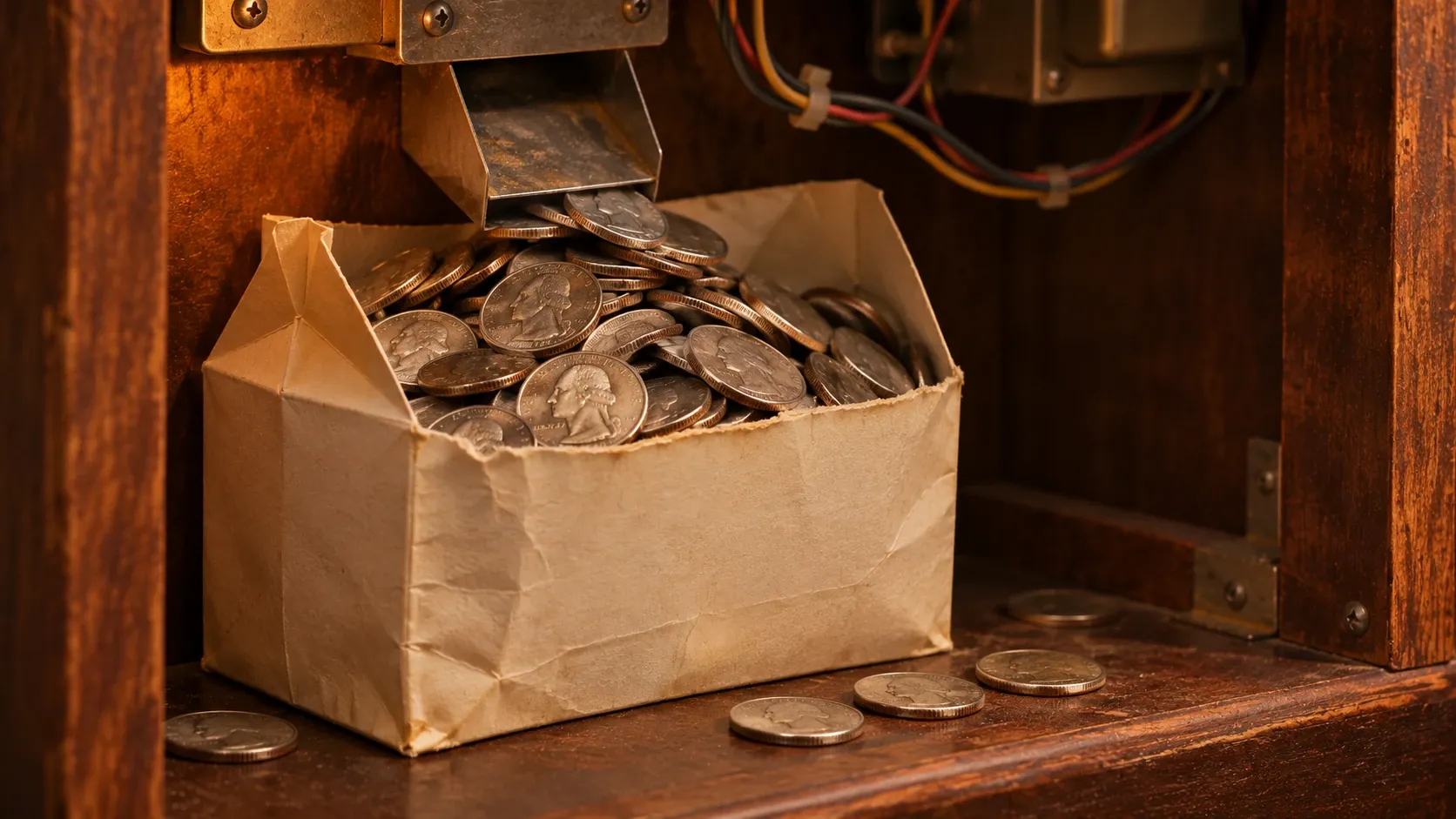
The best-known story about the Sunnyvale test begins with a malfunction. According to the Computer History Museum’s account, Alcorn was called back to Andy Capp’s after the machine stopped working. The milk carton used to catch the coins had filled with quarters.
From the bar to the Sears catalog
By 1975, Atari had a home version of Pong, introduced through the Sears catalog. The game could now be played on the family television instead of a coin-operated cabinet.
The hardware changed, too. The Computer History Museum credits Alcorn, Bob Brown and Harold Lee with the custom integrated circuits used in Atari’s home-game development. Those circuits helped reduce cost and improve sound and on-screen scoring.
At home, two players could keep a match going without feeding the machine another quarter.
Recommended