The Pack of Gum That Changed the Grocery Checkout
A pack of Juicy Fruit made checkout history in 1974. The scanner read a product code, while a store computer supplied the price.
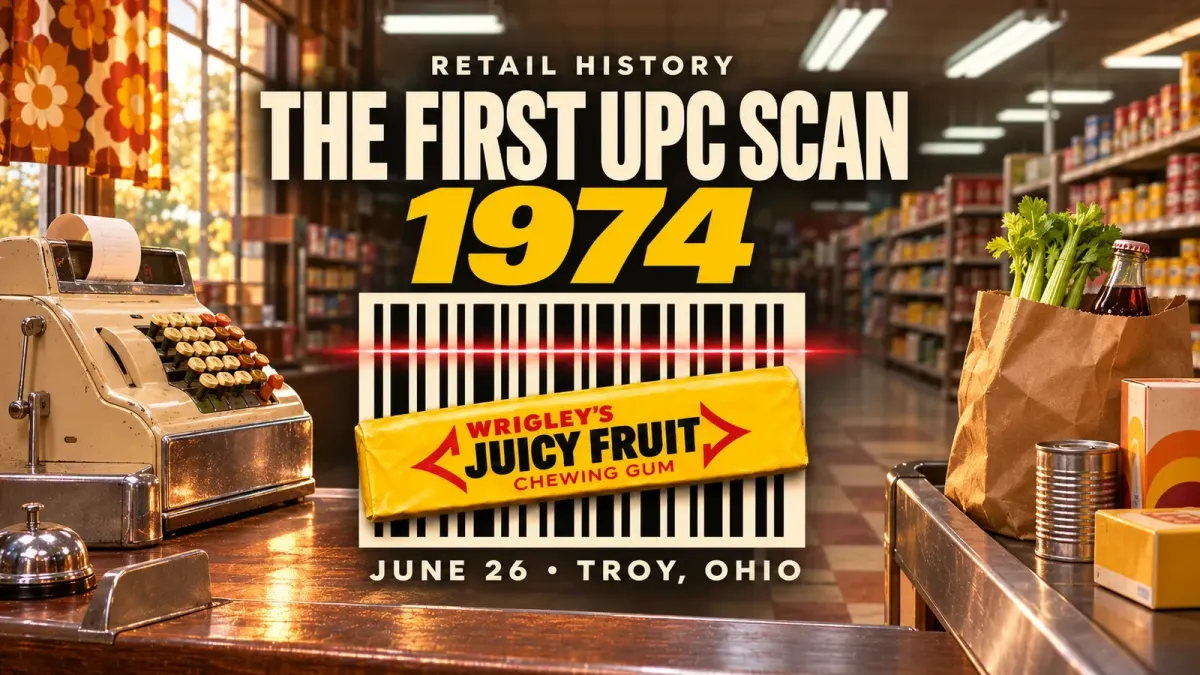
On June 26, 1974, Sharon Buchanan passed a 10-pack of Wrigley’s Juicy Fruit over a scanner at a Marsh supermarket in Troy, Ohio. The register brought up its 67-cent price. It was the first commercial purchase made using the standardized Universal Product Code, or UPC.
The customer was Clyde Dawson, Marsh’s head of development and research. The store was introducing a checkout system that could read a product’s code and look up its price, saving the cashier from entering it by hand.
Before the beep
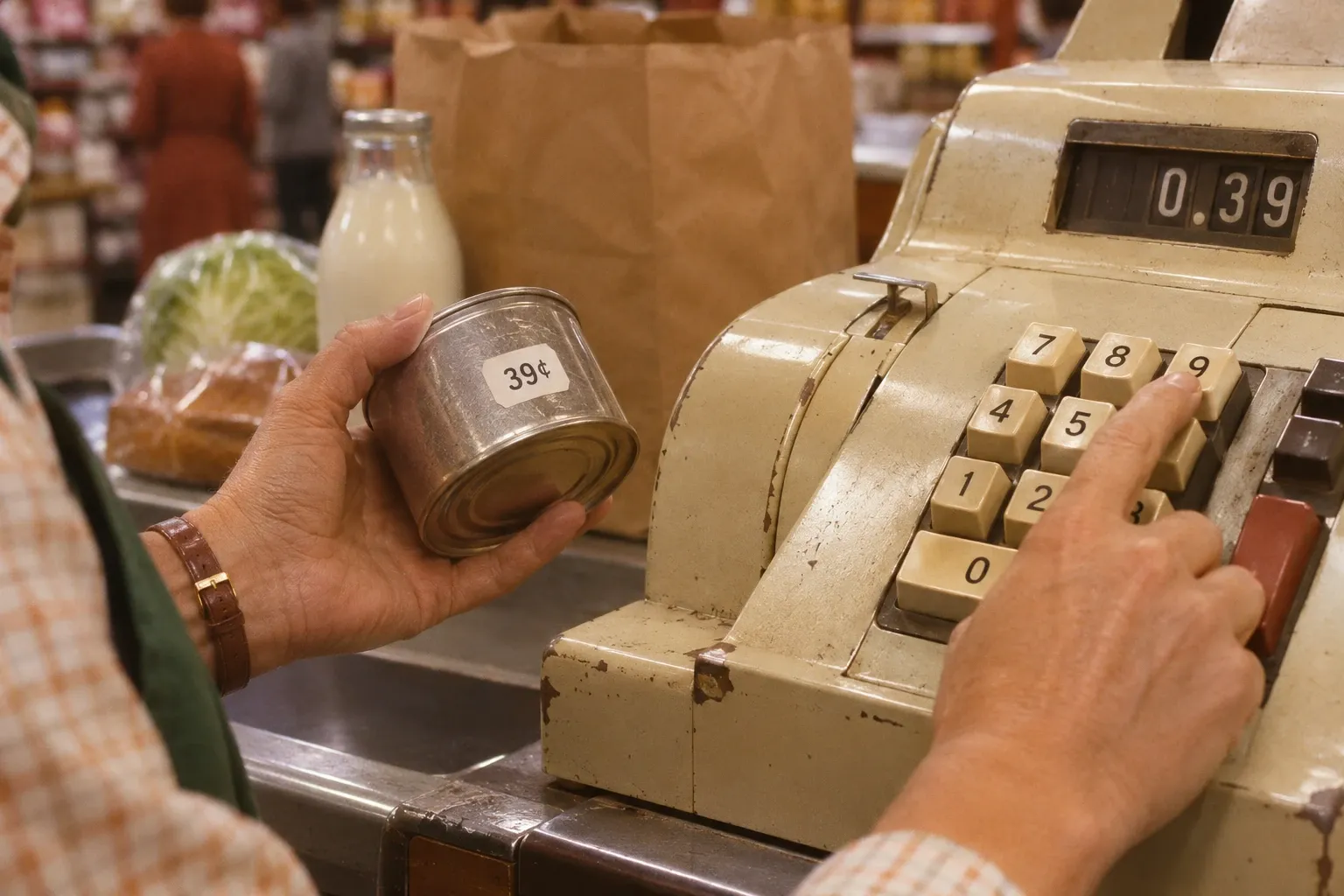
Before scanners, store workers applied price labels to groceries, and cashiers keyed in the price of each item at the register. A full cart meant repeating that process dozens of times.
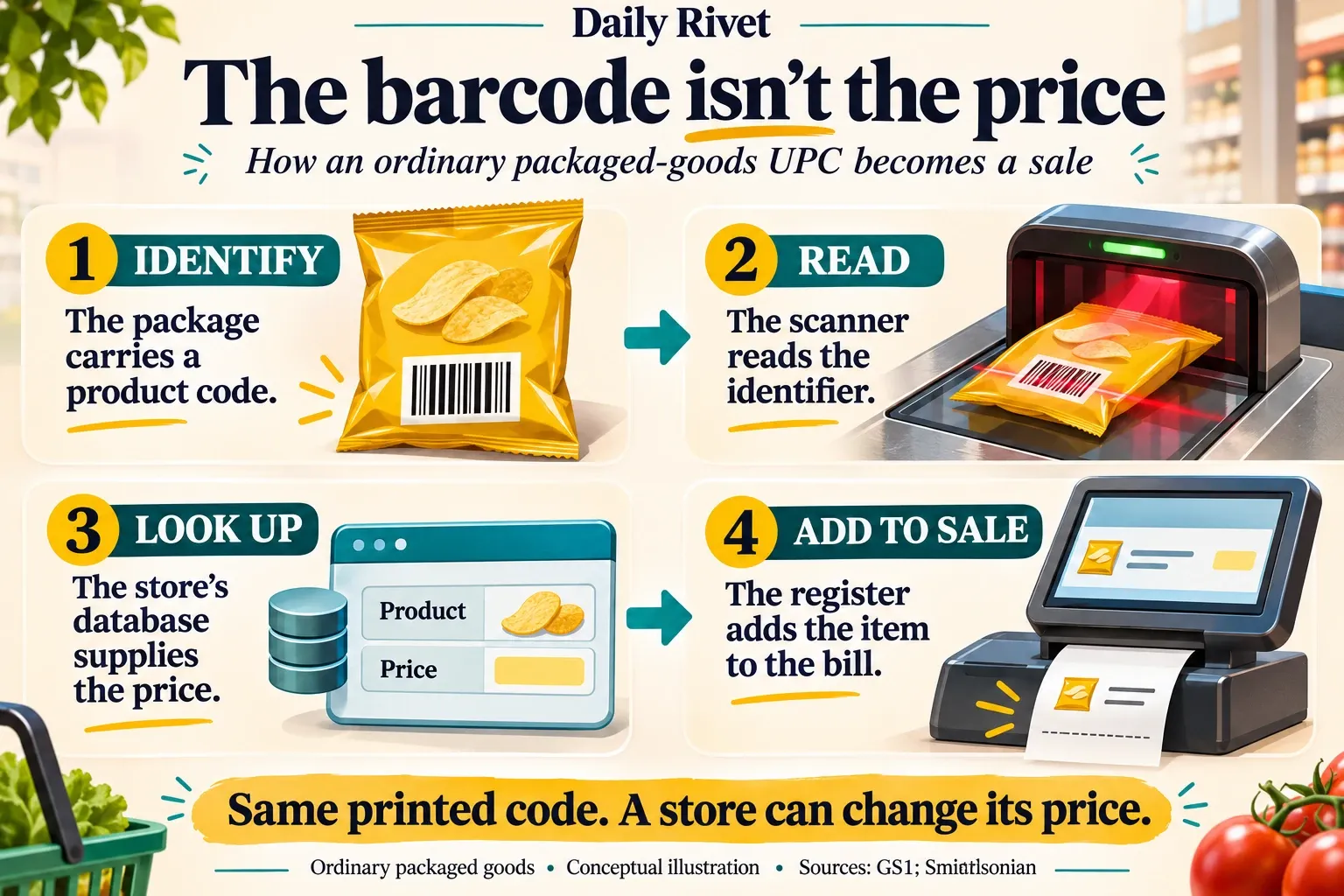
At the Troy checkout, a scanner read the code as the package passed over its glass surface. The computer found the matching product and price, then added it to the sale.
For the idea to work across the grocery business, manufacturers and stores needed to agree on a single code. A box of cereal had to work at different chains without needing a different label for each one.
How the familiar barcode took shape
Early barcode designs looked quite different from the stripes on today’s packages. Norman Joseph Woodland and Bernard Silver applied for a patent in 1949 and received it in 1952. Their designs included a circular, bull’s-eye-shaped code, which RCA and Kroger later tested at a Cincinnati supermarket in 1972.
By then, the grocery industry was working toward a shared system. At IBM, engineer George Laurer led the team developing the rectangular barcode. The industry chose the UPC in 1973, and the Troy store began using it the following year.
Earlier stores had tested barcodes, but the Juicy Fruit purchase marked the commercial debut of the standardized UPC. The Troy installation used Spectra-Physics scanners and NCR computerized registers.
Where the price comes from
The familiar UPC-A barcode represents a 12-digit number that identifies a product. On ordinary packaged groceries, the price comes from the store’s database. The scanner reads the number, and the checkout system uses it to find the product’s description and price.
That means a store can put an item on sale without changing the barcode on its packaging. The store updates its price record, and the same code brings up the new price at checkout.
Some labels work differently. Special codes for goods sold by weight and for coupons can include a price or value. For a typical pack of gum, though, the barcode is simply the number the store uses to look it up.
From one checkout to the rest of the store
The change took time. Stores needed new equipment, and manufacturers had to add barcodes to their packaging. As more products could be scanned, retailers also gained a clearer record of what was selling, helping them track stock and plan orders.
One of the ten scanners installed in Troy is now in the Smithsonian’s collection. The gum stayed with Dawson and never went to the museum.
Recommended