How Giant Balloons Took Over Thanksgiving Morning
From Philadelphia’s 1920 parade to Mickey Mouse and Snoopy above New York, explore how giant balloons became a Thanksgiving tradition.
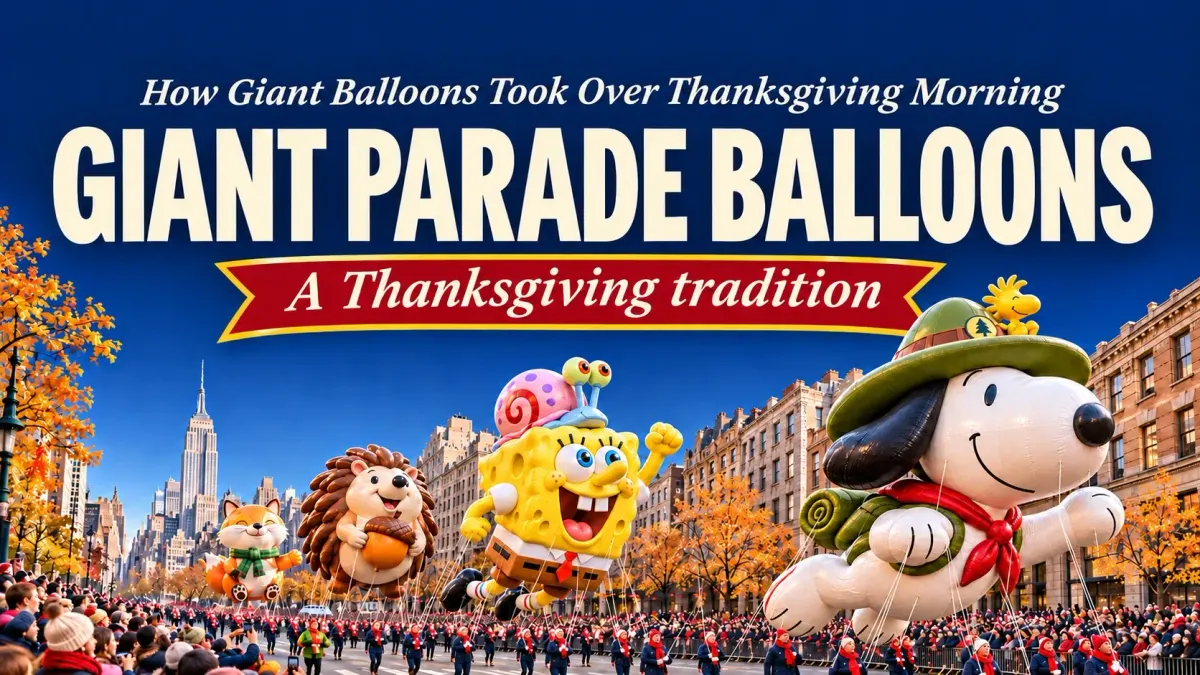
Philadelphia’s Gimbels parade is widely recognized as the nation’s oldest Thanksgiving Day parade, dating to 1920. Macy’s began its New York parade four years later. Giant balloons would give those street celebrations another place to look: up.
Flying Ace Snoopy traded an aviator’s helmet for a spacesuit in his early years at the Macy’s Thanksgiving Day Parade. The familiar beagle could change costumes with the times, while the people holding his lines kept him moving above the street.
Philadelphia starts the tradition
Philadelphia’s centennial account describes a modest first procession on November 25, 1920: 15 decorated cars, 50 employees and a firefighter portraying Santa. Gimbels used the holiday to welcome the Christmas shopping season.
Macy’s in New York and Detroit’s Thanksgiving parade began in 1924. Floats, marching bands and Santa could draw a crowd before giant characters filled the sky.
From puppets to parade balloons
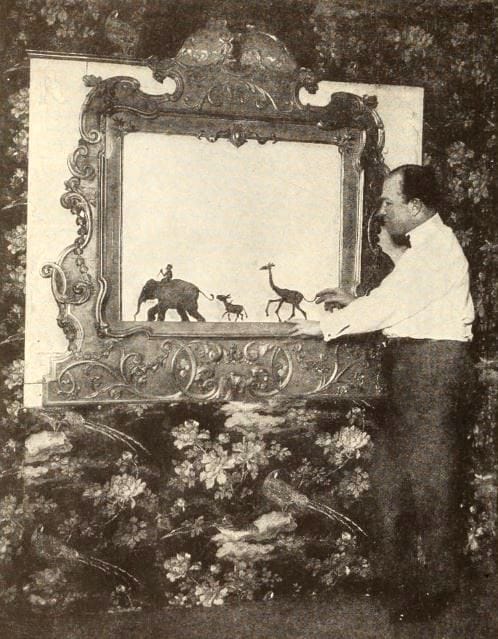
In 1927, puppeteer and illustrator Tony Sarg helped bring giant inflatable characters to Macy’s parade. His background in marionettes offered an obvious connection: a character could be brought to life by people controlling it from a distance.
Macy’s says its first character balloon was Felix the Cat. In 1927, volunteers carried the air-filled Felix on sticks. By 1928, helium-filled balloons could float above the route instead of being carried on sticks.
Philadelphia’s parade also grew to include giant balloons. A photograph from 1960 shows a Ferocious Tiger and an Organ Grinder and Monkey among its inflatables.
In New York, Macy’s kept turning characters from cartoons, comics and games into new balloons. Its changing lineup shows how familiar faces were adapted for the sky.
1934: Mickey Mouse takes flight
Mickey Mouse made his parade debut in 1934. Walt Disney and his staff designed the balloon, bringing the character into a setting very different from an animated short. The recognizable face and round ears had to work as a large object seen from the sidewalk.
The 1934 Mickey has the look of an early Disney drawing made enormous. His round ears, broad smile and shorts give him a clear outline against the buildings.
1968: Snoopy gets a new job
Snoopy arrived as the World War I Flying Ace in 1968. The astronaut version followed in 1969, the year of the first Moon landing. His changing outfits gave the parade a way to revisit the same character without simply repeating the previous design.
That approach continued for decades. Macy’s returned to the astronaut idea for its 2019 Snoopy balloon, updating the spacesuit for a new appearance. For someone watching at home, recognizing Snoopy could be immediate even when his costume was new.
1977: Kermit above the crowd
Kermit appears in Macy’s parade archive in 1977, bringing his green face and pointed collar into the balloon lineup. The Muppet was already built around a simple, expressive shape, but a floating version needed to read clearly from much farther away than a television puppet.
Turning a puppet into a balloon changes the way it moves. Kermit could no longer rely on a puppeteer’s tiny shifts of a hand to make an expression. His face, collar and long limbs had to do more of the work while he traveled above the crowd.
1987: Spider-Man joins the lineup
Spider-Man’s balloon debuted in 1987. His outstretched pose suited a character already associated with moving between New York buildings. The red-and-blue costume and mask remained recognizable even without the close-up details of a comic panel.
By the late 1980s, the parade could draw from characters children knew through comics, cartoons and toys.
1993: Sonic brings video games to the parade
Sonic the Hedgehog joined in 1993, becoming the first video-game character to appear as a balloon in the parade. His blue spikes and red shoes brought a different kind of screen character to Thanksgiving morning.
Children who knew Sonic from a Sega console could now pick him out among the older cartoon favorites. He returned in 2011 with another balloon design.
2005: An artist’s sculpture becomes a balloon
Tom Otterness’s Humpty Dumpty appeared in 2005 as the first balloon in Macy’s Blue Sky Gallery series. The project gave artists a place in a lineup more often associated with established entertainment characters.
Humpty Dumpty also suited the format. A rounded figure could become an airborne sculpture, visible from below as well as from the sides. The series offered another reason to look up: a balloon did not have to be a character already familiar from a television show or a game.
Made for the street, seen from everywhere
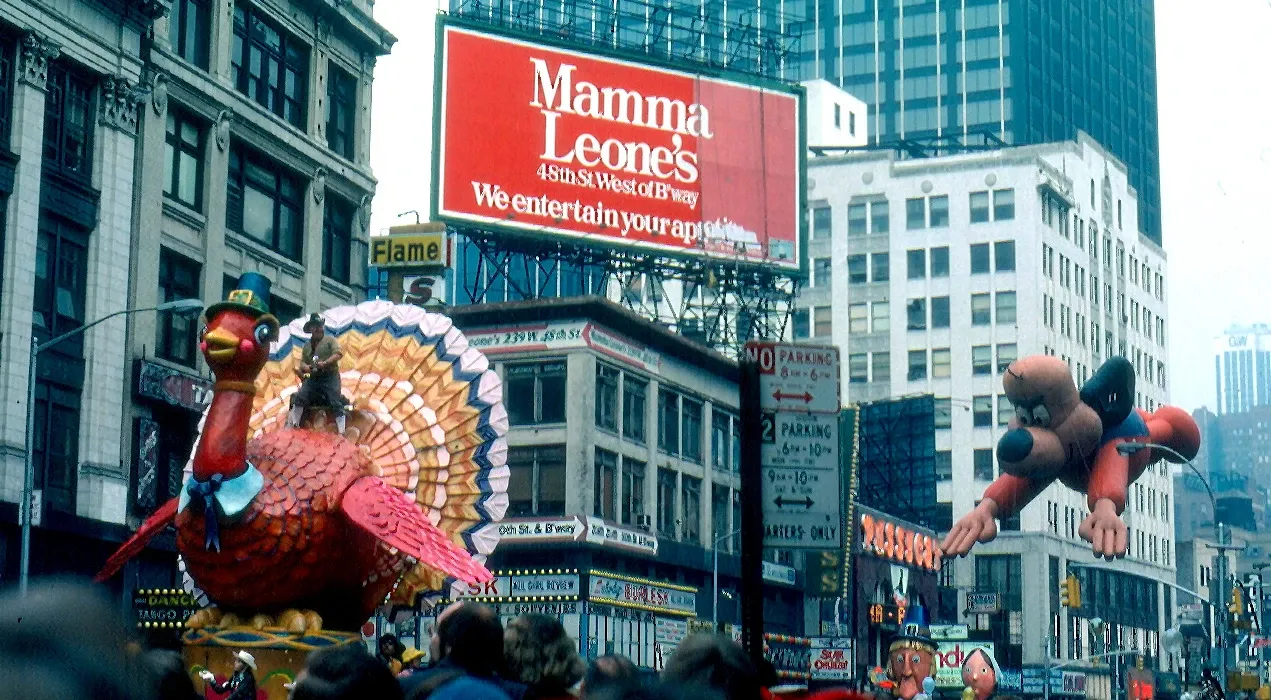
The designs have always depended on people working out how a drawing can become a three-dimensional object. Macy’s parade studio took greater responsibility for design and construction in the late 1960s, and moved from Hoboken to a new facility in 2011.
On parade day, that studio work arrives outdoors. A face has to be recognizable from the curb, a shape has to fit the street, and the handlers remain visible beneath it all. Watch the lines below the next giant character and the scale becomes clear: the balloon may get the close-up, but it is moving with a group of people on foot.
Recommended