The 20 Largest Restaurant Chains in America, Ranked by Location Count
Which restaurant chains have the most U.S. locations? See the top 20, from Subway and Starbucks to McDonald’s, using 2025 restaurant counts.
Subway leads this ranking of America’s largest restaurant chains with 18,773 U.S. locations—5,067 more than McDonald’s—using 2025 reporting. That is a substantial lead for a sandwich chain whose shops can occupy a single bay in a shopping center. Starbucks sits between them, helped by a network that reaches beyond standalone coffeehouses into other places people shop, work and travel.
Counting restaurants brings those differences in format into focus. A small sandwich counter and a freestanding restaurant with a dining room and drive-through each contribute one location to the total, even though their space, sales and staffing may be very different. The same distinction appears in our ranking of the retail companies with the most stores in America.
Below are the 20 largest restaurant chains in America by U.S. location count, using 2025 reporting. Coffee shops and ice cream shops are included; the scope and reporting-date notes appear after the countdown.
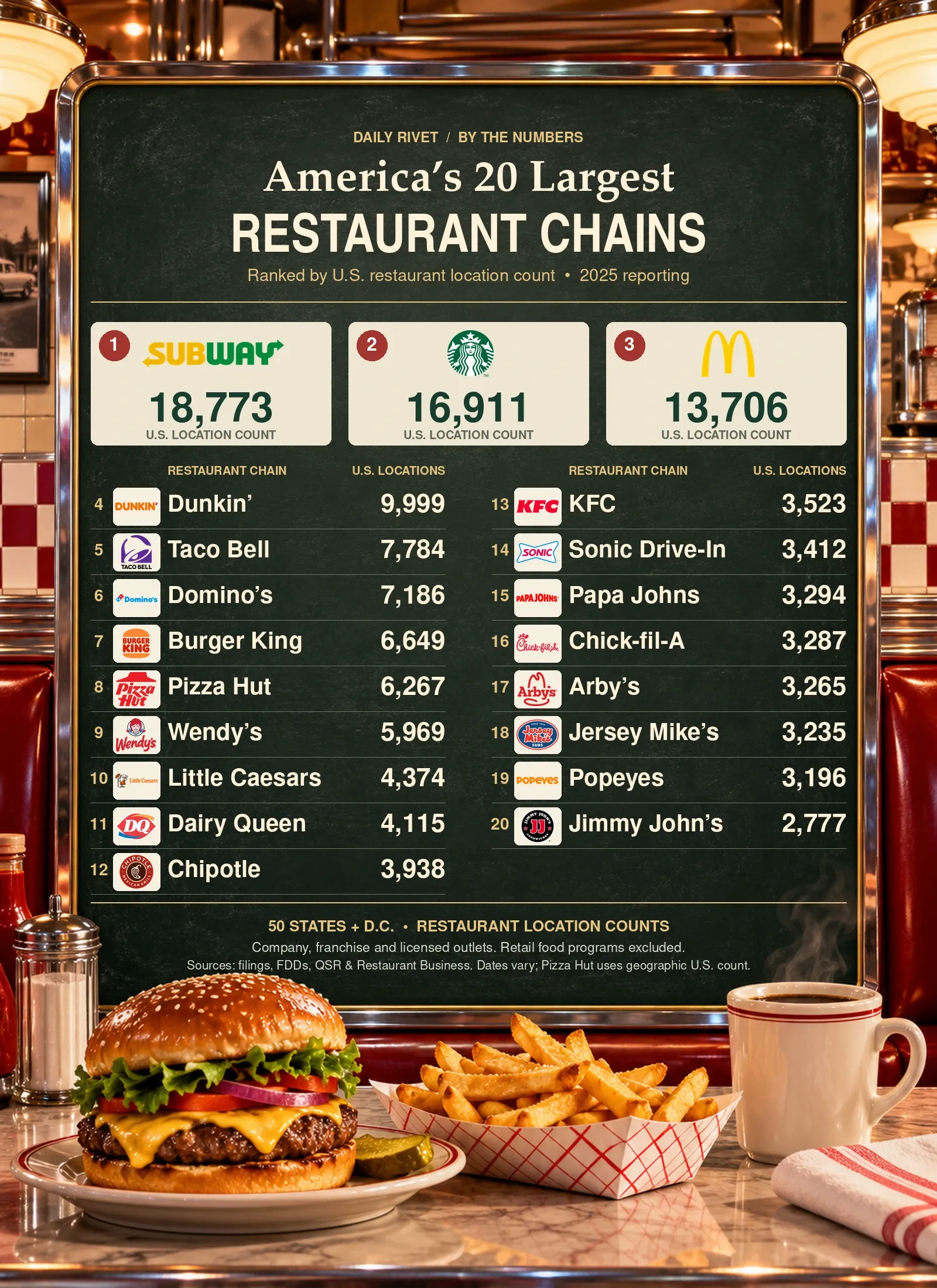
The largest U.S. restaurant chains at a glance
- Subway — 18,773 U.S. locations
- Starbucks — 16,911 U.S. locations
- McDonald’s — 13,706 U.S. locations
- Dunkin’ — 9,999 U.S. locations
- Taco Bell — 7,784 U.S. locations
- Domino’s — 7,186 U.S. locations
- Burger King — 6,649 U.S. locations
- Pizza Hut — 6,267 U.S. locations
- Wendy’s — 5,969 U.S. locations
- Little Caesars — 4,374 U.S. locations
- Dairy Queen — 4,115 U.S. locations
- Chipotle — 3,938 U.S. locations
- KFC — 3,523 U.S. locations
- Sonic Drive-In — 3,412 U.S. locations
- Papa Johns — 3,294 U.S. locations
- Chick-fil-A — 3,287 U.S. locations
- Arby’s — 3,265 U.S. locations
- Jersey Mike’s — 3,235 U.S. locations
- Popeyes — 3,196 U.S. locations
- Jimmy John’s — 2,777 U.S. locations
20. Jimmy John’s
2,777 U.S. locations
The first Jimmy John’s opened in a converted garage in Charleston, Illinois, in 1983. Its later emphasis on fast sandwich preparation and delivery feels consistent with that small-shop beginning: a counter, a focused order and a meal that is easy to take away. A network of almost 2,800 restaurants has grown around a comparatively simple lunch.
19. Popeyes
3,196 U.S. locations
New Orleans, where Popeyes began in 1972, remains central to how the chain presents its food. Louisiana seasonings, biscuits and sides give a chicken order a different character from a burger-and-fries meal. The menu also spans individual sandwiches and larger chicken orders, so the same restaurant can serve a quick lunch or supply much of a family dinner.
18. Jersey Mike’s
3,235 U.S. locations
At 17, Peter Cancro bought the New Jersey sandwich shop where he worked, helped by a loan from his football coach, who was also a banker. That was in 1975; Mike’s Subs had already been serving customers since 1956.
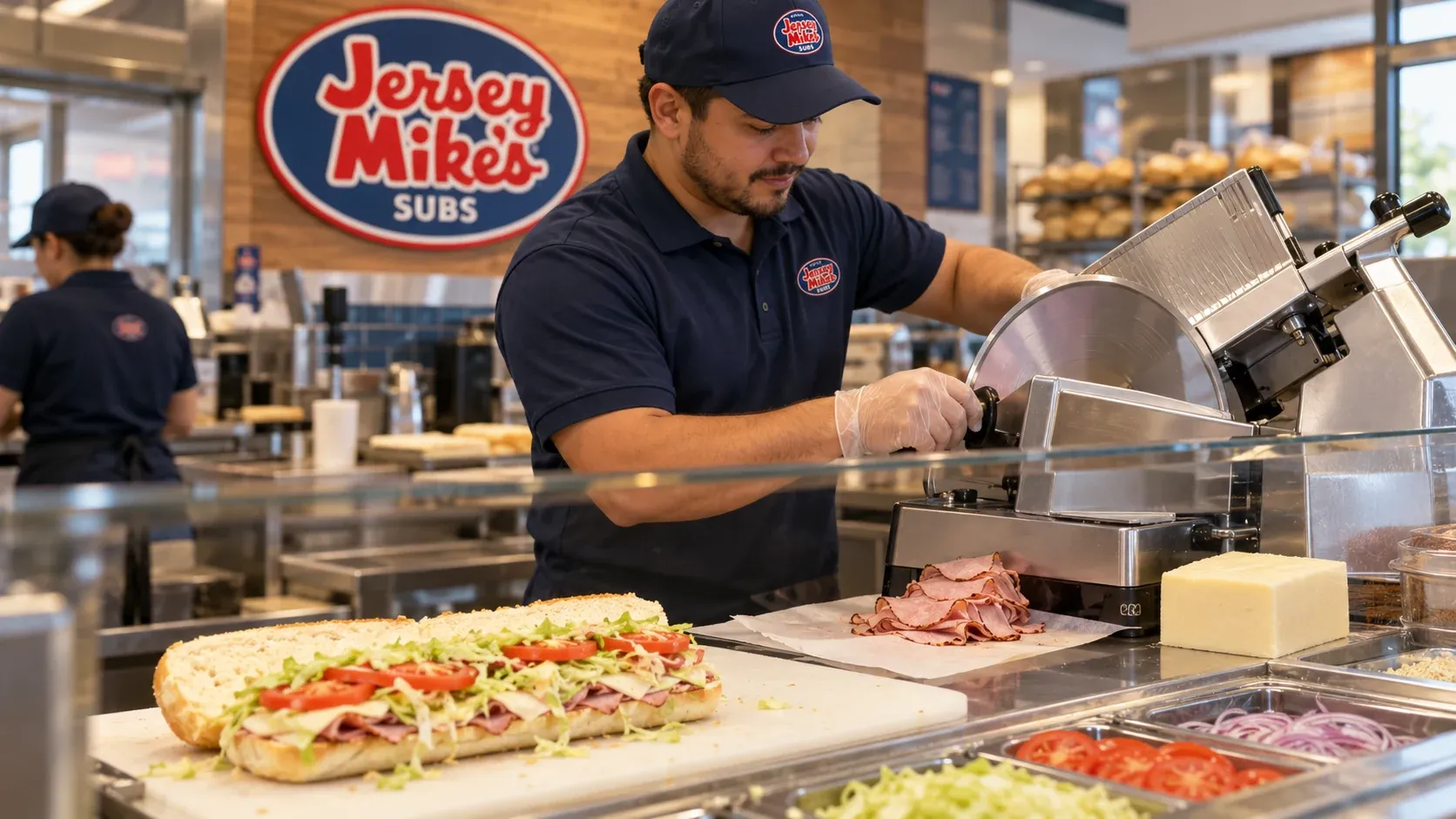
The chain still makes the preparation part of the visit. Meat and cheese are sliced at the counter, and ordering a sub “Mike’s Way” brings the familiar combination of onions, lettuce, tomatoes, oil, vinegar and spices. Those details carry more of the original deli experience into a national chain than the restaurant count alone conveys.
17. Arby’s
3,265 U.S. locations
The letters behind Arby’s name are R and B, for founders Leroy and Forrest Raffel—the Raffel brothers. They opened their first restaurant in Boardman, Ohio, in 1964, selling roast beef sandwiches in a fast-food market already associated with hamburgers.
That original choice is still visible on the menu. A pile of thinly sliced roast beef gives Arby’s a different starting point from the flat burger patty, even when the meal arrives with the familiar fries and soft drink.
16. Chick-fil-A
3,287 U.S. locations
A freestanding Chick-fil-A with drive-through lanes is only one version of the business. The U.S. total also includes 424 licensed locations alongside 2,863 operator and company restaurants. Those smaller or venue-based operations are easy to overlook when picturing the chain’s reach.
Its Sunday closure adds another distinction. Customers can recognize a national restaurant brand that deliberately disappears from their dining options for one day each week; a location count captures the physical network, without measuring the hours available to use it.
15. Papa Johns
3,294 U.S. locations
For a delivery-oriented pizza chain, the customer’s dining room is often at home. The local restaurant’s job is to prepare the order and get it out through a delivery driver or pickup counter. Papa Johns’ network therefore describes thousands of neighborhood pizza kitchens, rather than thousands of large dining rooms—a useful distinction when comparing it with chains built around eating on the premises.
14. Sonic Drive-In
3,412 U.S. locations
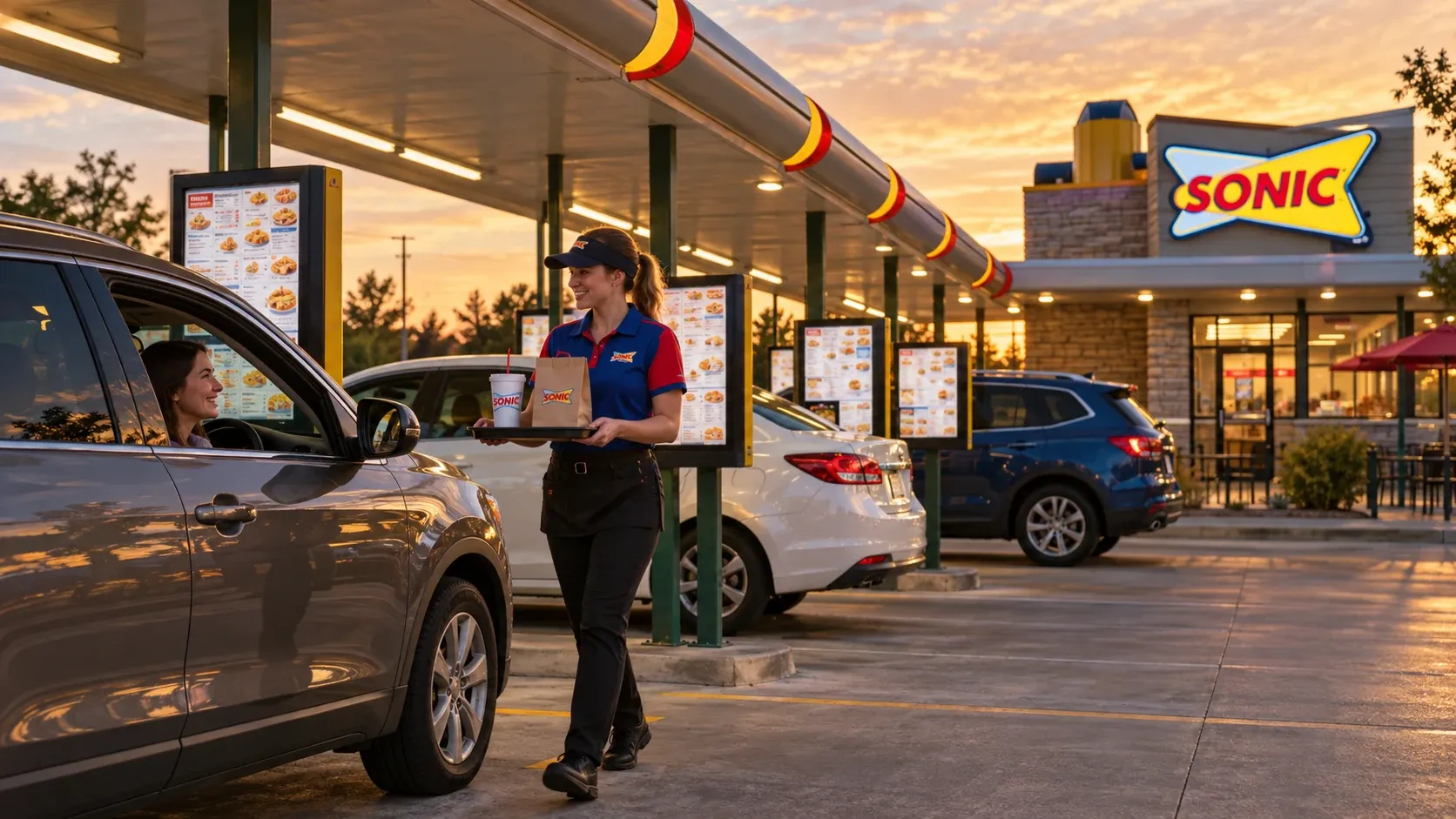
At Sonic, the parked car becomes part of the restaurant. Customers can pull into a stall, order through a speaker and receive their food from a carhop, keeping a style of roadside dining that feels different from moving through a drive-through queue.
The format has deep roots. Sonic traces its history to Top Hat, a small root beer stand in Shawnee, Oklahoma, in 1953. The menu has grown well beyond that beginning, but the drive-in remains a visible link to it.
13. KFC
3,523 U.S. locations
The Colonel’s face and the chicken bucket give KFC two recognizable symbols before a customer reads a menu. The bucket is particularly suited to a shared meal: the order travels as a group of portions, with sides alongside it. KFC has the largest U.S. location count among the three fried-chicken specialists in this list, although Chick-fil-A and Popeyes are within a few hundred restaurants.
12. Chipotle
3,938 U.S. locations
Chipotle’s U.S. restaurants are company-operated. Its nearly 4,000-location domestic business shows how large a restaurant network can become under that ownership model, alongside the many franchise systems elsewhere in the ranking.
Inside, the assembly line makes the customer’s decisions visible: rice, beans, protein, salsa and toppings accumulate into a burrito or bowl as it moves along the counter. Much of the meal is customized, while the ordering process is repeated from restaurant to restaurant.
11. Dairy Queen
4,115 U.S. locations
Two people can picture quite different businesses when they hear “Dairy Queen.” One may think of a soft-serve stop, with cones and Blizzards as the reason to visit. Another may know a Grill & Chill restaurant serving burgers, chicken and a full meal before dessert.
Both experiences belong in this count. Limiting the total to Grill & Chill would leave out part of the network and understate the reach of the DQ name.
The first store opened in Joliet, Illinois, in 1940. Soft serve has remained the connection between the different kinds of locations that followed.
10. Little Caesars
4,374 U.S. locations
Little Caesars made ready-to-carry-out pizza a central part of its identity through Hot-N-Ready. The appeal is easy to understand on an evening when dinner has not been planned: walking into a shop and leaving with a pizza can require less coordination than placing an order ahead of time.
The business began with Mike and Marian Ilitch’s restaurant in Garden City, Michigan, in 1959. Its place among the country’s largest chains reflects how far that carryout proposition has traveled.
9. Wendy’s
5,969 U.S. locations
Dave Thomas opened the first Wendy’s in Columbus, Ohio, in 1969 and named it after his daughter Melinda’s nickname. Square hamburgers and the Frosty were there at the beginning. Those recognizable features give the chain continuity across generations: the restaurant count has changed enormously, while a few of the details customers associate with Wendy’s have endured.
8. Pizza Hut
6,267 U.S. locations
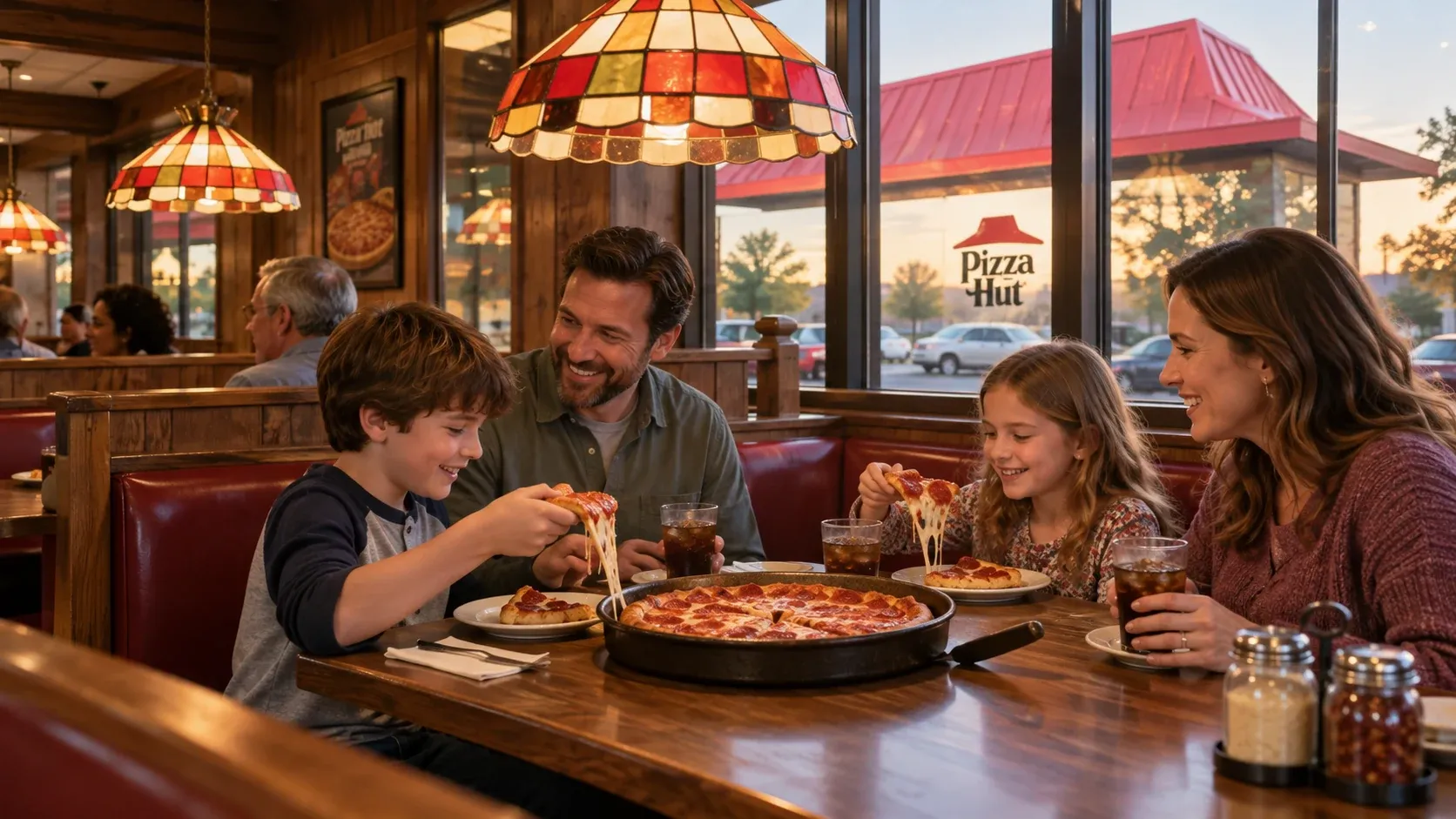
For anyone who remembers Pizza Hut as a sit-down family outing, the red roof can summon a whole restaurant experience: a booth, a pizza brought to the table and a meal that took longer than a stop at a pickup counter.
Delivery and carryout shops are also part of the brand’s network. That mix makes Pizza Hut a reminder that familiar restaurant names can survive changes in how—and where—customers eat their food. A count of locations gathers those different formats together, even when the buildings look little alike. If those dining rooms are familiar, try our restaurant dining room quiz.
7. Burger King
6,649 U.S. locations
Burger King’s long rivalry with McDonald’s can make the two feel like evenly matched fixtures of the American roadside. The physical networks are quite different in size: McDonald’s has more than twice as many U.S. restaurants in the reporting used here. The Whopper’s familiarity is a measure of how recognizable a product can become without its chain having a restaurant at every competing intersection.
6. Domino’s
7,186 U.S. locations
The delivery driver and the carryout box are central to the Domino’s experience. A restaurant can serve a neighborhood while customers eat almost all of their meals somewhere else, which gives the local kitchen a different role from a conventional dining room.
Most of the domestic network is franchised: 6,924 restaurants, compared with 262 company-operated stores. The familiar sign brings those separately operated businesses together into one national pizza brand.
5. Taco Bell
7,784 U.S. locations
Taco Bell has built a large restaurant network around a menu whose basic ingredients can be rearranged into many combinations. Tacos, burritos and layered or folded items give the chain room to introduce different products while retaining a recognizable style of food. In the U.S., its network is larger than either of its Yum! Brands siblings, Pizza Hut and KFC.
4. Dunkin’
9,999 U.S. locations
Dropping “Donuts” from the name in January 2019 made the coffee side of Dunkin’ more explicit. The company described the change as part of its emphasis on beverages and serving customers on the go; the doughnuts stayed.
Its location count also contains a familiar pairing. Dunkin’ and Baskin-Robbins can share a shop, putting morning coffee and an ice cream stop at the same address. Those combination locations count toward Dunkin’s network.
The reported total lands just one restaurant short of 10,000. Given that stores open and close throughout the year, it is best read as a reporting-date figure rather than a permanently fixed milestone.
3. McDonald’s
13,706 U.S. locations
Drive-through lanes, a dining room and space for customers to sit make a freestanding McDonald’s a substantial piece of a commercial strip. Yet it contributes the same single location to this ranking as a much smaller sandwich shop or coffee counter. Its third-place position is a useful check on what “largest” means here: neither restaurant floor space nor the amount sold at each outlet changes the count.
2. Starbucks
16,911 U.S. locations
The green Starbucks sign can mark a standalone coffeehouse, a drive-through or a counter inside another business. That flexibility is visible in the kinds of places customers encounter the brand: a grocery trip, an airport connection and a workday coffee break can all lead to a Starbucks purchase.
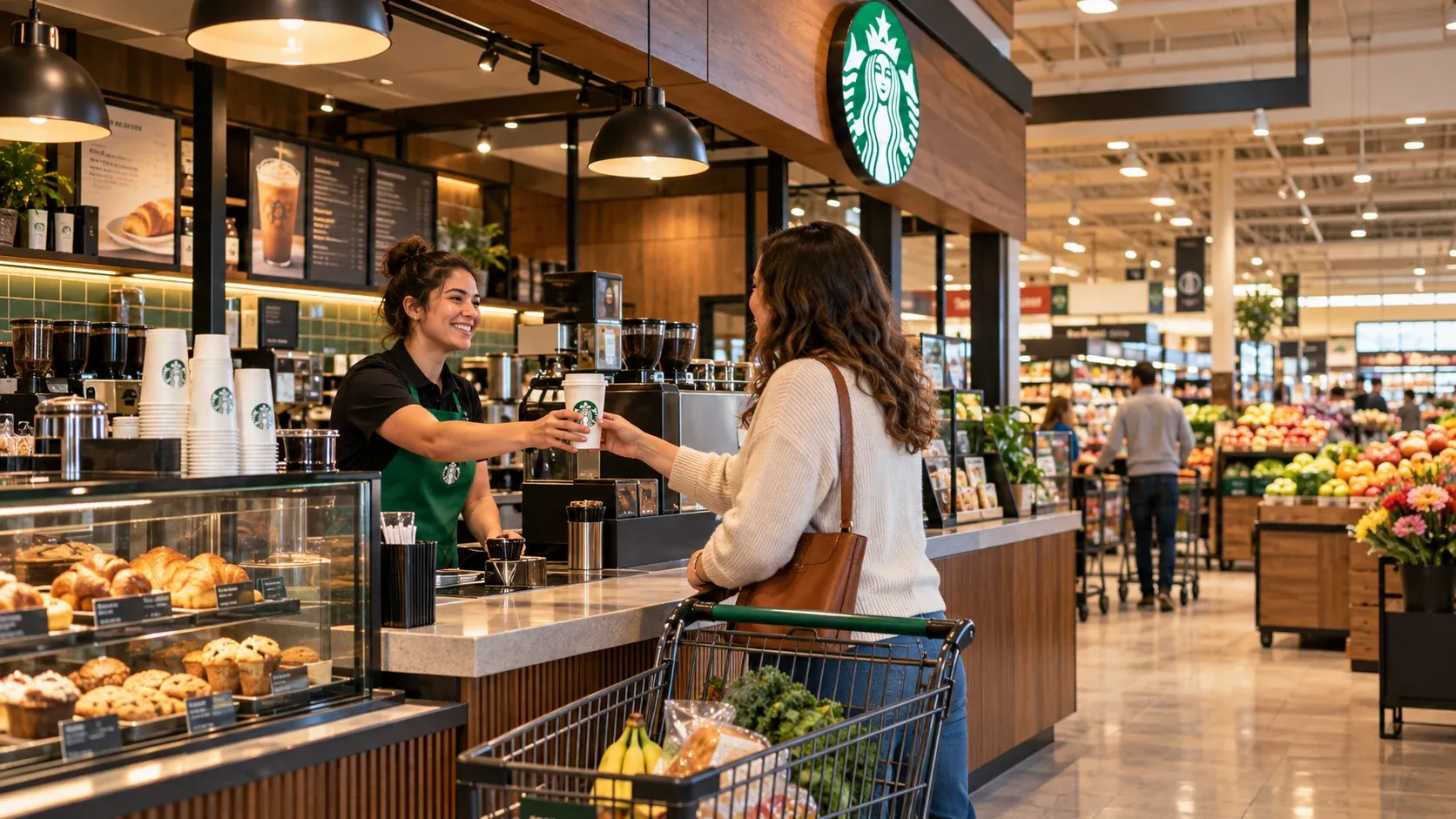
Licensed locations help extend that reach. A customer may order the same familiar drink while the shop is run by a partner rather than Starbucks itself. Counting both licensed and company-operated stores captures those different points of access to the brand.
1. Subway
18,773 U.S. locations
Fred DeLuca was 17 when he opened a sandwich shop in Bridgeport, Connecticut, in 1965 with backing from Peter Buck. The idea that became Subway was compact enough to fit into everyday retail spaces, with customers choosing fillings as their sandwiches moved along the counter.
That small-shop character remains useful when looking at the scale of the network. A Subway can occupy part of a shopping center without needing the land and building associated with a large freestanding restaurant. The U.S. total reported for the end of 2025 consists entirely of franchised locations: thousands of individual businesses, trading under the same name.
How we counted
The ranking measures individual restaurant brands across the 50 states and Washington, D.C. It includes company-operated, franchised and identifiable licensed restaurant outlets, including qualifying counters inside other venues. Coffee and ice cream shops qualify. Territories and foreign markets are excluded where separately disclosed.
Wholesale food programs installed inside existing retailers, including Hunt Brothers Pizza and Krispy Krunchy Chicken, are outside this article’s definition of a restaurant chain. A dedicated licensed restaurant operation can qualify even when it shares a building with another business.
Figures prioritize 2025 calendar-year-end counts or fiscal reporting dates close to year-end. Starbucks’ total is dated December 28, 2025, which falls in its first fiscal quarter of 2026. The figures form a documented 2025 reference snapshot; they were not all counted on the same day and should not be read as live totals.
Pizza Hut disclosure note: Yum! Brands reports 6,267 restaurants in its geographic U.S. table and 6,307 in a separate operating-region disclosure. This article uses the geographic figure to maintain the U.S.-only scope. The difference does not change Pizza Hut’s position.
Company filings and franchise disclosures were prioritized, supplemented by restaurant trade reporting. Additional chain names were checked when building the shortlist; Wikipedia’s restaurant counts were not used to establish the ranking.
Sources
- Subway, Dunkin’, Sonic, Arby’s and Jimmy John’s: 2026 Arby’s franchise disclosure document, including affiliated-brand disclosures.
- Starbucks: First-quarter fiscal 2026 results, reporting December 28, 2025 store counts.
- McDonald’s: 2025 annual report.
- Taco Bell, Pizza Hut and KFC: Yum! Brands fourth-quarter 2025 country-level restaurant data.
- Pizza Hut operating-region comparison: Yum! Brands 2025 unit-count reconciliation.
- Domino’s: 2025 annual filing.
- Burger King and Popeyes: Restaurant Brands International’s 2025 store counts by market.
- Wendy’s: 2025 annual filing.
- Little Caesars: QSR reporting on its 2025 domestic restaurant count.
- Dairy Queen: QSR reporting on its domestic network and franchise disclosures.
- Chipotle: 2025 restaurant-count disclosure.
- Papa Johns: 2025 annual filing, including the state-by-state restaurant table.
- Chick-fil-A: Restaurant Business reporting on 2025 restaurant counts.
- Jersey Mike’s: SEC filing with the December 28, 2025 restaurant-count comparison.
Recommended